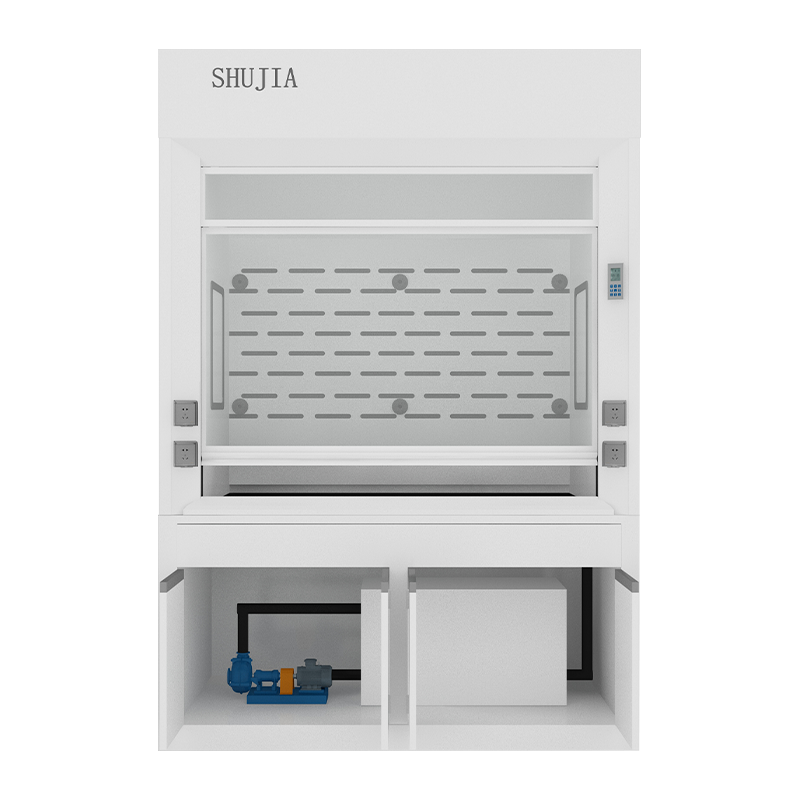
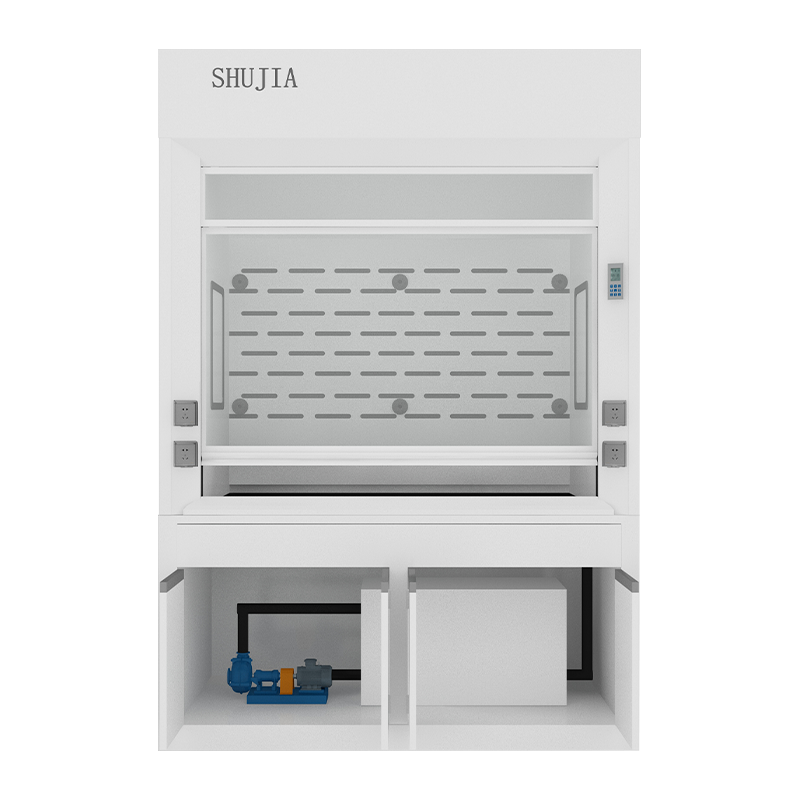
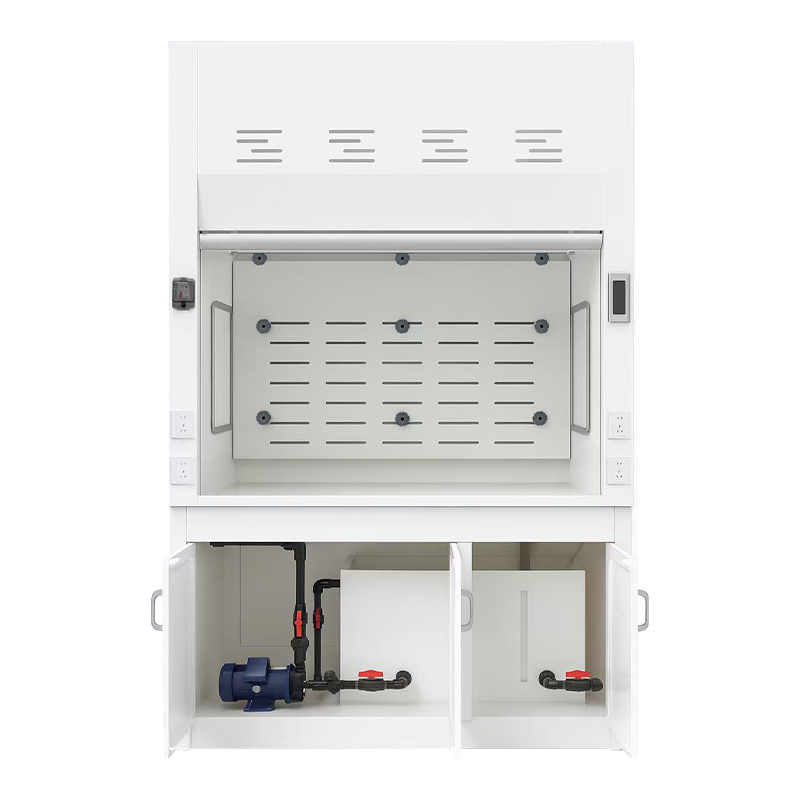
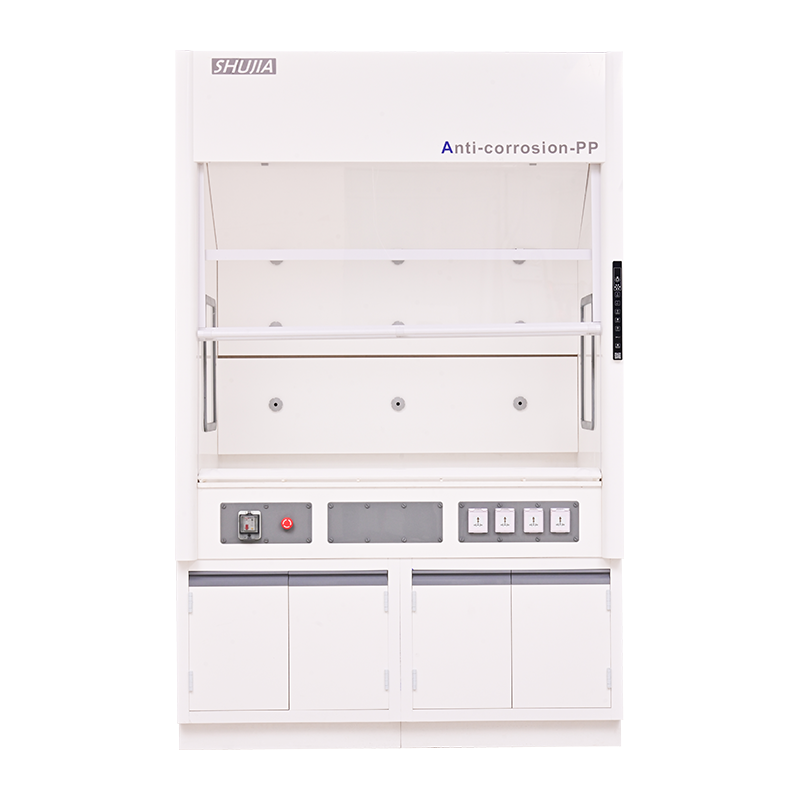
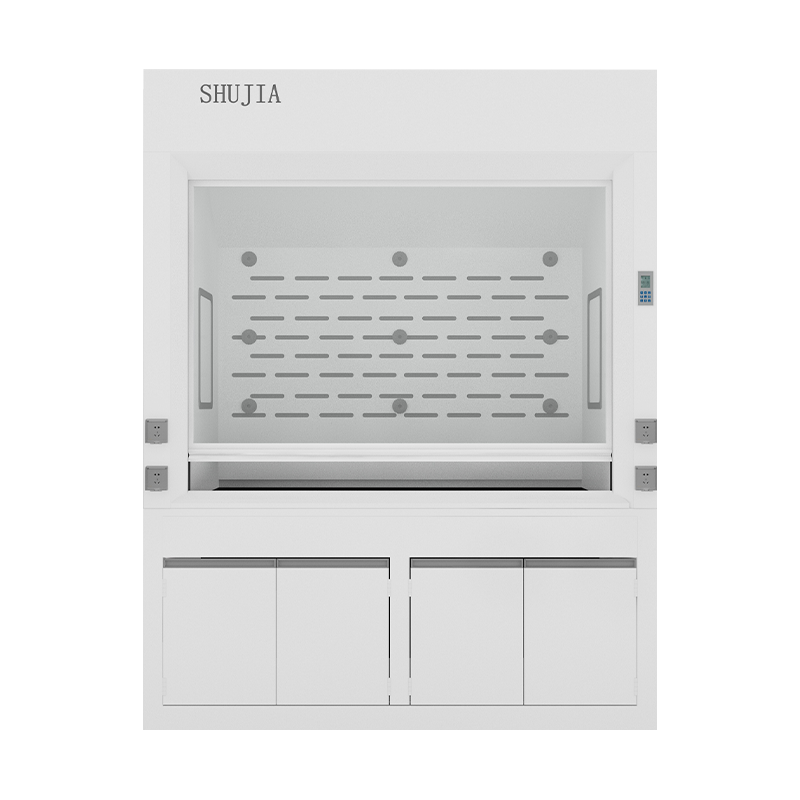
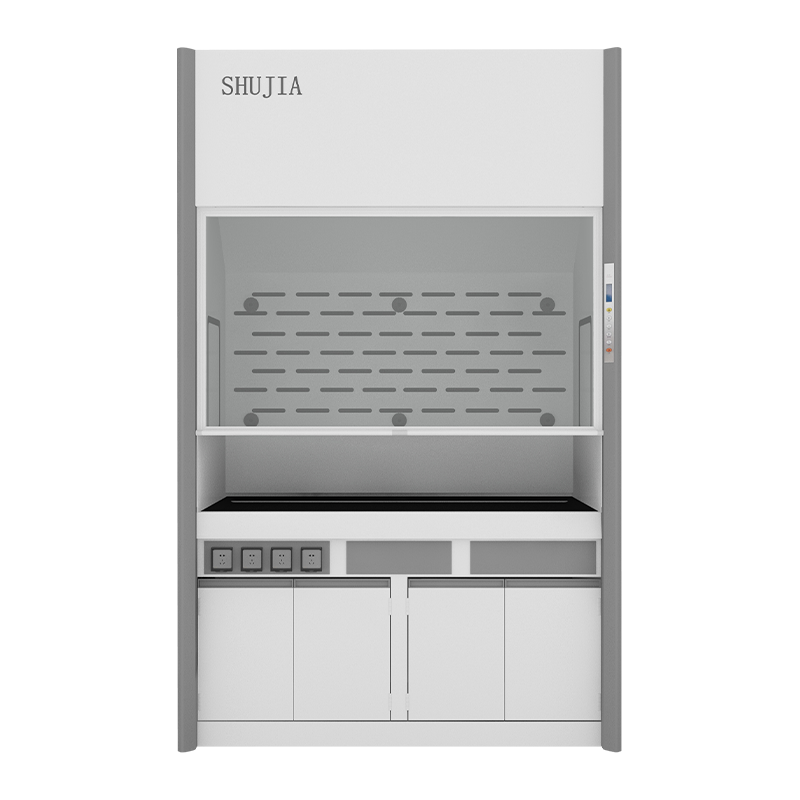
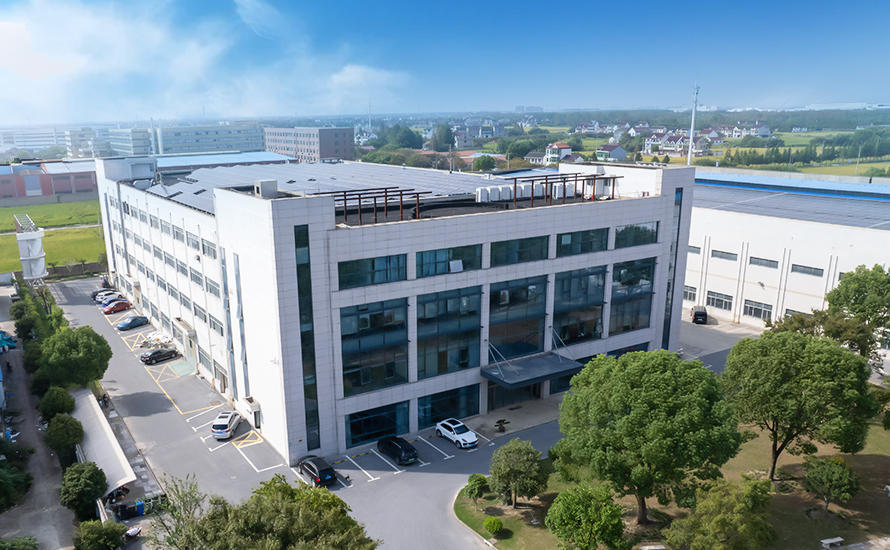
Shanghai Shujia Environmental Protection Engineering Co., Ltd. designs, manufactures and installs laboratory ventilation systems and corrosion-resistant laboratory furniture from three production bases in Jinshan District, Shanghai, covering 40,000 m² with more than 200 production, engineering and service staff. Within that range, the Laboratory SJHB PP24 Perchloric Acid Fume Hood manufacturer line covers the most aggressive bench chemistry — perchloric acid, hydrofluoric acid and comparable media — where a general-purpose chemical hood is not an adequate containment boundary.
Our Range for Aggressive-Media Bench Work
We build the PP series as a family of corrosion-resistant hoods, cabinets and enclosures, each aimed at a defined chemistry class rather than one universal box. The PP24 sits at the top of that family for oxidising acid service, while the remaining models cover synthesis, dissolution, auxiliary containment and ventilated storage.
| Model |
Chemistry and application fit |
Construction focus |
| SJHB PP24 |
Perchloric acid, hydrofluoric acid and similarly aggressive media; oxidising digestions and trace-metal work |
Flame-retardant, corrosion-resistant body; corrosion- and high-temperature-resistant deflector and collection hood; polymer fibre cable sash drive; self-circulating purification |
| SJHB PP23 Organic Chemical Synthesis Fume Hood |
Multi-step organic synthesis, solvent handling and reflux work with sustained vapour load |
Corrosion-resistant enclosure with reinforced working cavity for glassware assemblies |
| SJHB PP22 |
Dissolution, sample preparation and wet chemistry with mixed acid and solvent vapours |
Compact corrosion-resistant bench hood with service access for sinks and fixtures |
| SJHB PP21 |
Auxiliary local exhaust for vessels, small apparatus and secondary workstations |
Supplemental ventilation cabinet for ducted extraction at the point of use |
| Customized Ventilation Room |
Walk-in or large-format processes that exceed standard hood dimensions |
Site-built enclosure engineered to the process envelope and duct route |
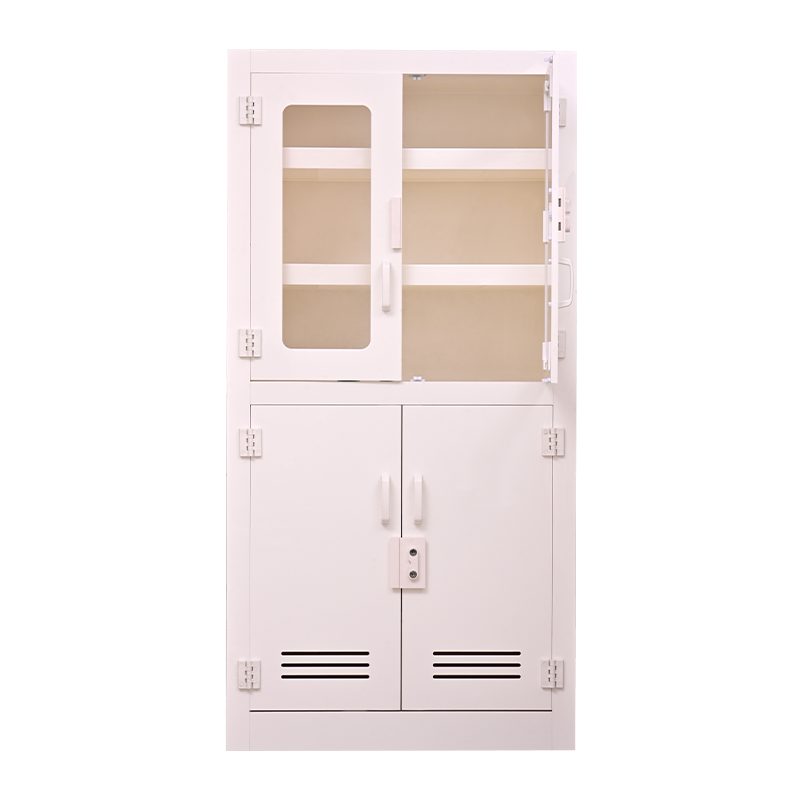
| PP Ventilated Reagent Cabinet / Vessel Cabinet |
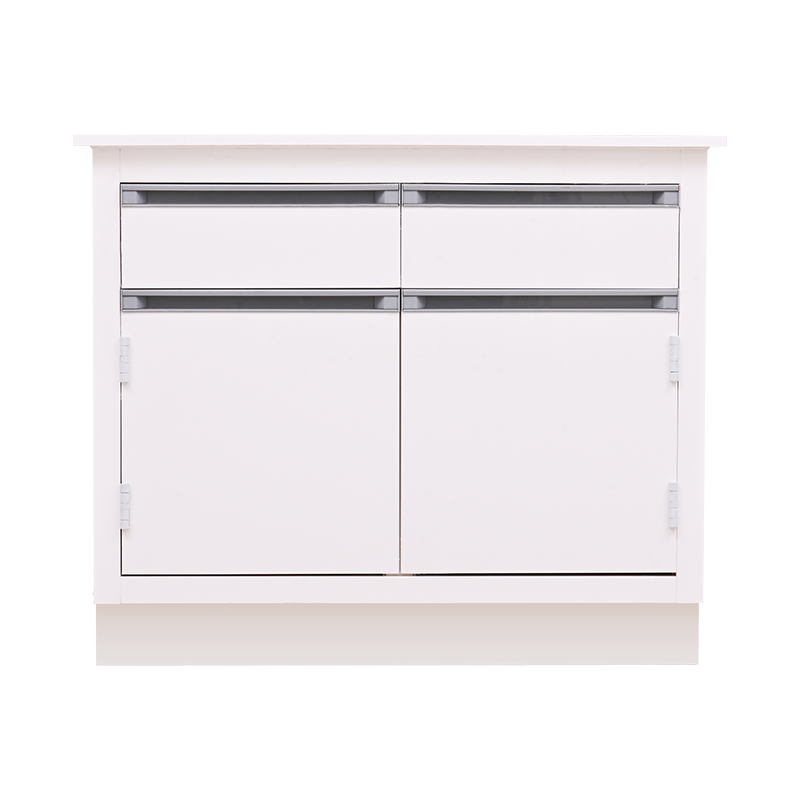
Ventilated storage of reagents, acids and vessels adjacent to the working bench |
Continuously extracted cabinet with corrosion-resistant interior |
Each model is produced to order, so working width, height, internal fit-out and duct connection are fixed against your layout drawing rather than taken from a fixed catalogue.
Application Fit: Perchloric Acid and Similar Media
Perchloric acid digestions, hydrofluoric acid etching and mixed oxidising baths attack metal components, degrade ordinary coatings and leave residues that must not accumulate inside the working cavity. The PP24 is specified for that service: the enclosure and internal aerodynamics are arranged so volatile perchloric-acid gas is captured and held rather than collecting in dead zones.
- Typical processes: perchloric acid digestion, trace-metal sample preparation, hydrofluoric acid handling, aggressive oxidising reactions.
- Materials handled: strong mineral acids, oxidising acid mixtures, alkaline reagents and hot acid vapours.
- Where it does not fit: routine solvent-only work is normally served by the PP23 or PP22, which keeps the higher-specification PP24 available for the aggressive duty it was designed around.
Construction, Materials and Structural Behaviour
The main body is built from flame-retardant, corrosion-resistant material, and the deflector, collection hood and related parts use corrosion- and high-temperature-resistant material. The sash transmission runs on a corrosion-resistant polymer fibre cable, which keeps the drive mechanism dependable in an atmosphere that would shorten the life of conventional hardware.
Extensive “口”-, U- and T-shaped reinforcement gives the cabinet a stable structure with high load capacity, so heavy glassware, hotplates and digestion blocks can be worked inside the cavity without the enclosure flexing or the sash alignment drifting.
Airflow, Containment and Acceptance Testing
The design working point is 1,350 m³/h at a 0.5 m/s face velocity, with leakage below 0.05. Those figures set the duct diameter, fan duty and make-up air requirement for the room, and they are the numbers we use when the hood is coordinated with the rest of the exhaust system.
| Parameter |
Specification |
| Working footprint |
2400 × 1100 mm |
| Working height options |
1200 / 1500 / 1800 mm |
| Design air volume |
1,350 m³/h |
| Design face velocity |
0.5 m/s |
| Leakage |
Below 0.05 |
| Structural reinforcement |
“口”-, U- and T-shaped sections |
| Sash transmission |
Corrosion-resistant polymer fibre cable |
| Standards applied |
ASHRAE 110-2016; JB/T 6412-1999 |
| Third-party testing |
CMA, CNAS and ILAC-MRA recognised laboratories |
Configuration Options and Dimensional Range
The 2400 × 1100 mm footprint is offered in three working heights so the cavity can match operator posture, apparatus height and the available duct route. Because the hood is built to order, the following variables are settled at the drawing stage and carried through production:
- Working height and overall cabinet height, including base cabinet or floor-mounted variants.
- Internal fit-out: worktop, cup sink or sink position, drip cups and drainage route.
- Service fittings: gas, water, vacuum and electrical outlets positioned for the bench workflow.
- Sash arrangement, counterbalance setting and lighting placement.
- Duct connection size and orientation, coordinated with the exhaust route above or behind the cabinet.
Integration with Ductwork, Fans and Environment Control
A perchloric acid hood is only as good as the exhaust system behind it. We supply the surrounding chain from the same production base, so the hood, ductwork and air treatment are sized against one another instead of being reconciled on site.
- PP duct and fittings for corrosion-resistant exhaust runs.
- Anti-corrosion centrifugal fans matched to the 1,350 m³/h design point and the system pressure loss.
- Wet Scrubber Tower and activated carbon stages where acid mist or odorous compounds must be removed before discharge.
- VAV High-Speed Damper Actuator control for variable-volume operation, keeping face velocity stable as the sash moves.
Information We Use to Configure Your Solution
Our proposal is based on the working point, the chemistry and the production target, not on a width and a price alone. To prepare a configuration and quotation we work from:
- Room layout drawing or site dimensions, including bench position and available wall run.
- List of acids, solvents and reagents handled, with concentrations and operating temperatures.
- Required working height, internal fit-out and service fitting positions.
- Duct route, vertical or horizontal discharge, and distance to the fan and treatment stage.
- Electrical supply, make-up air arrangement and any building management interface.
- Acceptance requirements, documentation language and delivery scope to site.
Quality Control, Documentation and Serviceability
Raw materials are selected against the corrosion duty, and inspection is carried out after each production process, with finished units inspected to the agreed requirement and the applicable international standard. We participate in the drafting of T/SLEA 0011-2023 Laboratory Fume Hoods and T/SLEA 1011-2023 Technical Specifications for Laboratory Design and Construction — Part 1, so the design conventions used in our cabinets follow the same industry framework.
Serviceability is designed in: the sash drive, liner components and fittings are reachable for replacement without dismantling the cabinet, and spare parts are supplied against the original configuration record. Delivery scope, packaging, installation responsibility and commissioning steps are confirmed in the order documentation, together with the operating and maintenance information needed by the site team.
Frequently Asked Questions
What makes the SJHB PP24 different from a standard chemical fume hood?
It is specified for perchloric acid, hydrofluoric acid and similarly aggressive media. The body is flame-retardant and corrosion-resistant, the deflector and collection hood are corrosion- and high-temperature-resistant, the sash runs on a polymer fibre cable, and self-circulating purification captures volatile perchloric-acid gas instead of letting it accumulate.
Which working height should we specify?
The cabinet is available at 1200, 1500 and 1800 mm working heights on a 2400 × 1100 mm footprint. The choice follows operator posture, the tallest apparatus used inside the cavity and the space available for the duct connection above the sash.
What exhaust capacity does the hood require?
The design air volume is 1,350 m³/h at a 0.5 m/s face velocity, with leakage below 0.05. We size the duct, fan and treatment stage against that figure plus the pressure loss of the actual route, and variable-volume control can be added where the room air balance demands it.
How is containment performance verified?
The hood is third-party tested to CMA, CNAS and ILAC-MRA recognised standards and is compliant with ASHRAE 110-2016 and JB/T 6412-1999. Test documentation is issued with the order so the installation can be accepted against the same basis.
Can the hood be supplied with the exhaust and treatment equipment?
Yes. We manufacture the PP ductwork, anti-corrosion centrifugal fans, wet scrubber towers and activated carbon adsorption boxes in the same programme, so the hood, extraction and air treatment are delivered as one coordinated scope from our Shanghai factory.
What do you need from us to prepare a quotation?
A room layout or site dimensions, the chemistry list with concentrations and temperatures, the required working height and internal fit-out, the duct route, and the electrical and make-up air arrangements. With those inputs we return a configured cabinet, the matching exhaust scope and the delivery and installation split.

 EN
 English
 عربى