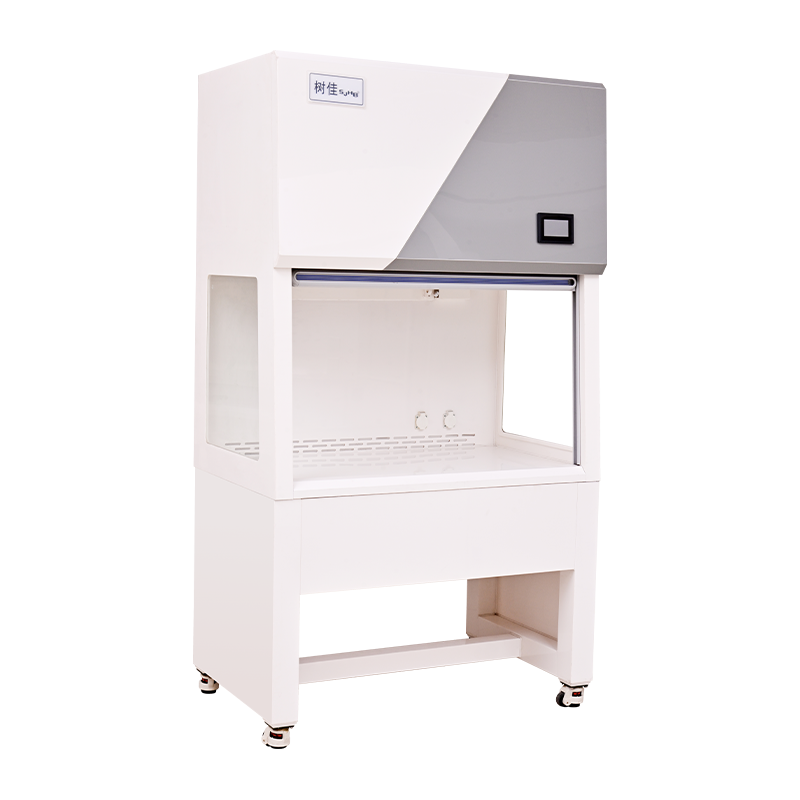
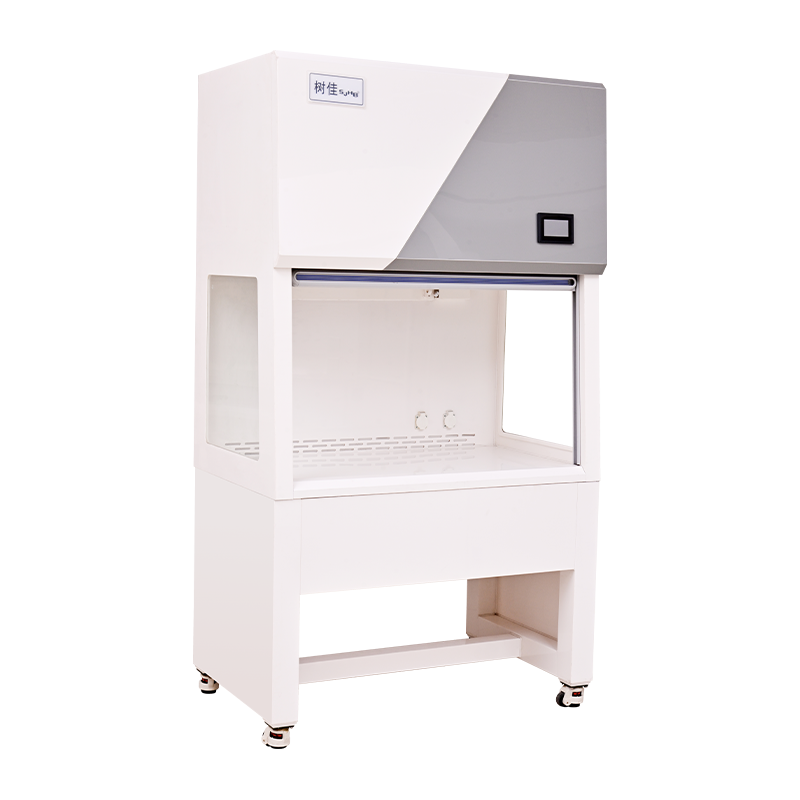
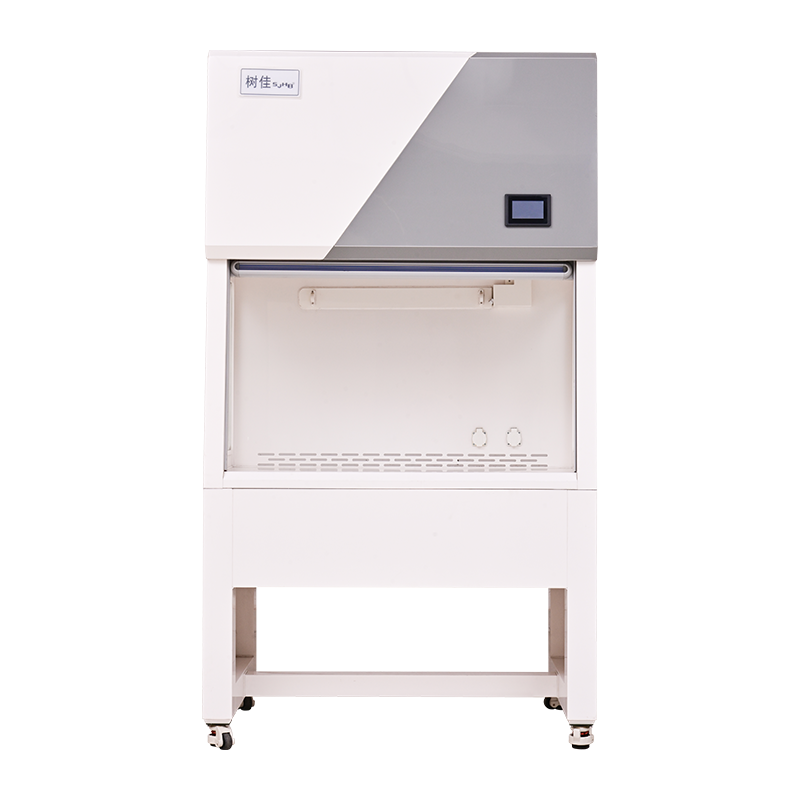
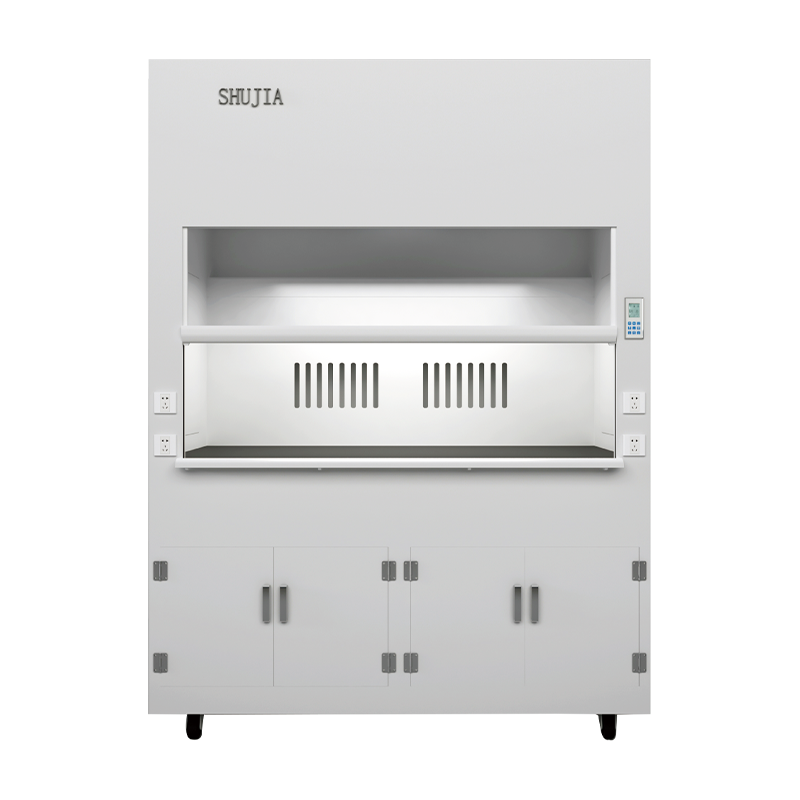
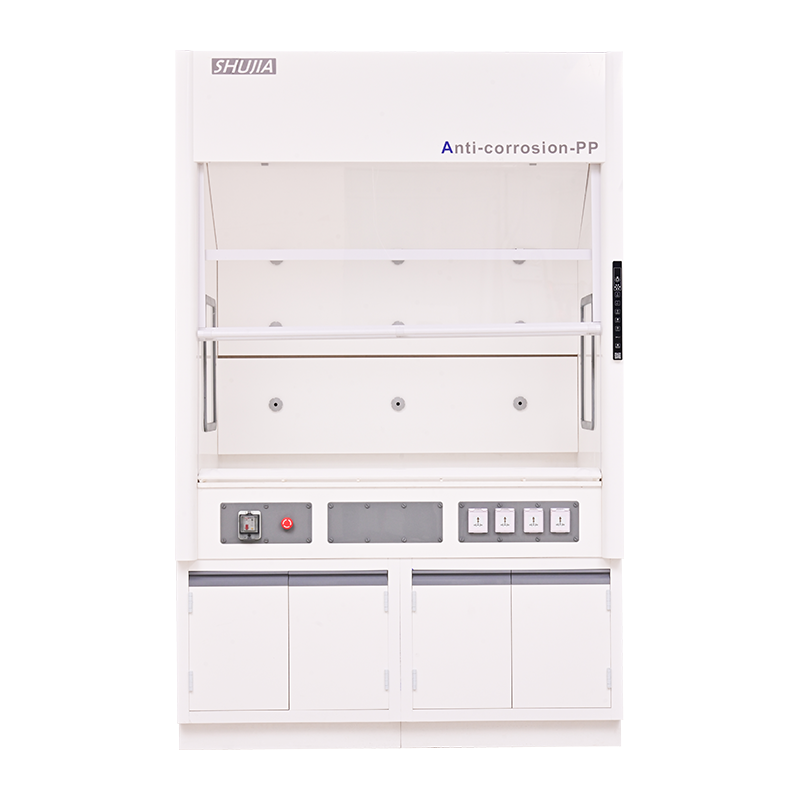
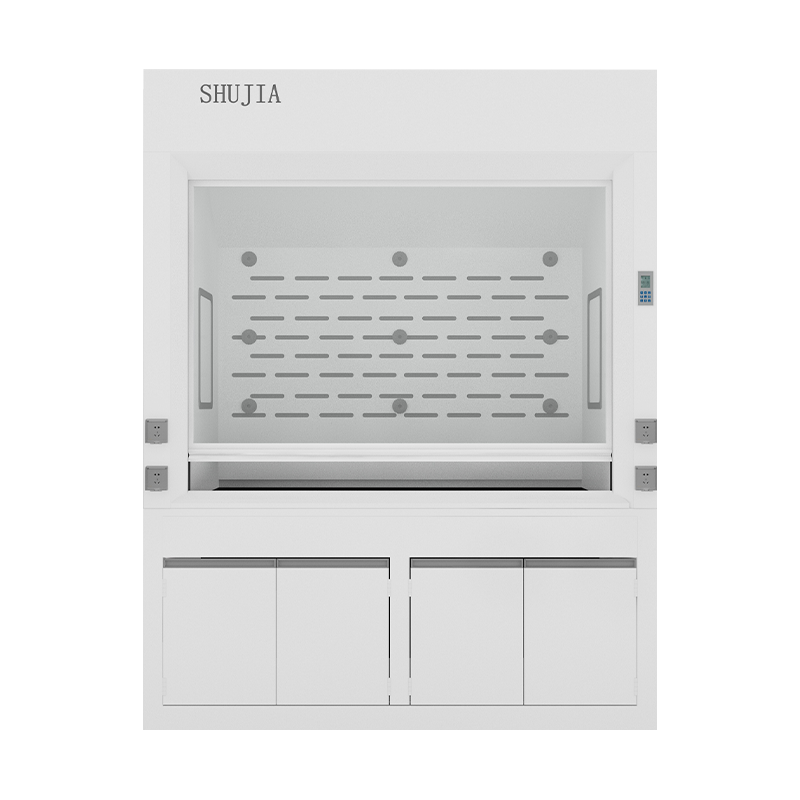
As a Laboratory PP Ultra Clean Platform manufacturer, Shanghai Shujia Environmental Protection Engineering Co., Ltd. supplies laminar-flow local air-purification workstations for benches where airborne particulate, not only chemical vapour, decides whether a procedure succeeds. The platform holds a stable, adjustable clean-air velocity across the work zone and surrounds samples with a continuous sterile flow, while the polypropylene body withstands the acid and alkali exposure that accompanies routine laboratory work.
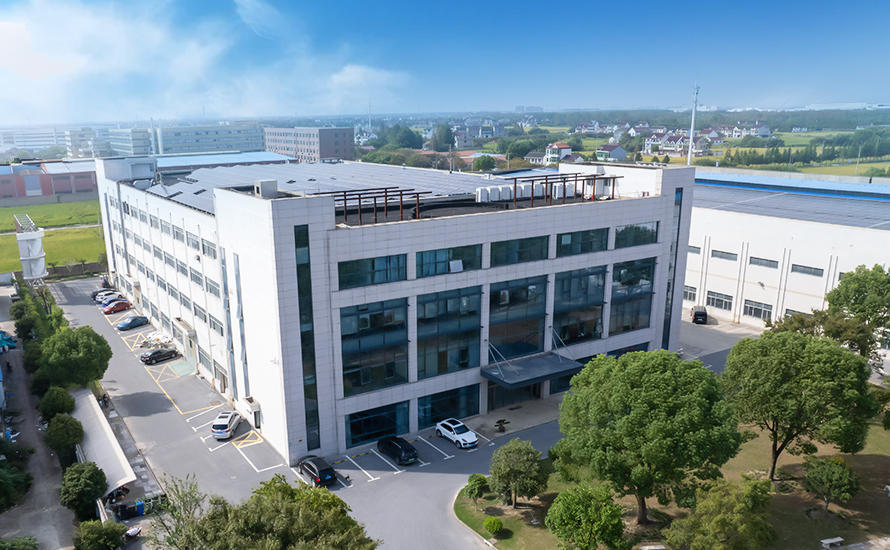
We are a Shanghai-based laboratory environmental equipment manufacturer founded in 2012, operating three production bases across 40,000 m² with more than 200 staff in production, technology, R&D, construction and service. Our work covers laboratory ventilation and exhaust systems, high-end laboratory furniture and environmental protection equipment, delivered as individual units or as part of a coordinated laboratory construction package.
- PP clean benches and ultra-clean cabinets for particulate-sensitive bench work
- Fume hoods, ventilated reagent cabinets and walk-in ventilation rooms for chemical containment
- Ducting, fans, scrubbers and adsorption equipment for the exhaust path
- VAV dampers and actuators for airflow regulation at the hood face
How the PP Ultra Clean Platform Works
The unit is a local purification device, not a containment hood. An adjustable air-volume fan pushes room air through a laminated microporous foam filter element, and the conditioned air leaves as a continuous laminar stream across the working surface. Dust, fungal spores and bacterial spores larger than 0.3 µm are removed from that stream, so the operator works in an envelope of clean air rather than a sealed chamber.
A German EBM fan drives a clean-air flow rate of 24–30 m/min, which is enough to resist contamination carried in by nearby air disturbances such as door movement, walk-by traffic or adjacent bench activity. The movable vertical sash locks at any height, so the operator can set a working aperture that balances hand access against the protective air curtain in front of the sample.
Materials note: the cabinet body is built primarily from PP board. This is the reason the platform suits acid digestion, plating, solvent handling and cleaning routines where coated steel or laminate surfaces would degrade at the edges and fasteners.
Standard Model Range and Work-Zone Dimensions
Three standard footprints cover most clean-bench layouts. All share the same 750 mm depth and 2280 mm overall height, which keeps the units compatible with continuous laboratory bench runs and wall service spines.
| Overall size (W×D×H, mm) |
Work zone (W×D×H, mm) |
Clean-air face velocity |
Typical bench allocation |
| 1200×750×2280 |
1000×600×750 |
24–30 m/min |
Single-operator sample preparation |
| 1500×750×2280 |
1300×600×750 |
24–30 m/min |
Two operators or bench-top instrument work |
| 1800×750×2280 |
1500×600×750 |
24–30 m/min |
Extended plating, assembly or inspection lines |
Application Fit Across Our Laboratory Range
The clean platform rarely stands alone. Most projects combine it with containment, storage and exhaust equipment so that clean zones, chemical zones and the air path are designed as one system rather than three separate purchases.
| Equipment |
Function |
Where it fits |
| PP Ultra Clean Platform |
Laminar-flow clean air over an open work zone |
Biopharmaceuticals, optoelectronics, microelectronics, hard-disk manufacturing |
| Semiconductor Ultra Clean Cabinet |
Enclosed ultra-clean environment with controlled access |
Wafer, substrate and precision component handling |
| SJHB PP23 Organic Chemical Synthesis Fume Hood |
Containment of organic synthesis vapours |
Adjacent synthesis benches feeding the clean zone |
| PP Anticorrosion Side Experimental Platform |
Acid- and alkali-resistant side bench with local exhaust |
Wet chemistry preparation beside clean work |
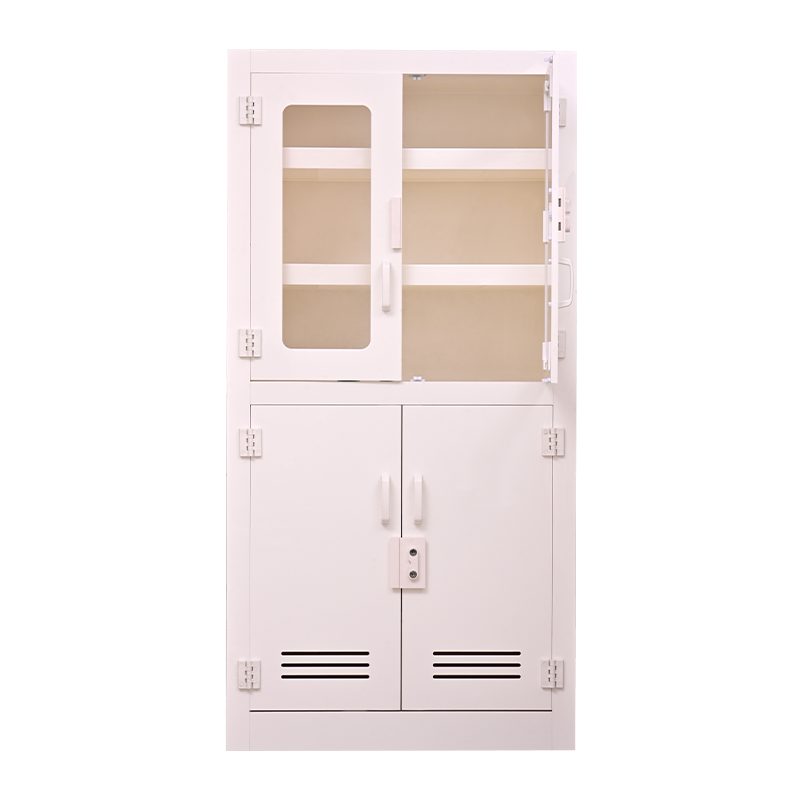
| PP Ventilated Reagent Cabinet / Vessel Cabinet |
Continuous exhaust storage for reagents and vessels |
Storage within the same room as the clean bench |
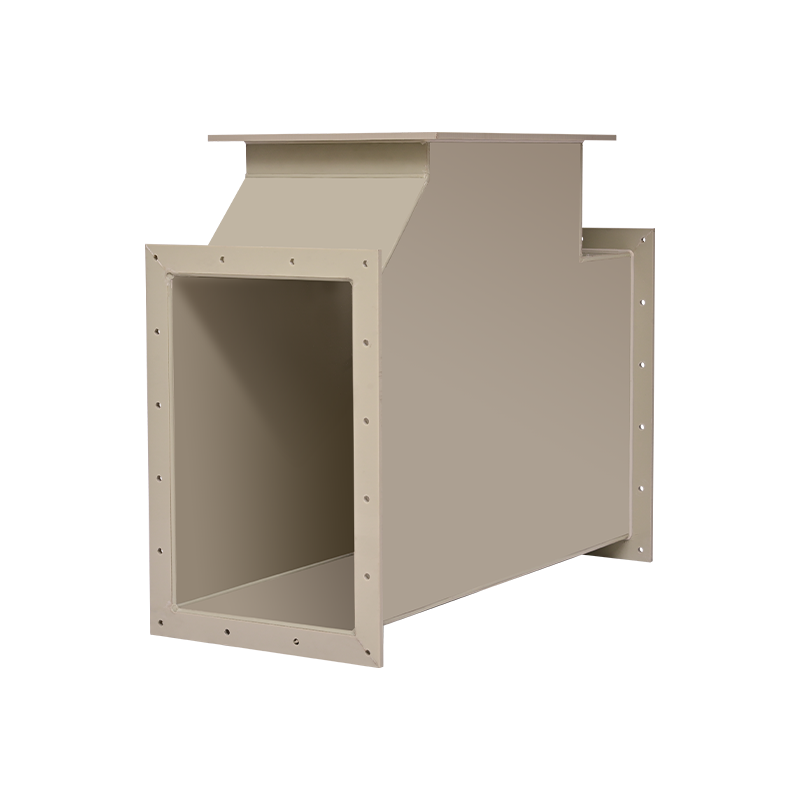
| PP Air Duct and Accessories |
Corrosion-resistant exhaust routing |
Connecting hoods and cabinets to fans and treatment |
| Anti-Corrosion Centrifugal Fan, Wet Scrubber Tower, Activated Carbon Adsorption Box |
Air movement and staged gas treatment |
Acid mist, VOC and odour control downstream of the bench |
Configuration Options We Build Around
Because the platform body is fabricated rather than assembled from a fixed catalogue shell, several parameters can be adjusted before production, and all of them change the drawing set.
- Work-zone size: any of the three standard widths, or a modified length to close a bench run exactly.
- Fan and control: single-speed or adjustable air-volume fan speed, with switch panel position set to suit the operator's working side.
- Sash: movable vertical sash with locking at intermediate heights.
- Filtration element: laminated microporous foam filter matched to the particle class the process must exclude.
- Services and fittings: sockets, gas and water tapping points and shelf positions positioned around the intended instrument footprint.
- Body and finish: PP board construction throughout, with the internal work surface detailed for the chemicals in use.
Installation, Utilities and Airflow Integration
The unit needs a level bench line, a stable power supply rated for the fan and lighting load, and sufficient clear space in front of the sash for the operator to work without interrupting the laminar stream. Where the platform stands in a room that also contains fume hoods, the two systems compete for air, and hood exhaust volume has to be balanced against the clean-air intake.
Our engineers review the room pressure regime, supply and exhaust balance, duct riser position and any VAV control loop before confirming placement. Combining the clean bench with VAV dampers and actuators on the hood side keeps the room under negative pressure relative to adjacent circulation space, which is normally the condition that keeps the clean zone credible over time.
Quality Control and Acceptance
Raw materials are selected for corrosion resistance and dimensional stability before fabrication begins. Inspection is carried out after each production process, and finished units receive full inspection against the agreed drawing and technical standard rather than a sampled check.
Acceptance on site typically covers visual and dimensional verification, fan operation and control response, confirmation of the working aperture range, and measurement of clean-air velocity across the work zone against the 24–30 m/min band. We work to the requirements set out in the project specification and the applicable national and international standards for the installation. Shujia participates in the compilation of T/SLEA 0011-2023 Laboratory Fume Hoods and T/SLEA 1011-2023 Technical Specifications for Laboratory Design and Construction, Part 1: General Technical Requirements, and holds construction enterprise qualification and work safety documentation for the installation scope we execute.
Maintenance, Spare Parts and Serviceability
- Filter elements are serviceable without dismantling the body, which keeps cleaning cycles practical in continuous-use clean zones.
- Fan assemblies and control components are replaceable as discrete items, so a fault does not retire the cabinet.
- PP surfaces tolerate the acid and disinfectant wiping routines common in pharmaceutical and testing laboratories.
- Documentation covers installation, operating settings and maintenance intervals; operator and maintenance training is arranged as part of the delivery scope for projects that require it.
Equipment is packed for road, sea or air freight according to the delivery address, with the scope of supply stated item by item in the contract so that site work and factory work are not confused at handover.
Information We Use to Configure Your Solution
To prepare a proposal that matches the bench rather than a generic unit, we work from the following project inputs. Where a site drawing already exists, we mark it up and return it for confirmation.
- Required work-zone width and depth, and the bench or wall position the unit will occupy
- Process description: what is handled, in what form, and how long the sample remains exposed
- Particle class and target cleanliness level to be maintained over the work surface
- Chemicals present in the room, including acid, alkali and solvent exposure
- Number of operators and expected working height of the sash during use
- Power supply available, control panel preferred position and any building management interface
- Room supply and exhaust arrangement, hood count and duct routing constraints
- Acceptance test criteria, documentation language and required drawing approvals
- Delivery destination, site access and installation responsibility split
Frequently Asked Questions
Is the PP Ultra Clean Platform a fume hood?
No. It protects the work from airborne particulate by supplying clean laminar air over the bench. Chemical containment belongs to a fume hood, and in rooms where both operations occur we normally specify both, with the exhaust path sized to keep the room pressure correct.
Which sizes do you manufacture as standard?
1200, 1500 and 1800 mm wide bodies, each 750 mm deep and 2280 mm high, with work zones of 1000×600×750 mm, 1300×600×750 mm and 1500×600×750 mm respectively. Modified lengths can be produced to close a bench run.
What particle size does the filtration remove?
The laminated microporous foam filter element produces a continuous clean-air stream that removes dust, fungal spores and bacterial spores larger than 0.3 µm, which is the basis on which we match the platform to biopharmaceutical, optoelectronic, microelectronic and hard-disk applications.
Can the fan speed be adjusted on site?
Yes. The adjustable air-volume fan system allows the clean-air velocity to be set within the 24–30 m/min range and re-verified after installation, which is useful when a room is commissioned in stages or the bench layout changes later.
How do you handle a non-standard requirement?
We develop and produce to customer drawings or samples. Send the bench layout, process description and the services available, and we will return a configuration drawing and a quotation covering the unit, the associated ducting and controls, and the installation scope.

 EN
 English
 عربى