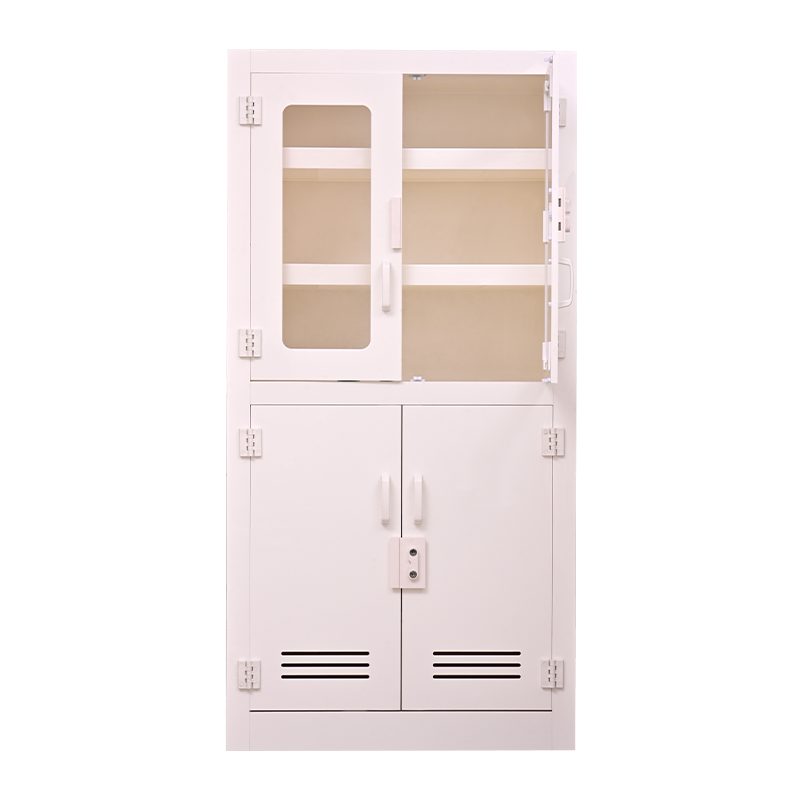
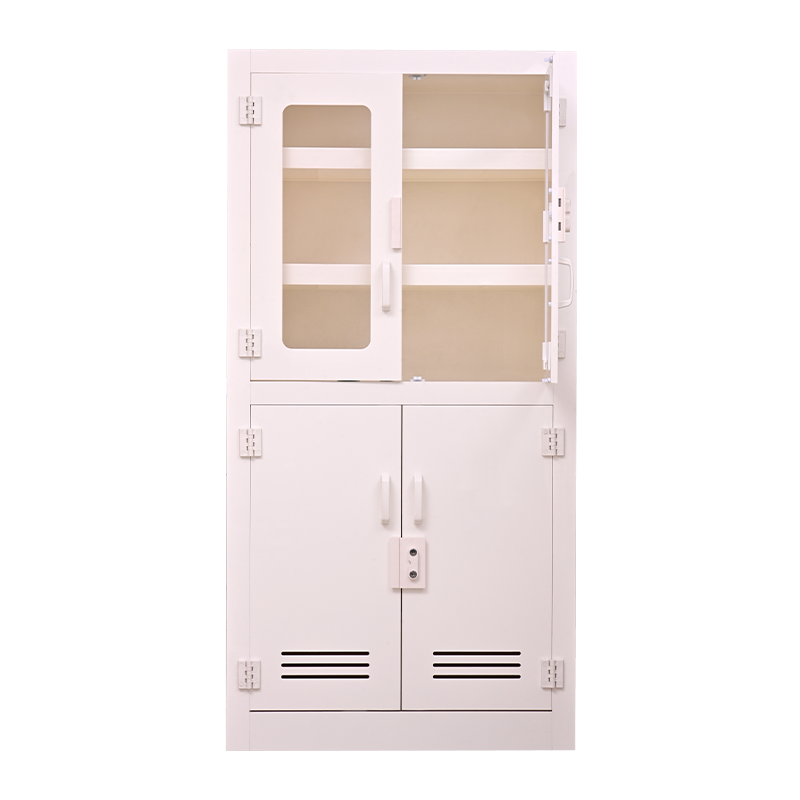
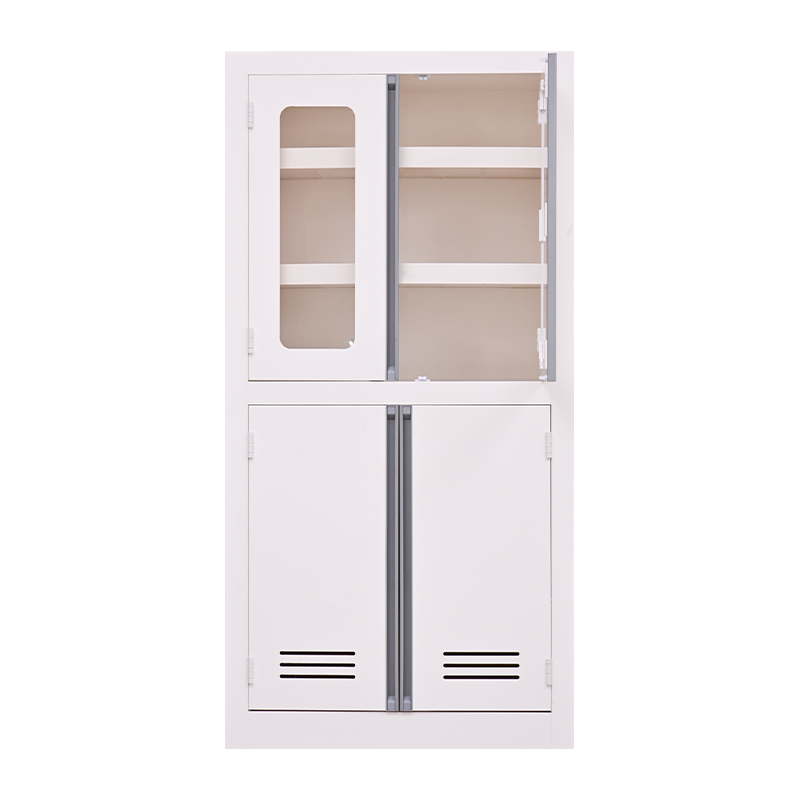
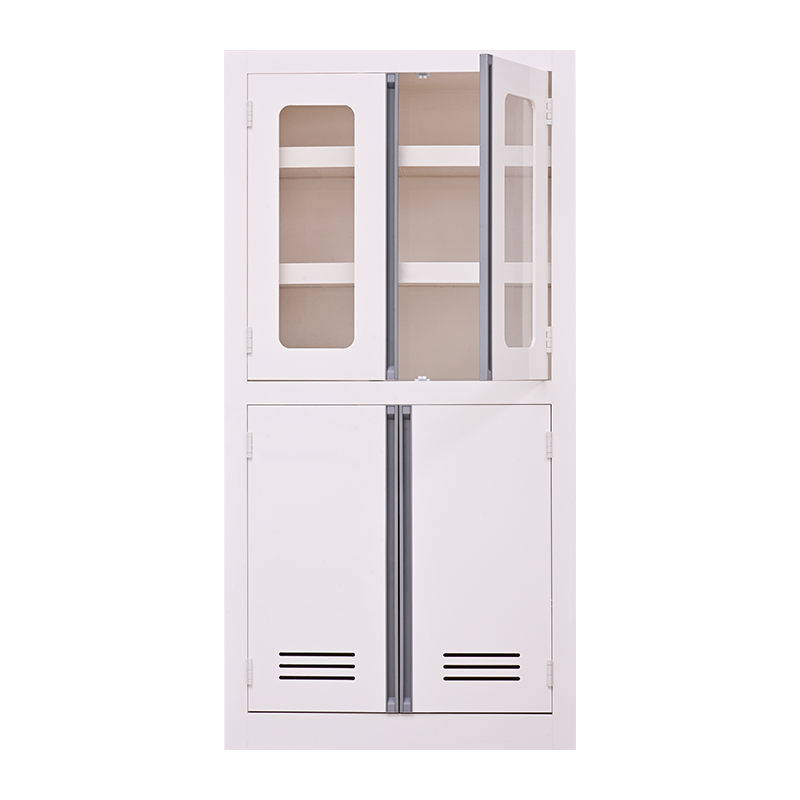
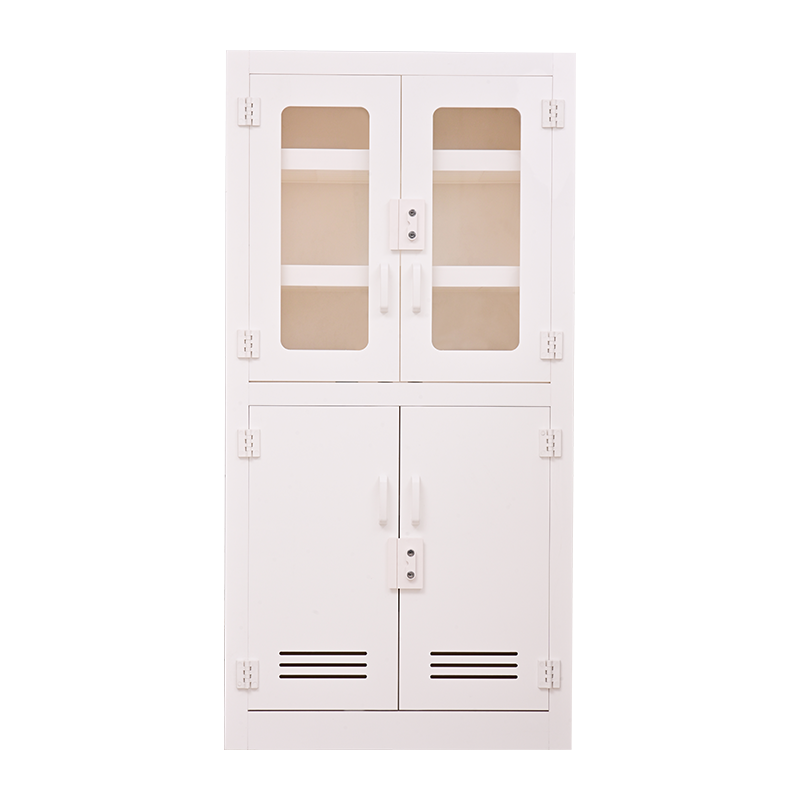
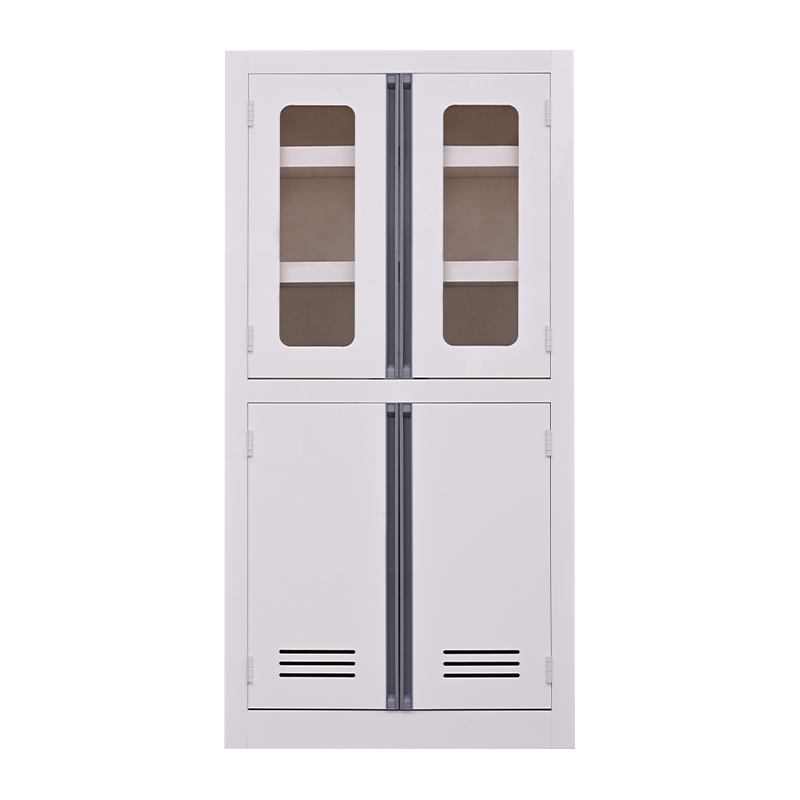
Shanghai Shujia Environmental Protection Engineering Co., Ltd. manufactures the Laboratory PP Ventilated Reagent Cabinet / Vessel Cabinet manufacturer range as part of our laboratory furniture programme: corrosion-resistant storage furniture with dedicated ventilation for reagents, chemicals and laboratory vessels. It is the cabinet we supply where open shelving is not acceptable — acids, bases, solvents and odorous reagents stay inside a sealed polypropylene body while each storage space is exhausted independently.
Our production is based in Jinshan District, Shanghai, across three production bases covering 40,000 m², with more than 200 people working in production, R&D, construction and service. Because we also build laboratory waste gas treatment and intelligent environment control systems, this cabinet is delivered as part of a coordinated furniture and exhaust package rather than a standalone box.
What We Build in This Product Family
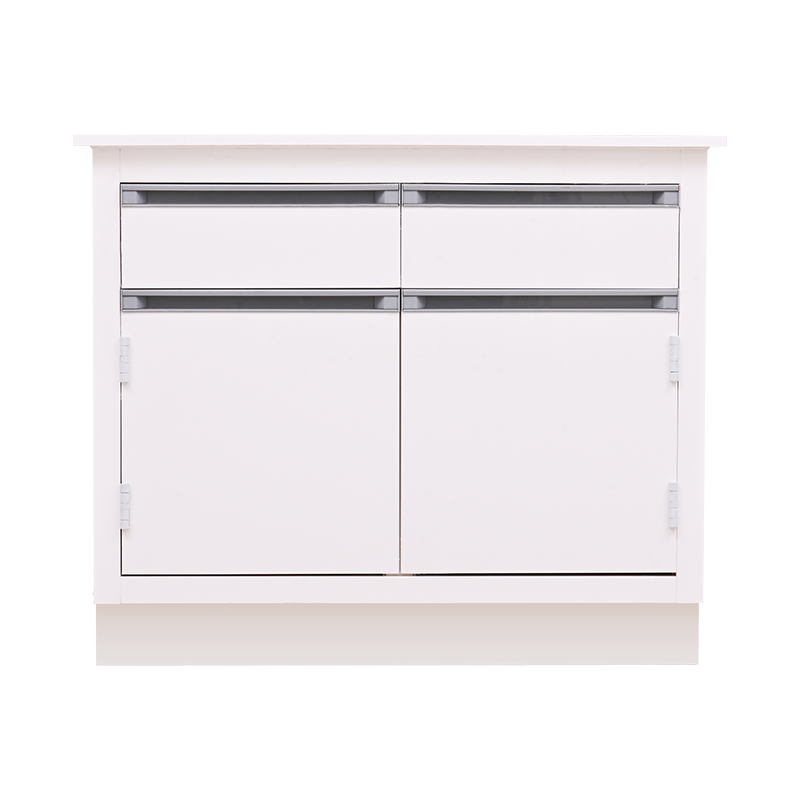
The range covers two-door and four-door ventilated reagent cabinets and vessel cabinets for larger glassware and containers. Every unit is built from ceramic-white PP, and the standard footprint is 900 × 450 × 1800 mm. Cabinets leave our factory either as a complete assembled unit or as loose parts for site assembly where access routes or lift dimensions make a finished cabinet impractical.
- Two-door cabinet — compact reagent storage for bench-adjacent positions and smaller preparation rooms.
- Four-door cabinet — higher storage density with separate compartments, each with its own ventilation path.
- Vessel cabinet — deeper internal arrangement for carboys, bottles and laboratory vessels that must stay upright.
- Shelving sets — 3-tier, 4-tier or 5-tier movable laminated shelves, freely combined inside compartments.
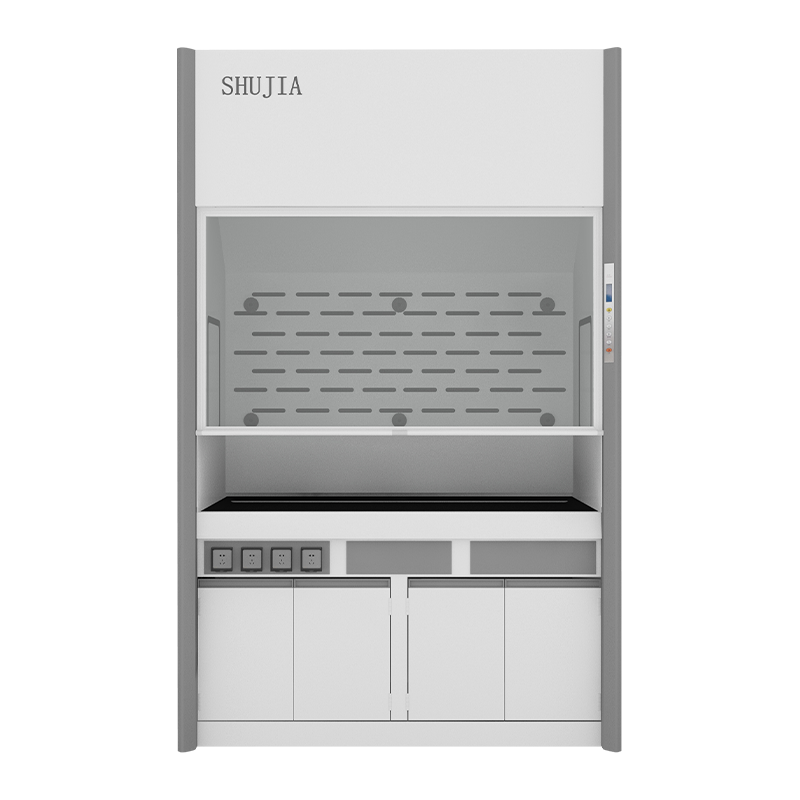
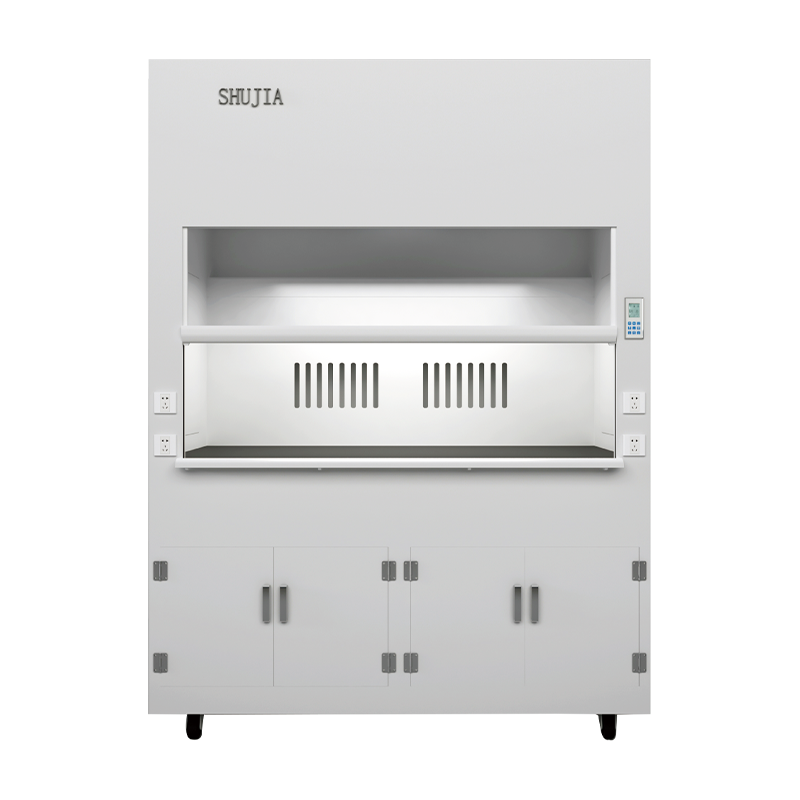
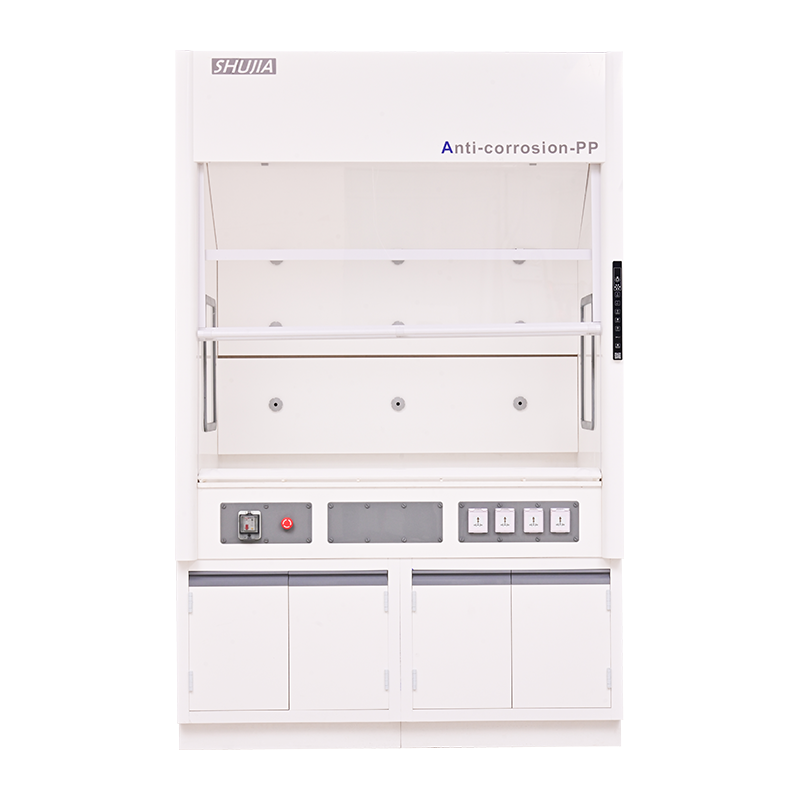
Where a project needs a wider ventilation concept, the cabinet is specified alongside our SJHB PP21 Supplemental Ventilation Cabinet and the fume hoods that serve the same room, so exhaust volumes and duct routes are planned together.
Material and Construction Detail
Body, doors, shelves, handles and hinges are all ceramic-white PP with strong acid, alkali and corrosion resistance. Components are seamlessly welded with same-color PP welding rod, which produces a robust, well-sealed body with no exposed metal fasteners to corrode in a fume-laden atmosphere.
- Adjustable laminated shelves with a vertical edge all around, welded and molded as one piece — no pieced-together scrap material.
- Shelves are fully movable and can be combined freely within a compartment; placed upright or inverted, the vertical edge gives a degree of spill prevention.
- Standard 5 mm tempered-glass window, U-shaped PP handles and PP hinges.
- Each storage space has independent ventilation rather than a single shared plenum.
Configuration Matrix
| Configuration item |
Standard build |
Options we produce |
| Door layout |
Two-door or four-door |
Custom widths and compartment splits |
| Shelf tiers |
3-tier movable |
4-tier and 5-tier movable shelves |
| Shelf construction |
Laminated PP, vertical edge all round, welded and molded as one piece |
Upright or inverted placement for spill containment |
| Viewing window |
5 mm tempered glass |
Window proportion adjusted to the door layout |
| Hardware |
U-shaped PP handles, PP hinges |
Same-color PP hardware throughout |
| Ventilation |
Independent ventilation per storage space |
Duct connection sized to the exhaust route |
| Overall size |
900 × 450 × 1800 mm |
Non-standard dimensions to suit the room |
| Delivery form |
Complete unit |
Loose parts for site assembly |
Application Fit Across Laboratory Types
The cabinet suits rooms where reagent inventory is held inside the working area rather than in a remote store. Matching the compartment layout to the reagent list and container sizes is what determines whether the cabinet works in daily use.
| Laboratory type |
Typical stored media |
Configuration emphasis |
| Chemical & petrochemical |
Acids, bases, solvents, corrosive reagents |
Full PP body, independent compartment exhaust, spill-edged shelves |
| Third-party testing |
Mixed reagent inventories, reference standards |
Multi-compartment layout with separate exhaust per space |
| Universities & research institutes |
Teaching and research reagents, glassware, vessels |
Two-door or four-door vessel cabinet with adjustable shelving |
| Biomedicine & CDC |
Disinfectants, staining reagents, sample vessels |
Sealed PP surfaces and an easy-clean interior |
Ventilation and Exhaust Integration
Independent ventilation per storage space is the defining feature of this cabinet. It keeps fumes contained at the source instead of letting them migrate into the room when a door is opened, and it allows a compartment holding aggressive reagents to be exhausted without affecting the rest of the cabinet.
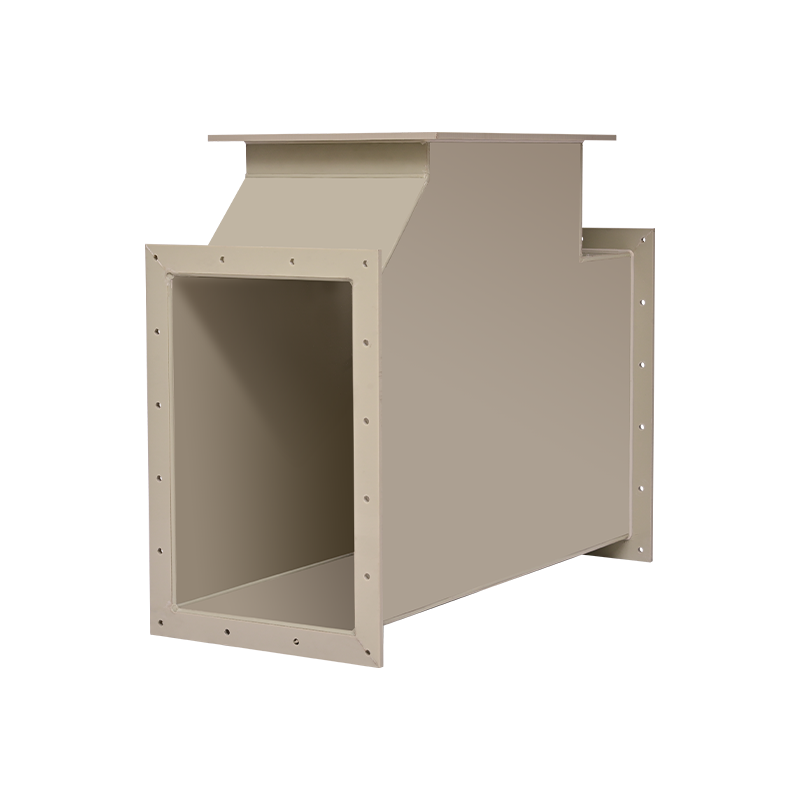
We connect the cabinet into the room exhaust through PP Air Duct and Accessories, sized to the available static pressure and the number of compartments served. Where the room also handles organic synthesis work, the same exhaust concept is applied to the SJHB PP23 Organic Chemical Synthesis Fume Hood, and downstream treatment — scrubber or activated carbon adsorption — is selected according to the reagent mix.
Quality Control and Acceptance
We select raw materials and inspect after each production process, then carry out 100% inspection of finished cabinets against the customer's requirements and the applicable international standard. Welded seams, shelf flatness, door alignment, hinge action and ventilation openings are checked before packing.
Shujia holds a Construction Industry Enterprise Qualification Certificate, a Work Safety Permit and a Business License, and we participate as a core unit in the formulation of T/SLEA 0011-2023 Laboratory Fume Hoods and T/SLEA 1011-2023 Technical Specifications for Laboratory Design and Construction — Part 1: General Technical Requirements. Acceptance documentation, packing list and installation drawings are issued with the shipment.
Information We Use to Configure Your Solution
Our proposal is built from the working point of the room, not from a catalogue number. The following inputs let us fix compartment layout, shelf tiers, duct connection and delivery form in one pass.
- Reagent and chemical list with container sizes, including carboys and vessels that must remain upright.
- Room layout, wall position, available height and door swing clearance.
- Exhaust route, duct connection point and available static pressure at the cabinet.
- Number of cabinets, compartment count and whether loose parts or a complete unit is preferred.
- Site schedule, installation responsibility and required documentation language.
Installation, Maintenance and Spare Parts
Installation is straightforward because the cabinet carries no metal frame to protect: it is levelled, fixed to the wall or floor as the layout requires, and the compartment outlets are connected to the duct run. Where cabinets arrive as loose parts, we supply assembly drawings and the same-color welding rod for site joints.
- Routine maintenance is limited to wiping PP surfaces, checking door and hinge alignment, and confirming that each compartment still draws air.
- Movable shelves can be repositioned or added later without modifying the cabinet body.
- Replacement shelves, handles, hinges and tempered-glass panels are supplied as spares.
Frequently Asked Questions
What is the standard size of the PP ventilated reagent cabinet?
The standard unit measures 900 × 450 × 1800 mm. We also produce non-standard widths and depths where the room layout or the vessel inventory requires it, developed from customer drawings or samples.
Which materials are used throughout the cabinet?
The body, doors, shelves, handles and hinges are ceramic-white PP with acid, alkali and corrosion resistance. Components are seamlessly welded with same-color PP welding rod, and the standard viewing window is 5 mm tempered glass.
How is ventilation arranged inside the cabinet?
Each storage space has independent ventilation, so compartments are exhausted individually rather than through one shared opening. This keeps fumes contained when a door is opened and allows different reagent groups to be stored in the same cabinet.
Can the cabinet be supplied as loose parts?
Yes. We deliver either a complete assembled unit or loose parts for site assembly, depending on access routes, lift dimensions and the installation sequence on site.
How do you control quality before shipment?
We inspect after each production process and carry out 100% inspection of finished cabinets according to customer requirements and the applicable international standard, covering welded seams, shelf flatness, door alignment, hinge action and ventilation openings.
What do you need to prepare a quotation?
Send the reagent and chemical list with container sizes, the room layout and wall position, the exhaust route and available static pressure, the number of cabinets and compartments, the preferred delivery form, and the site schedule. We reply to enquiries within 24 hours on working days.

 EN
 English
 عربى