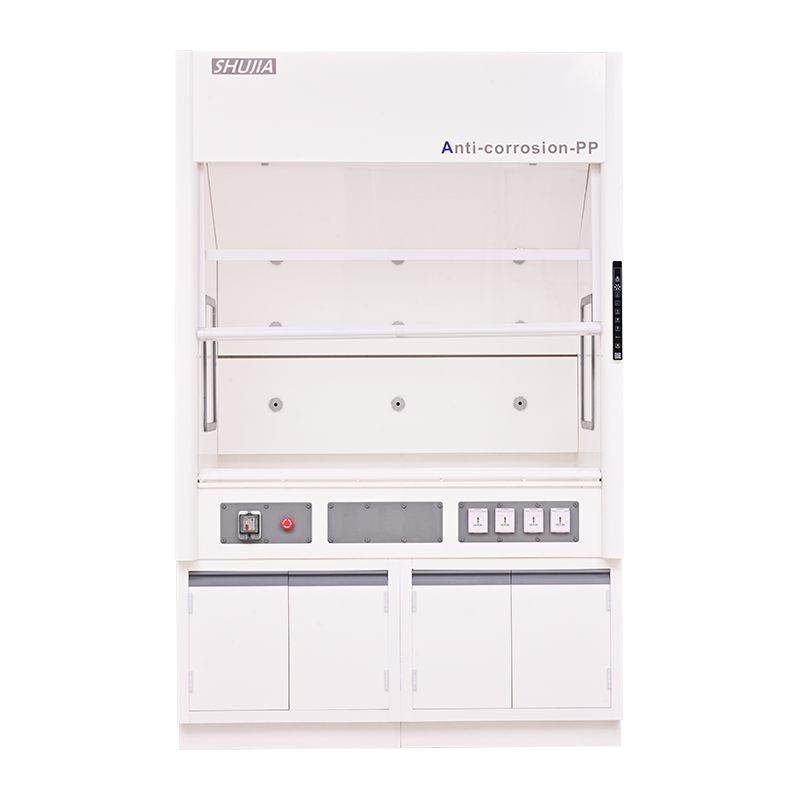
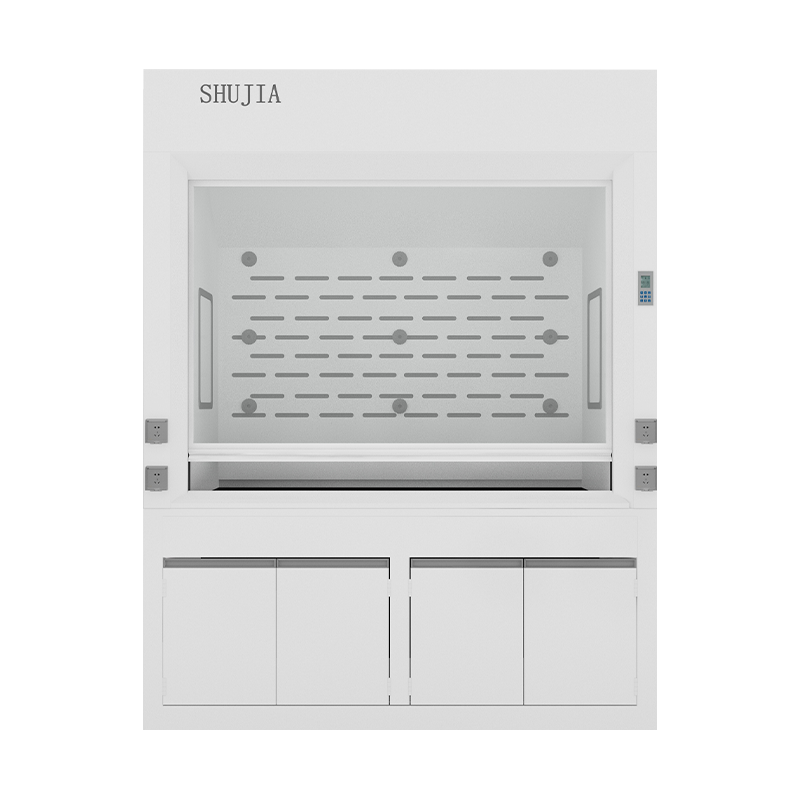
Laboratory waste gas treatment equipment answers a question that fume hoods leave open: where do the vapors go after they leave the building? A hood protects the person at the bench, but the exhaust still carries solvent vapors, acid mist, ammonia and odorous compounds through a duct and out of a stack. Without treatment, that exhaust becomes a neighbor's odor complaint, a permit violation or a corroded rooftop fan.
This article from Shanghai Shujia Environmental Protection Engineering Co., Ltd. explains what laboratory exhaust actually contains, how the main treatment technologies compare, which hidden metrics decide real-world efficiency, and how to size, buy and maintain a system that keeps passing emission checks.
KEY CONCLUSIONS
Five reasons treatment equipment belongs in every laboratory exhaust design
1. Hoods relocate pollutants; they do not destroy them. Every gram of solvent or acid that enters a hood is still in the exhaust stream when it reaches the roof.
2. Emission limits apply to the stack, not the bench. National and local air standards regulate what leaves the building, and inspectors measure it there.
3. One technology rarely covers a mixed exhaust. Acid gases, organic vapors and odors usually need a combined train, typically scrubbing followed by adsorption.
4. Airflow drives cost. Treatment units are sized by volume, so low-flow hoods and VAV control shrink the equipment you need to buy.
5. Maintenance decides performance. A saturated carbon bed or a drifting scrubber pH removes nothing, however good the equipment was on commissioning day.
What Laboratory Waste Gas Contains and Why a Fume Hood Is Not Enough
Laboratory exhaust is a mixture, and the mixture changes by the hour. A teaching lab may emit light solvents and a little hydrochloric acid. A pharmaceutical analytical lab may add acetonitrile, methanol and amines. An environmental testing lab running acid digestion can release nitric and hydrochloric acid mist continuously. Each pollutant family behaves differently and needs a different removal mechanism.
Acid Gases and Mist
Hydrogen chloride, nitrogen oxides, sulfuric and nitric acid mist and hydrofluoric acid vapor. They corrode ducts, fans and rooftop equipment, and they are best removed by alkaline wet scrubbing.
Alkaline Gases
Ammonia and volatile amines from reagent handling, kjeldahl analysis and biological work. These dissolve readily in acidic wash liquor, which is why they need a separate scrubbing stage from acid gases.
Volatile Organic Compounds
Methanol, acetone, hexane, dichloromethane, acetonitrile and many more. VOCs are the largest regulated category in most laboratory permits and are mainly captured by adsorption or, at higher loads, oxidation.
Odorous Sulfur Compounds
Hydrogen sulfide, mercaptans and thioethers. Odor thresholds are extremely low, so complaints can arrive even when measured concentrations are far below toxicity limits.
Particulates and Aerosols
Fine dust, droplets and fumes from weighing, grinding and heating. They foul adsorbent beds and packing, so a demister or filter ahead of the main treatment stage protects everything downstream.
Special Toxic Gases
Hydrogen cyanide, phosgene, arsine, chlorine and similar substances. These require case-by-case engineering, dedicated exhaust and, in some cases, specialized chemical neutralization.
Fume hoods move pollutants, they do not remove them
A single laboratory fume hood can exhaust 2,000 cubic meters of air per hour or more. Dilution makes the concentration at the stack look small, which is why some facilities assume treatment is unnecessary. The mass of pollutant leaving the building is unchanged, however, and regulators increasingly look at total mass emission rate and at nuisance effects such as odor, not only at concentration. When ten, twenty or fifty hoods share a building, the cumulative load is that of a small industrial source.
Other reasons a laboratory needs exhaust treatment
Compliance is only one driver. Acid mist shortens the life of fans, dampers and roof curbs. Untreated exhaust can be drawn back into fresh air intakes of the same or the next building, especially under certain wind conditions. Nearby residents and businesses complain about odor long before any measurement exceeds a limit. Treatment also protects maintenance staff who work on ducts and fans, and it is increasingly requested in environmental, social and governance reporting by pharmaceutical and chemical companies.
Laboratory Waste Gas Treatment Technologies Compared: Scrubbers, Carbon and Oxidation
Selecting a technology begins with the pollutant, then continues with concentration, humidity, temperature and duty cycle. The table summarizes typical performance of the main options. Figures are indicative design ranges and vary with equipment quality and operating conditions.
Technology
Best For
Typical Removal
Running Cost
Main Limitation
Packed-tower wet scrubber (alkaline)
Acid gases, acid mist
90 to 99% for acid gases
Moderate: chemicals, water, pump power
Poor on non-soluble VOCs; produces liquid waste
Packed-tower wet scrubber (acidic)
Ammonia, amines
85 to 98%
Moderate
Must be a separate stage from alkaline scrubbing
Activated carbon adsorption
Low-concentration VOCs, odors
80 to 95% when fresh
Medium: carbon replacement and disposal
Humidity sensitive, saturates, fire risk with some solvents
Impregnated carbon or alumina media
Specific acid gases, H2S, mercaptans
85 to 98% for target gas
Medium to high
Media is gas-specific and costly to replace
Catalytic oxidation or thermal oxidizer
Continuous, higher-concentration VOCs
95 to 99%
High: fuel or electricity
Poor fit for dilute, intermittent lab exhaust; catalyst poisoning
UV photolysis or low-temperature plasma
Light odor polishing
30 to 60%, highly variable
Low to medium
Can form by-products; not reliable as the only stage
Wet scrubbers for acid and alkaline laboratory exhaust
A packed-tower scrubber sprays circulating liquor over a bed of packing while the exhaust rises through it. Acid gases dissolve and react with a sodium hydroxide solution, while ammonia is captured by a dilute acid solution. Good design keeps pH in the correct window, typically around 8 to 10 for acid gas removal, and uses a demister to stop droplets leaving with the clean air. The scrubber also acts as a pre-treatment stage that protects the carbon bed downstream from corrosive gas.
Activated carbon for volatile organic compounds and odors
Carbon adsorption suits the dilute, intermittent organic loads typical of laboratories. Its weaknesses are well known: capacity falls when the gas is humid, light molecules such as methanol break through early, and highly reactive ketones can cause bed heating. Specify carbon type, bed velocity, residence time and a temperature sensor, and treat the carbon as a consumable with a planned replacement interval.
Why oxidation and plasma are rarely the first choice
Thermal and catalytic oxidizers perform best with steady, concentrated streams. Laboratory exhaust is large in volume, low in concentration and uneven in time, which makes heating the gas uneconomical. UV and plasma units are inexpensive to buy, but their removal efficiency swings widely with humidity and pollutant type, and in some cases they generate secondary products. They work as polishing steps after a robust main treatment stage, not as a replacement for one.
Hidden Metrics That Decide Real Laboratory Waste Gas Treatment Efficiency
Brochures quote the best removal efficiency the equipment has ever achieved. Real efficiency on your exhaust depends on the combination of technologies, and on a few operating variables that rarely appear in the quote. The chart compares indicative removal efficiency for a mixed acid and VOC laboratory exhaust across typical treatment routes.
Indicative overall removal efficiency on mixed acid and VOC exhaust
Percent removal of total pollutant load. Values are illustrative and depend on design, humidity and chemical mix.
UV or plasma only
Spray tower only
Carbon only
Scrubber plus carbon
Scrubber, carbon and monitoring
The final bar is higher not because of a new technology but because of monitoring. A system that detects breakthrough, pH drift or a failed pump is a system that keeps performing. Four more variables deserve attention.
Humidity
Carbon capacity drops markedly in air above roughly 50 to 60 percent relative humidity. A scrubber upstream saturates the air, so a demister and sometimes a gentle reheat stage are needed before the carbon bed.
Contact time and velocity
Packed sections are commonly designed around gas velocities of 0.8 to 1.2 m/s, and granular carbon beds around 0.5 m/s or lower. Undersized units run faster, and efficiency falls without any visible warning.
Scrubbing liquor control
pH sensors, automatic dosing and level control keep the liquor effective. Manual dosing is the most common reason scrubbers underperform after the first year.
Low and variable concentration
Adsorption works best at moderate loading. Very dilute exhaust gives short contact with little pollutant per kilogram of carbon, so source reduction and lower hood airflow improve the result as well as the cost.
Airflow is the cost multiplier
A scrubber tower and a carbon bed are sized by the volume of air they handle. Doubling exhaust airflow roughly doubles tower cross-section, carbon mass and fan power. This is why variable air volume hoods, low-flow designs and sash discipline reduce the cost of treatment equipment as well as building energy. Connecting hoods to a shared system through well-balanced ducts, with dampers that close when a hood is idle, shrinks the system further.
Where Laboratory Waste Gas Treatment Equipment Is Used: Demand by Sector
Demand follows regulation and laboratory density. The distribution below is an indicative estimate of where treatment equipment is installed. It shifts with the strength of local enforcement and the mix of industry in each region.
Indicative share of laboratory waste gas treatment demand by sector
Universities and research institutes: 26%
Pharmaceutical and biotech: 24%
Environmental, food and third-party testing: 16%
Chemical and new materials: 14%
Electronics and semiconductor: 12%
Hospitals, disease control and other: 8%
University and research laboratories
Campus laboratory buildings concentrate dozens of hoods in a single structure, often close to residential or teaching areas. Treatment is driven by environmental approvals for new buildings and by odor complaints. Exhaust mixes are broad, so a combined scrubber and carbon train, centrally installed on the roof or in a plant room, is the common solution.
Pharmaceutical and biotech facilities
Organic solvents dominate, with acids and amines contributing in analytical and synthesis labs. Operators typically require continuous monitoring, documentation and validation-friendly design, plus segregation of high-hazard streams. Carbon with online VOC detection or scheduled sampling is widely used.
Testing, chemical and electronics laboratories
Acid digestion for metals analysis, wet etching and cleaning processes generate steady acid mist, so wet scrubbing with corrosion-resistant materials such as polypropylene or fiber-reinforced plastic is the backbone of the system. Ammonia from nitrogen determination and organic solvents from extraction are handled in additional stages.
How to Select and Install Laboratory Waste Gas Treatment Equipment: Six Steps
Most underperforming systems were designed from a nameplate airflow and a guess about the chemicals. The sequence below starts from data and keeps the design traceable to the pollutants.
1
Survey the waste gas sources
List every hood, snorkel, canopy and storage cabinet vent. Record chemicals, annual consumption, operating hours and exhaust volume. Where possible, take stack samples to confirm concentrations rather than estimating them.
2
Map the emission rules that apply
Identify national and local limits for concentration, mass rate, odor and stack height, and any environmental approval conditions for the site. Treatment targets should be set from these numbers.
3
Design collection and segregation
Group compatible streams into separate ducts: acid, alkaline and organic. Keep incompatible chemicals apart, use corrosion-resistant duct material and size branches to hold transport velocity without noise.
4
Select the treatment train
A common laboratory configuration is acid or alkaline scrubber, demister, activated carbon bed, then fan and stack. Add a particulate pre-filter if aerosols are present, and an extra acidic stage for ammonia.
5
Specify fan, stack and monitoring
Choose a corrosion-resistant fan with a pressure margin for the treatment train, a variable speed drive to follow hood demand and a stack height that satisfies local rules. Stacks of at least 15 m and above nearby buildings are common requirements, subject to local standards. Add differential pressure, pH, temperature and, where justified, VOC sensors.
6
Commission, test and hand over
Balance airflow, confirm pressure drops, run an emission test at the stack by an accredited party, and train operators on dosing, carbon changes and alarm response. Keep baseline readings for later comparison.
Laboratory Waste Gas Treatment Cost and ROI: What Buyers Should Budget
Return on investment for pollution control is often framed as avoided penalties and avoided disruption, but there are direct cost levers as well. The cards show typical ten-year cost shares for a scrubber and carbon system serving a laboratory building. They are planning ranges and should be replaced with project data.
35 to 45%
Equipment and installation
Scrubber, carbon unit, ducts, fan, stack, controls, commissioning.
30 to 40%
Consumables and utilities
Carbon, scrubbing chemicals, water, fan and pump electricity.
20 to 25%
Testing, labor and disposal
Stack testing, inspections, spent carbon and liquor disposal.
Worked example: annual carbon cost for a small laboratory system
Consider a treatment system serving 3,000 m³/h for 2,000 operating hours a year, with an average VOC concentration of 20 mg/m³. Assume the carbon holds about 10 percent of its weight in dynamic capacity, costs 2.5 USD per kilogram and costs 1.0 USD per kilogram to dispose of as hazardous waste. These are illustrative assumptions.
Air treated per year: 3,000 × 2,000 = 6.0 million m³
VOC mass captured: 6.0 million × 20 mg/m³ = about 120 kg per year
Carbon needed at 10% capacity: about 1,200 kg per year
Annual carbon cost: 1,200 × (2.5 + 1.0) = about 4,200 USD
The example shows two things. First, carbon cost scales directly with the mass of solvent you emit, so reducing solvent use and capturing high-concentration streams at the source pays back every year. Second, the calculation depends on concentration and operating hours, which is why measured data from step one of the selection process matters more than any vendor rule of thumb.
What the avoided-cost side of ROI includes
Treatment reduces the risk of fines, enforced shutdown and delay to environmental acceptance of a new building. It also extends the life of exhaust fans, dampers and rooftop units that would otherwise be attacked by acid mist, and it removes the reputational cost of repeated odor complaints. These benefits are harder to quantify than a carbon bill, but they are usually the reason the budget is approved in the first place.
Maintenance and Compliance for Laboratory Waste Gas Treatment Systems
Treatment equipment fails quietly. A tower with a dry spray header still turns, a carbon bed past breakthrough still lets air through, and the fan runs as usual. Without a routine that checks the process variables, the first sign of trouble is often an inspector or a neighbor.
DAILY
Read differential pressure across each stage, check scrubber pH and liquid level, confirm pump and fan are running and note any alarms.
WEEKLY
Inspect spray nozzles for blockage, check dosing pumps and chemical tank levels, and drain condensate from the carbon unit.
MONTHLY
Clean demister and pre-filter, calibrate pH probes, check fan belts and bearings, and review carbon bed temperature records.
QUARTERLY
Screen the outlet with a portable VOC detector, sample carbon to estimate remaining capacity and inspect packing and ducts for scaling or corrosion.
ANNUALLY
Arrange stack emission testing by an accredited laboratory, replace carbon as scheduled, review logs and update the operating procedure.
Regulations and standards to check
Requirements differ by country, region and facility class, and many cities add stricter local standards. Confirm current limits with the environmental authority and quote them in the equipment specification. Documents commonly referenced in China include the following; buyers elsewhere should substitute their local equivalents.
GB 16297: integrated emission standard of air pollutants, including stack height and rate limits.
GB 37822: control of fugitive volatile organic compound emissions.
GB 14554: emission standard for odor pollutants.
Local municipal standards: city or provincial emission limits that may be stricter than national rules.
ANSI/AIHA Z9.5 and NFPA 45: laboratory ventilation and fire protection practice used internationally.
Hazardous waste rules: spent carbon and scrubber liquor are often classed as hazardous waste and need licensed handling.
Safety points specific to treatment equipment
Segregate streams so that incompatible gases never meet in a shared duct or tower. Fit temperature sensors in carbon beds, because adsorption of some ketones releases heat. Use explosion-protected fans where flammable vapor concentrations are possible, and provide sampling ports, safe access platforms and clear labelling at the stack. Treat the liquid from scrubbers as a waste stream with its own handling procedure rather than sending it directly to a drain.
Laboratory Waste Gas Treatment Equipment FAQ
Why is laboratory waste gas treatment equipment needed if the lab already has fume hoods?+
Fume hoods protect people in the room by moving contaminated air outside. They do not remove or destroy the pollutants. Treatment equipment captures acid gases, solvent vapors and odors before the exhaust is released, which is what air emission rules and neighbors care about.
Is activated carbon alone enough for a laboratory?+
Only for exhaust that contains little more than low-concentration organic vapors. Acid gases and ammonia damage standard carbon and are poorly removed by it, so most mixed laboratory exhaust needs a scrubber ahead of the carbon bed.
How do I know how large the treatment system must be?+
Size it on the total exhaust airflow at maximum realistic demand, the pollutant list and concentrations, and the required outlet limits. Overestimating airflow inflates cost, while underestimating it lowers efficiency, so measure hood flows and consider diversity between hoods that run simultaneously.
How often must activated carbon be replaced?+
It depends on the mass of solvent captured, the carbon type and the humidity. A calculation based on actual loading gives an interval, and periodic outlet testing confirms it. Waiting for an odor complaint is an unreliable indicator because breakthrough often starts before it can be smelled.
Can acid and organic exhaust share one duct and one treatment unit?+
They can pass through the same treatment train in sequence, but incompatible chemicals should not be mixed in shared ducts. Segregate the collection ducts where reactions or precipitates are possible, and send each stream through the appropriate stage before final polishing.
What happens to the liquid and spent carbon from the system?+
Both are waste streams. Scrubber liquor typically needs neutralization and licensed disposal or on-site treatment, and spent carbon is frequently classified as hazardous waste. Include collection, storage and manifest procedures in the operating plan from the start.
Do low-flow or VAV fume hoods really reduce treatment cost?+
Yes. Scrubber towers, carbon beds, ducts and fans scale with airflow, so cutting design airflow reduces equipment size, capital cost and fan energy. The pollutant mass stays the same, so concentration rises slightly, which often improves adsorption efficiency.
How is compliance proven to the authorities?+
Through stack emission test reports by an accredited laboratory, operating logs, maintenance records and waste manifests. Keep these documents together and dated. Inspectors usually ask for them in addition to measuring the outlet themselves.
Conclusion: Laboratory Waste Gas Treatment Equipment Completes the Safety Chain
A laboratory is only as safe and compliant as its exhaust path. Fume hoods protect people at the bench, and laboratory waste gas treatment equipment protects everyone beyond the building envelope, along with the fans, ducts and approvals that keep the laboratory operating. The need is not a matter of preference. It follows from the physics of exhaust, from emission rules applied at the stack, and from the practical reality that neighbors notice odor long before an analyzer does.
The most reliable systems share the same traits: a measured waste gas inventory, streams segregated by chemistry, a train that combines scrubbing with adsorption, airflow kept as low as safe hood operation allows, and a maintenance routine with sensors and records. Build these in at design stage and treatment becomes a predictable operating cost instead of a recurring emergency.
Need laboratory waste gas treatment equipment for a new or existing lab?
Share your hood count, chemical list and exhaust airflow with the engineering team at Shanghai Shujia Environmental Protection Engineering Co., Ltd. to receive a treatment train recommendation and a project quotation.
Request a Treatment Solution and Quote

 EN
EN
 English
 عربى
عربى
 +86-13472882970 (Mr. Zhang)