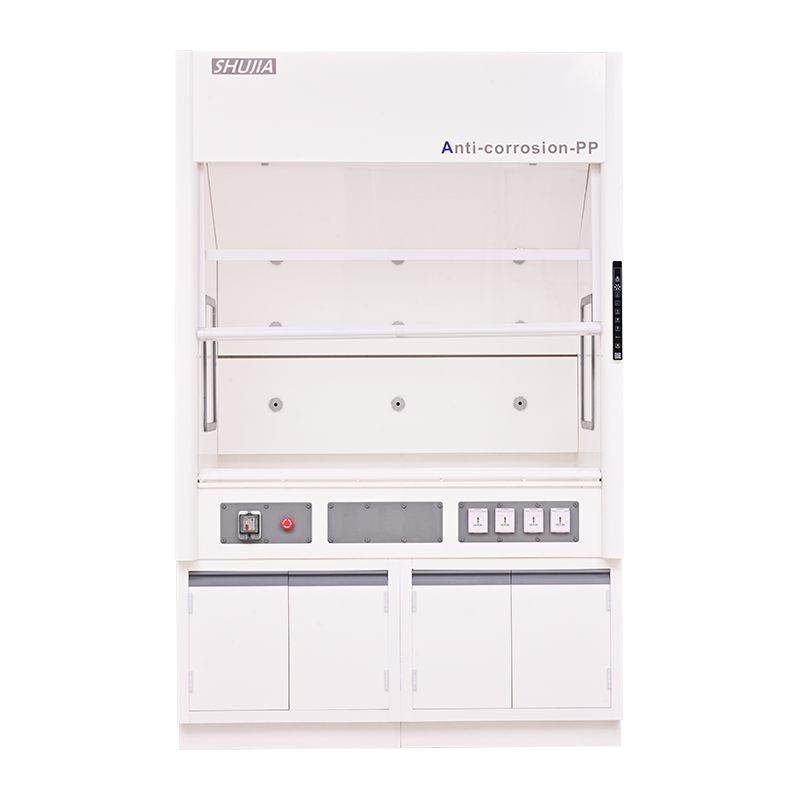
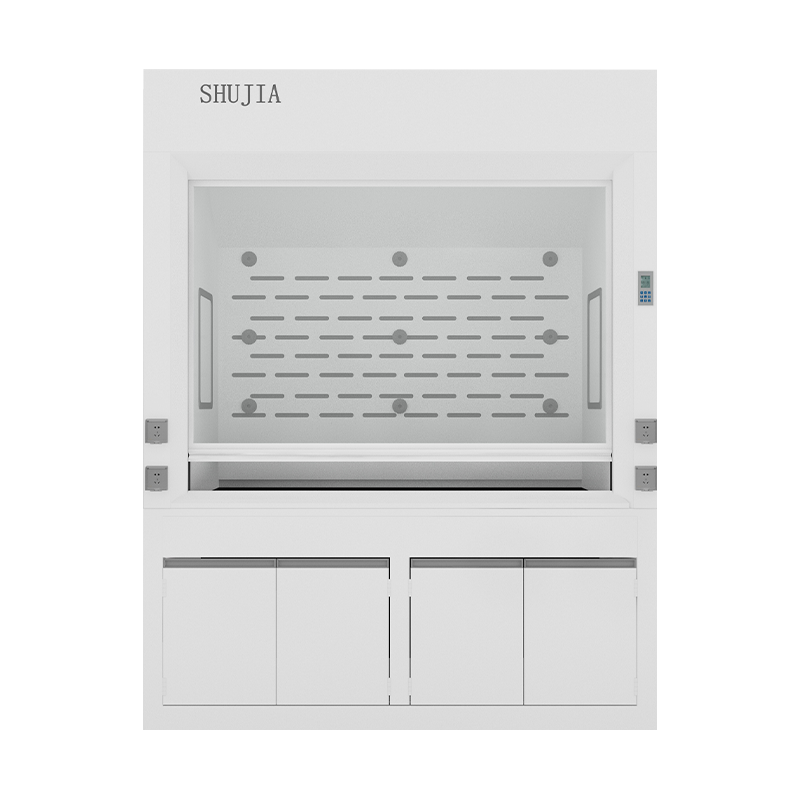
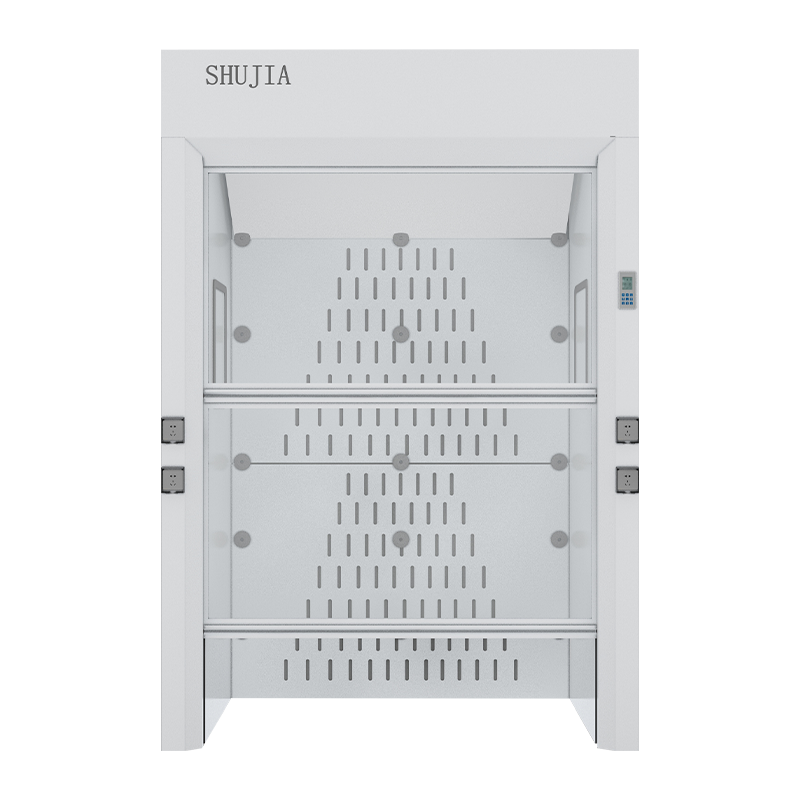
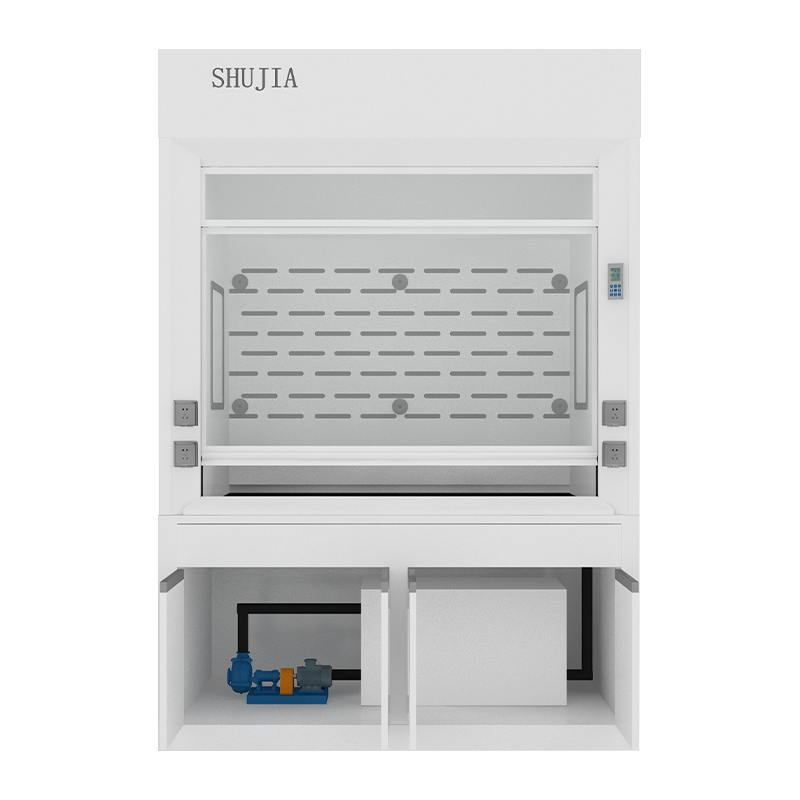
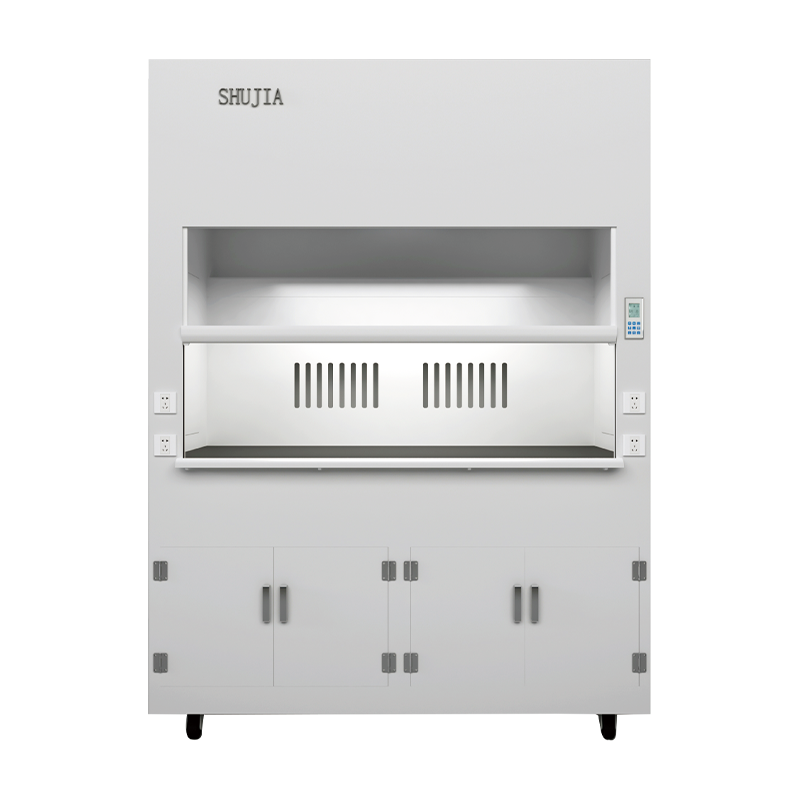
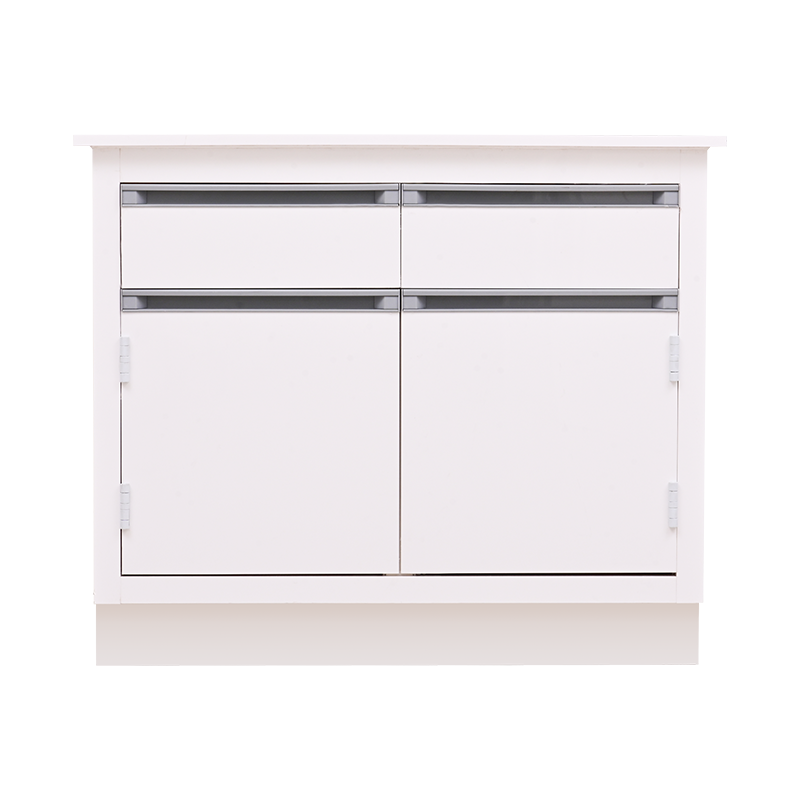
Chemical fume hoods are rarely bought on technical merit alone. A purchase order usually starts with a width, a price and a delivery date, while the details that decide safety and running cost sit in clauses that nobody reads until the hood fails its first test. By then the cabinet is bolted to the floor, the ducts are above the ceiling and the only remaining option is an expensive correction.
This checklist from Shanghai Shujia Environmental Protection Engineering Co., Ltd. is written for procurement managers, lab planners and EHS officers. It shows what to ask for, what to compare line by line, which numbers hide inside a quotation, and which acceptance conditions belong in the contract before money changes hands.
KEY CONCLUSIONS
Five checks that separate a safe, economical purchase from a costly one
1. Ask for proof of containment. Request the type-test report for the exact model and sash configuration, not a brochure statement that the hood is "compliant".
2. Start from the chemical inventory. Materials, hood type and exhaust treatment follow from what will be used inside, not from the lowest bid.
3. Compare complete systems. A quote without fan, ducts, controls and commissioning is not comparable with one that includes them.
4. Write acceptance criteria into the order. Face velocity, as-installed containment, alarm function and noise limits should be pass or fail conditions for final payment.
5. Price ten years, not day one. For ducted hoods, conditioned-air energy typically makes up the majority of lifetime cost.
What Chemical Fume Hoods Must Do: The Technical Basics Behind Every Quote
A chemical fume hood is a ventilated enclosure that draws room air across the work area and exhausts vapors, gases and fine particles away from the operator. Everything on a specification sheet exists to support that one function. Six features carry most of the weight, and each one leaves a trace in the quotation if you know where to look.
Controlled Face Velocity
Air speed across the sash opening keeps contaminants inside. Most guidance places the working range at 0.4 to 0.6 m/s (80 to 120 fpm). Check that the quote states the design velocity and the sash height it applies to.
Sash and Safety Glazing
The sash is a physical shield as well as a flow regulator. Look for laminated or toughened safety glass, a sash stop at the working height, smooth counterbalanced movement and an optional automatic closer.
Baffle and Airfoil Geometry
Rear baffles spread exhaust evenly through the chamber, and the airfoil sill smooths flow under the sash. Poor geometry creates eddies near the operator's chest even when the average velocity looks fine.
Chemical-Resistant Construction
Worktop, liner, fittings and fasteners must survive the actual chemicals. Epoxy resin, phenolic resin, stainless steel and polypropylene each suit different duties, and a mismatch shows up as corrosion within months.
Exhaust Path
Duct material, fan type, static pressure margin and stack height determine whether design airflow is achieved on site. Corrosion-resistant fans with the motor outside the airstream are standard for aggressive vapors.
Monitoring and Alarms
A continuous airflow monitor with audible and visual alarms warns users when the hood is no longer protecting them. Confirm the alarm threshold, the sensor type and how often it needs calibration.
How to read a fume hood specification sheet critically
A specification sheet describes the product. A test report describes the performance. Treat a statement such as "meets international standards" as an invitation to ask which standard, which edition, which test, which sash position and which laboratory performed it. A reputable supplier will answer in one email. A vague reply tells you something about the product, too.
Types of Chemical Fume Hoods Compared: Which Fits Your Chemistry and Budget
Not every chemical fume hood is a general-purpose cabinet. Some are designed for acid digestion, some for energy savings and some for situations where ducting is impossible. The table compares the common categories so that the right type is chosen before quotes are requested. Values are indicative and vary by manufacturer.
Hood Type
Typical Use
Main Advantage
Main Limitation
Cost Level
General-purpose ducted (CAV)
Teaching, routine synthesis, small labs
Simple, robust, easy to service
Constant exhaust, highest energy use
Medium
Variable air volume (VAV)
Multi-hood research and pharma labs
Airflow follows sash position
Needs controls and tuning
Medium to high
Low-flow high-performance
New builds with strict energy targets
Lower airflow with proven containment
Higher unit price, test evidence essential
High
Acid digestion hood
Metal analysis, environmental and food testing
Corrosion-resistant liner and wash-down options
Often needs a scrubber, special ducting
High
Walk-in hood
Pilot scale, large apparatus
Floor-mounted space for tall equipment
Very high airflow demand
High
Ductless filtered hood
Repetitive, defined low-hazard tasks
No ducting, easy relocation
Limited chemicals, filter saturation risk
Low
Chemical fume hood vs ductless fume hood: the decision rule
If the chemical list is fixed, short and documented, and a safety officer has confirmed that the filter media captures every substance on it, a ductless unit can be a sound choice. If the list changes, if toxic or unknown materials are involved, or if heat-generating equipment will sit inside the chamber, buy a ducted hood. Ductless hoods rely on a consumable that fails silently when saturated, while a ducted hood removes the problem from the building.
Materials that match the chemistry
Epoxy resin worktops cover most general chemistry and are the usual baseline. Phenolic resin handles heat better. Stainless steel suits clean or high-temperature work but can pit in chloride-rich acids, so it is not a universal answer. Polypropylene performs well with strong acids and digestion work. Perchloric acid requires a dedicated wash-down hood and non-combustible, non-reactive ductwork that is never shared with other hoods.
Hidden Metrics in Chemical Fume Hood Quotations That Decide Real Performance
Two quotations for apparently identical hoods can differ by thirty percent, and the cheaper one often omits exactly the items that matter on installation day. Beyond price, a handful of hidden metrics decide whether the hood performs as designed and what it costs to operate.
Airflow demand versus sash position on a VAV hood
On a variable air volume hood, the exhaust volume tracks the sash opening because face velocity is held constant. The chart shows indicative airflow as a percentage of the fully open value. Notice the floor at the right: a minimum flow is always maintained, so a closed sash does not mean zero exhaust. Check the minimum flow setting in the quote, because it affects both energy cost and the hood's ability to dilute residual vapors.
Indicative exhaust airflow by sash opening (VAV hood)
Percent of full-open airflow at constant face velocity. A minimum flow floor of roughly 25 to 30 percent is typical; actual settings vary by design.
Sash fully open
Sash 75% open
Sash 50% open
Sash 25% open
Sash closed (minimum flow)
Six numbers worth requesting in writing
Design and minimum airflow
Exhaust volume at full open and at the minimum setting, per hood. These feed the fan and make-up air calculation.
Hood pressure drop
Static pressure loss across the hood itself. Underestimating it leads to fans that cannot reach design airflow.
Noise at the sash
A target below about 65 dB(A) at the operator position keeps the lab workable. Request measured values, not estimates.
Illumination on the worktop
Values in the region of 700 to 1,000 lux are commonly specified, with vapor-proof luminaires and no shadows from the sash frame.
Tracer gas containment value
The measured leakage in ppm for the model type, plus the conditions: sash height, challenge rate and mannequin position.
Lead time and spares
Delivery schedule by component, plus the availability of sensors, sash cables and liners for at least ten years.
Cross-drafts: the problem the quote never mentions
Supplier tests are done in controlled rooms. Your laboratory has doors, ceiling diffusers and people. Good practice keeps cross-drafts below roughly 20 percent of the face velocity at the hood opening, so supply diffusers should be located away from the hood face and not aimed toward it. Raise this point at layout review, before the hood position is fixed on the drawings.
Where Chemical Fume Hoods Are Used: Demand by Industry
Knowing which sector your purchase resembles helps when asking suppliers for reference projects. The distribution below is an indicative estimate of where demand for chemical fume hoods is concentrated. Regional shares differ with local industry mix.
Indicative share of chemical fume hood demand by sector
Pharmaceutical and biotech: 27%
Chemical and petrochemical manufacturing: 22%
Universities and research institutes: 20%
Electronics and semiconductor: 11%
Environmental, food and testing labs: 12%
Hospitals and other: 8%
Pharmaceutical and chemical manufacturing laboratories
These buyers order in volume, so energy performance and documentation dominate the evaluation. Expect requests for VAV or low-flow hoods, full test records and compatibility with building management systems. Process development labs also tend to need walk-in hoods for scale-up equipment.
Universities and research institutions
Durability and flexibility matter most. Teaching labs need surfaces that tolerate rough handling and easy replacement of sashes and liners. Research labs need room to reconfigure services as projects change, so adjustable service fittings and spare capacity in the exhaust system are worth paying for.
Electronics, environmental and testing laboratories
Acid-intensive processes in semiconductor, metal analysis and food testing call for polypropylene or other corrosion-proof construction. Digestion work frequently needs a wash-down system and an acid-resistant exhaust path, and in some cases a scrubber before discharge.
Chemical Fume Hood Purchase Process: A Six-Stage Verification Timeline
Verification works best when it follows the project instead of being squeezed in at the end. The timeline below places each check at the stage where it is cheapest to act on.
1
Define requirements before requesting quotes
Prepare a one-page brief with chemical inventory, quantities, heat loads, equipment footprint, hood count, services, building exhaust capacity and energy goals. Quotes based on the same brief can actually be compared.
2
Compare quotes line by line
Create a matrix of scope items: hood, base cabinet, services, fan, ducts, dampers, controls, alarm, installation, commissioning test, training and documentation. Any blank cell is a hidden cost or a hidden risk.
3
Review test evidence and factory acceptance
Ask for the type-test report, material certificates and electrical documentation. For larger orders, inspect a unit at the factory or review photographs and measurements of a production sample.
4
Coordinate delivery and installation
Confirm floor loading, door and lift dimensions, service connection points and the sequence of ceiling, duct and electrical work. Hoods placed before supply air is balanced are tested twice.
5
Run the as-installed acceptance test
Measure face velocity at multiple grid points, visualize flow with smoke, run a tracer gas test where specified and verify alarm function. Tie final payment to a passing result.
6
Hand over, document and train
Collect operation manuals, wiring diagrams, test reports and spare-parts lists. Train users on sash handling, equipment placement and alarm response, and record who attended.
Clauses worth adding to the purchase order
Named standard and edition for design and testing.
Pass criteria for as-installed face velocity and containment.
Material specification for worktop, liner, fasteners and ducts.
Maximum noise level and minimum illumination values.
Responsibility for fan, duct and make-up air interfaces.
Warranty scope, response time and spare-parts availability.
Documentation package and user training before handover.
Retest obligation if the hood fails after installation.
Chemical Fume Hood ROI: Lifecycle Cost and Payback for Procurement Teams
A purchase price comparison tells a finance team very little about what a ducted hood will cost. Energy for conditioning exhaust and make-up air generally outweighs the cabinet over ten years. The cards below show typical planning ranges for a ducted installation. Replace them with local figures when building the budget.
20 to 30%
Equipment and installation
Hood, base units, fan, ducts, controls, commissioning.
55 to 70%
Energy and air conditioning
Heating, cooling, humidity control and fan power.
10 to 15%
Testing and maintenance
Annual verification, calibration, parts and servicing.
Worked example: upgrading ten constant-volume hoods to VAV
Assume each existing hood exhausts 2,400 m³/h around the clock, and VAV control with sash discipline reduces the average to 1,300 m³/h. Assume conditioning energy of 0.004 kWh per cubic meter and an energy price of 0.10 USD per kWh. These are illustrative assumptions, not forecasts.
Airflow reduction per hood: 2,400 - 1,300 = 1,100 m³/h
Annual volume saved: 1,100 × 8,760 = about 9.6 million m³
Energy saved: 9.6 million × 0.004 = about 38,500 kWh per hood
Annual saving, ten hoods: 385,000 kWh × 0.10 USD = about 38,500 USD
Assumed extra cost for VAV controls, 9,000 USD per hood: 90,000 USD, which is a simple payback of about 2.3 years
The result swings with climate, tariffs and real sash behavior. In a hot, humid region the saving rises quickly, and in a mild climate it takes longer. The point for procurement is not the exact payback figure but the habit of asking suppliers for airflow data at several sash positions so that the calculation can be repeated with your own numbers.
Maintenance and Compliance for Chemical Fume Hoods After Purchase
The acceptance test proves the hood works on the day it is handed over. Keeping it that way depends on a maintenance plan with named owners and dated records. Auditors and insurers ask for these records more often than for the original purchase documents.
BEFORE EACH USE
Confirm the airflow monitor is on and not in alarm, set the sash to the marked height and keep equipment at least 15 cm inside the sash plane.
MONTHLY
Inspect the sash, counterweights, liners, lights and service fittings. Remove stored items that block baffle slots.
QUARTERLY
Check face velocity against the setpoint, test alarms, and look at fan belts, vibration and duct joints.
ANNUALLY
Full performance test by a qualified technician, sensor calibration and a dated certification label on the hood.
AFTER CHANGES
Retest after moving furniture, changing diffusers, altering ducts or adding hoods to a shared exhaust.
Standards and regulations referenced most often
Applicable rules depend on your country, industry and building type. Confirm with local authorities and your EHS officer, and name the exact documents in the purchase order so that supplier and buyer test against the same reference.
ASHRAE 110: tracer gas method for testing fume hood performance.
EN 14175 series: European requirements and test methods for fume cupboards.
ANSI/AIHA Z9.5: laboratory ventilation, including commissioning and ongoing verification.
NFPA 45: fire protection for laboratories using chemicals.
SEFA 1 and SEFA 9: recommended practices for fume hoods and recirculating hoods.
OSHA 29 CFR 1910.1450: exposure to hazardous chemicals in laboratories.
Safe use rules that protect the investment
A chemical fume hood is a work area, not a storage cabinet. Bottles stacked across the rear baffle, large equipment pushed against the sash and sashes left wide open all undermine containment and waste energy. Provide proper chemical storage elsewhere, mark the working sash height clearly and make closing the sash a habit. Training is cheaper than any hardware upgrade.
Chemical Fume Hoods FAQ for Buyers
What should a quotation for chemical fume hoods include?+
At minimum: the hood with dimensions and materials, base cabinet, services, lighting, airflow monitor and alarm, fan, ductwork and dampers, controls if VAV, installation, commissioning test, training, documentation and warranty terms. Anything excluded should be listed so that responsibility is clear.
Which test report should I ask the supplier for?+
Request a containment type-test report for the exact model, such as an ASHRAE 110 tracer gas test or an EN 14175-3 type test, with sash height, test conditions and the testing organization stated. A report for a similar model is not evidence for yours.
How do I choose between epoxy resin, phenolic resin and stainless steel?+
Choose from the chemical list. Epoxy resin is the general-purpose option, phenolic resin tolerates higher temperatures, and stainless steel suits clean or hot processes but can corrode in some chloride-rich acids. For strong acids and digestion, polypropylene construction is often preferred.
Does my laboratory need a scrubber on the exhaust?+
It depends on the volume and nature of the vapors and on local emission rules. Acid digestion and some electronics processes often require wet scrubbing before discharge. Ask the environmental authority or your EHS adviser early, because a scrubber changes duct materials, fan selection and floor space.
Can chemicals be stored inside a fume hood?+
Keep storage to the minimum needed for the current task. Containers and apparatus block airflow, create turbulence and add to the fire load. Use ventilated chemical storage cabinets for stock, and never block the baffle slots.
How long does delivery and installation usually take?+
Standard models can ship in a few weeks, while customized or corrosion-resistant designs take longer. Installation depends heavily on duct and electrical readiness. Ask for a schedule by component and plan the building work in parallel so that the hood is not waiting for the fan.
What noise level is acceptable at the hood?+
A common specification target is below about 65 dB(A) at the operator position with the hood running at design airflow. Excess noise usually comes from undersized ducts, high air velocity at the fan or poorly balanced dampers, so address those before accepting a noisy installation.
Who is responsible if the hood fails the as-installed test?+
The contract should say. If the supplier provides the full system, the supplier corrects and retests at their cost. If building services are split among several parties, define interface responsibilities in advance so that a failed test does not become a dispute over whose airflow was wrong.
Conclusion: Buy Chemical Fume Hoods on Evidence, Not on Price Alone
The best chemical fume hoods purchases share the same habits. The chemical inventory is written down first, quotes are compared as complete systems, containment is proven by test reports and not by brochure language, and the acceptance conditions sit in the contract with money attached. Energy cost is treated as a design variable from day one, because over a decade it outweighs the cabinet itself.
Use the checklist in this article as a working document. Print the clause list, fill in the quote comparison matrix and require every supplier to answer the same questions. A supplier that welcomes this scrutiny is usually one that will still be responsive when the first annual test comes around.
Preparing a purchase order for chemical fume hoods?
Send your chemical list, hood count and room layout to the engineering team at Shanghai Shujia Environmental Protection Engineering Co., Ltd. for a technical review and a quotation that covers the complete system.
Request a Technical Review and Quote

 EN
EN
 English
 عربى
عربى
 +86-13472882970 (Mr. Zhang)