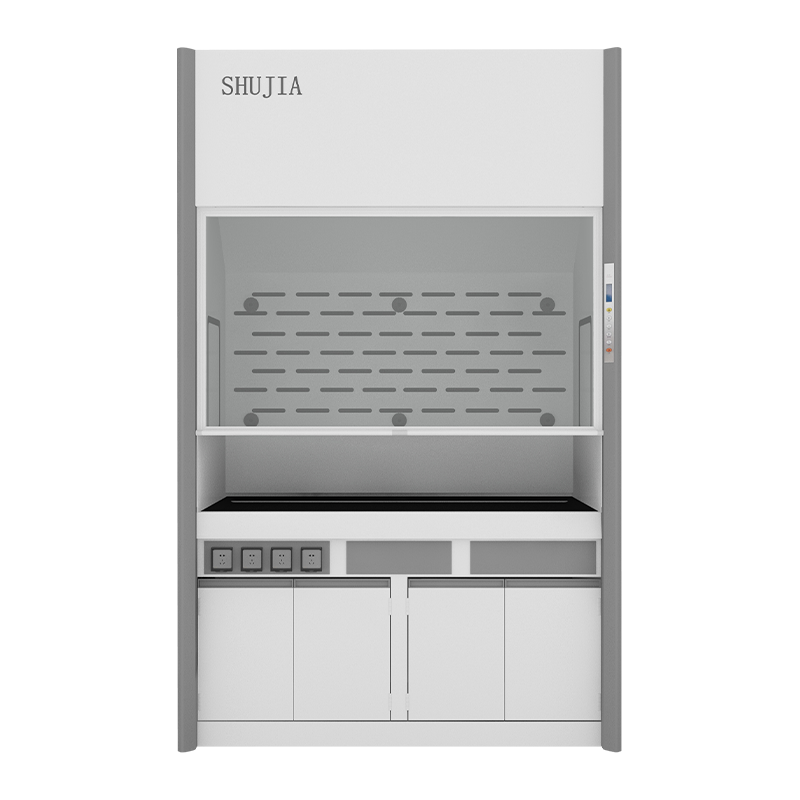
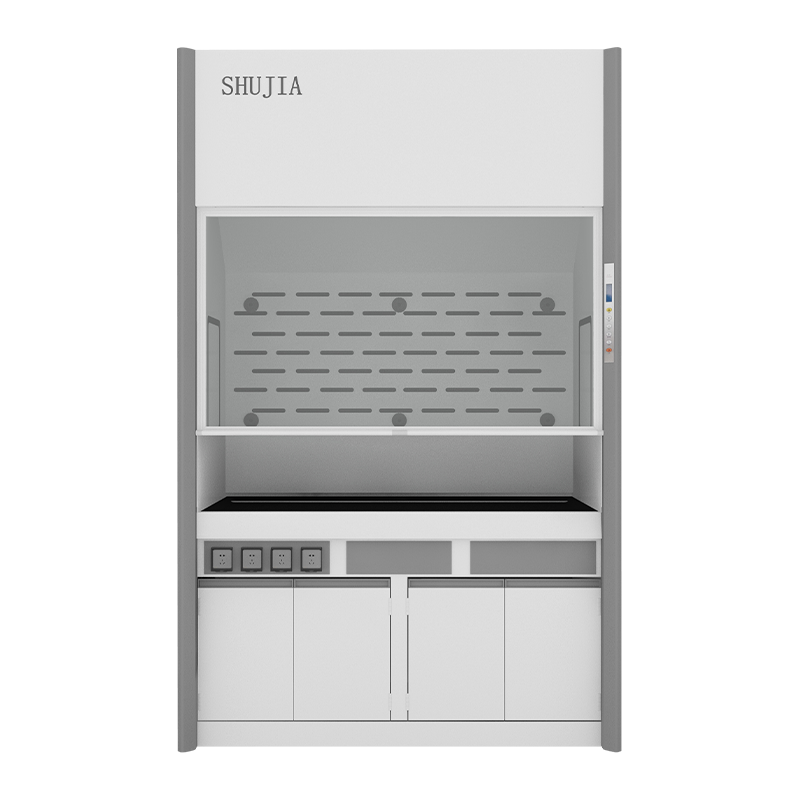
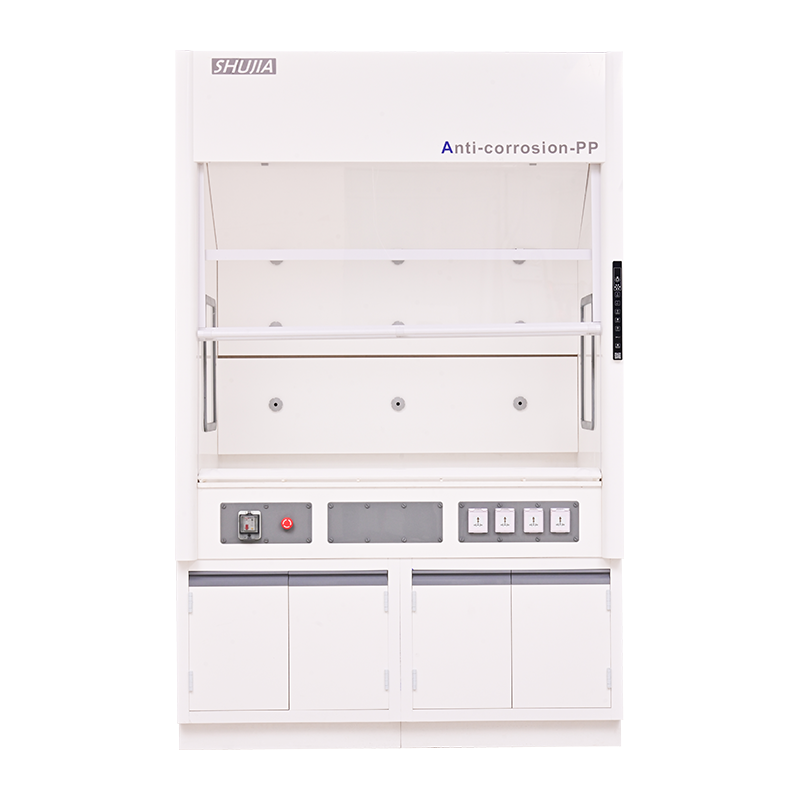
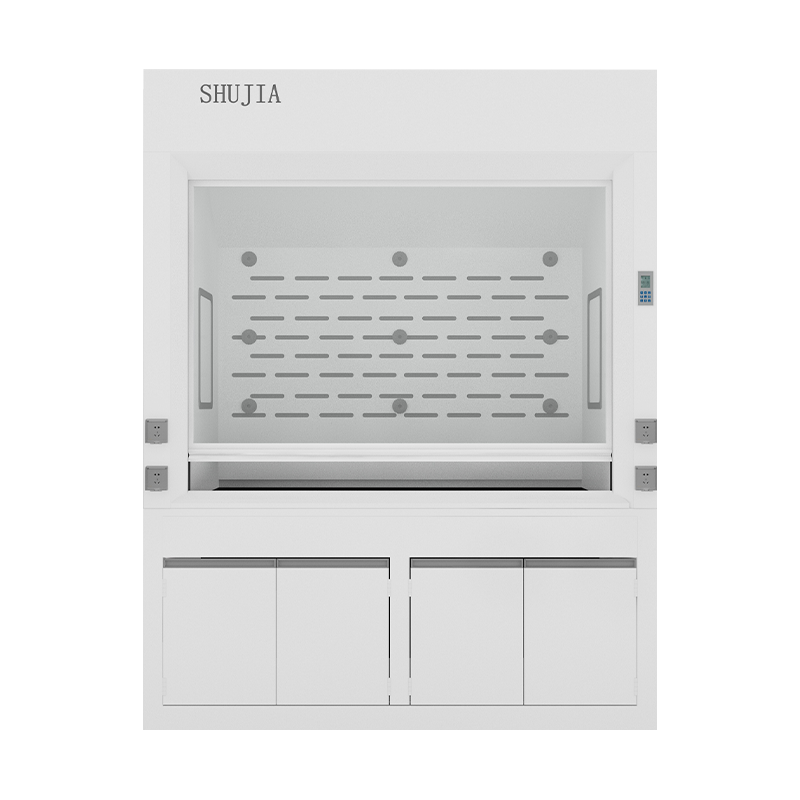
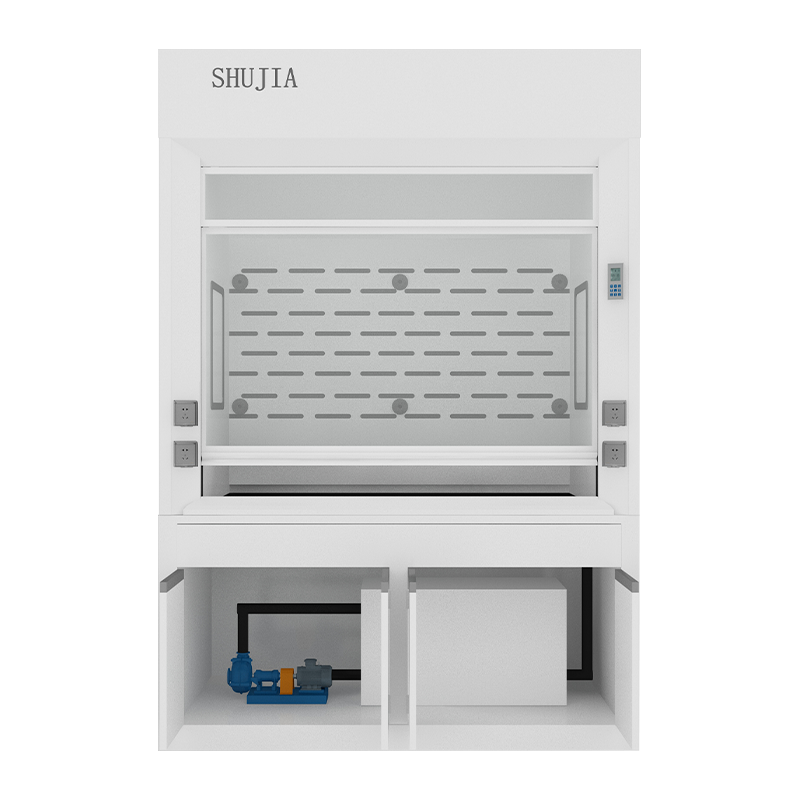
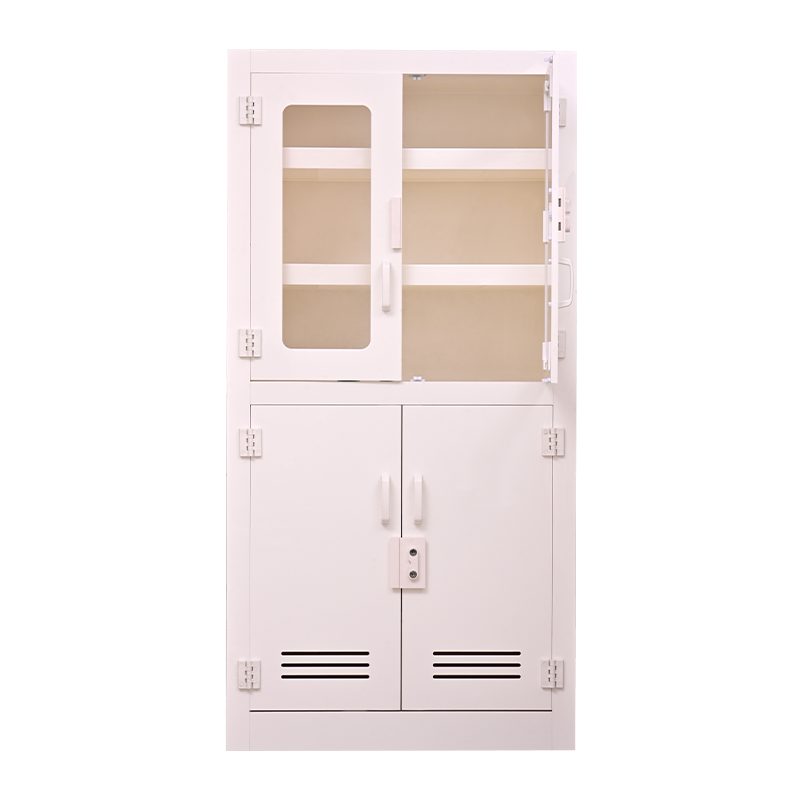
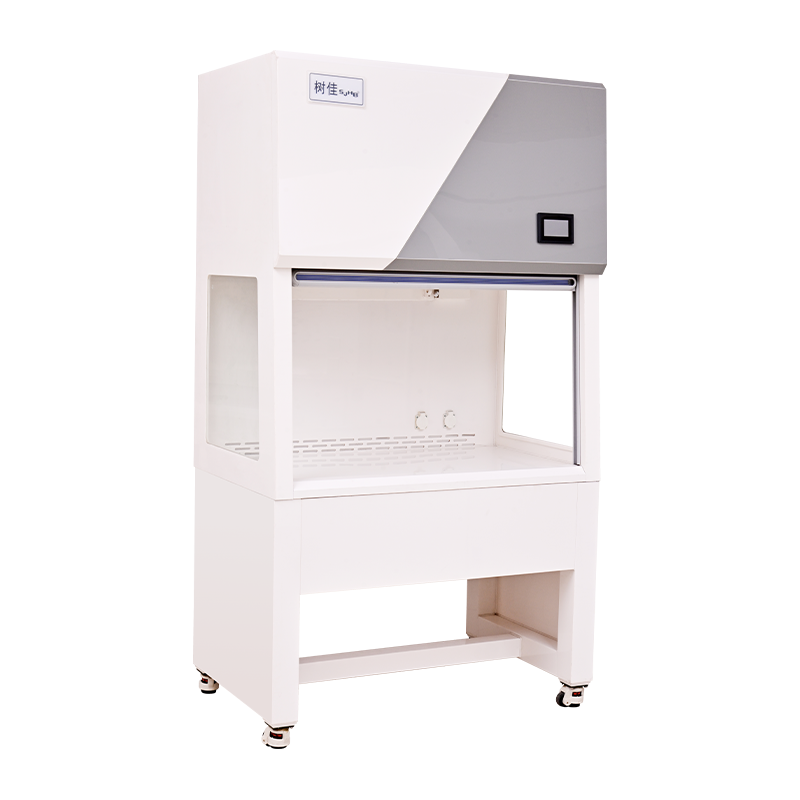
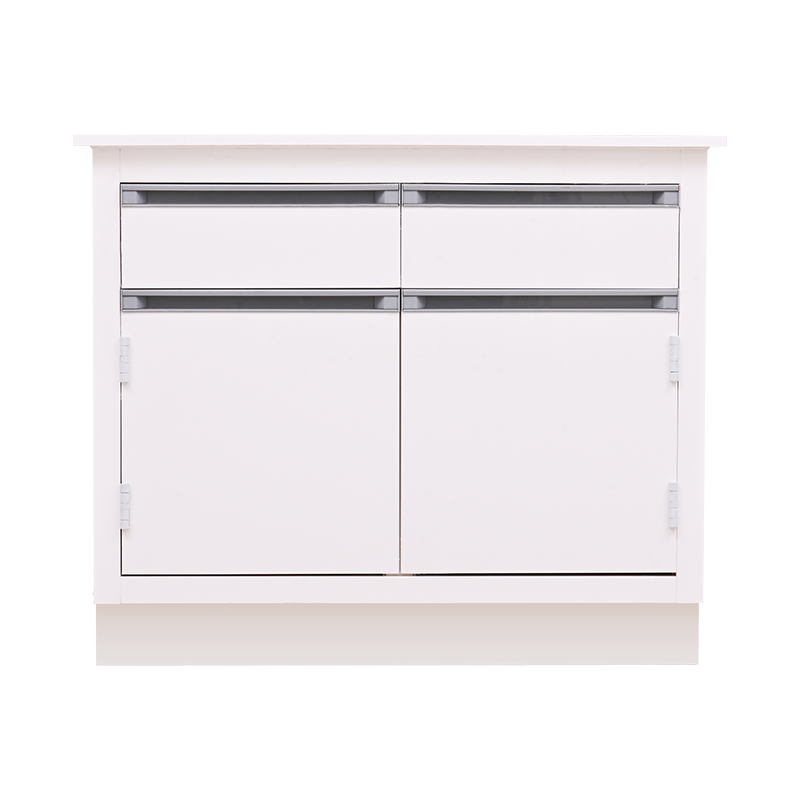
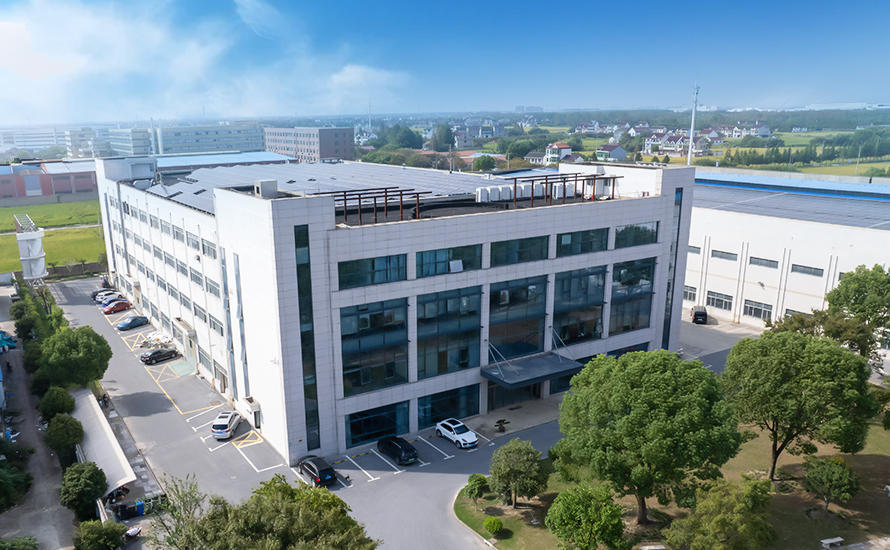
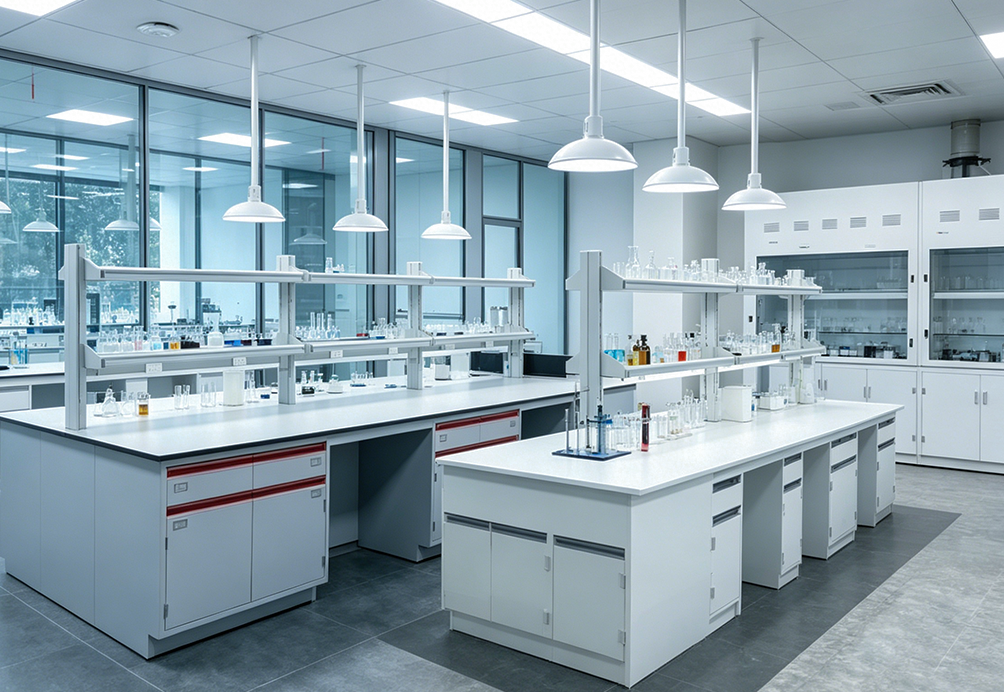
Shanghai Shujia Environmental Protection Engineering Co., Ltd. manufactures the Laboratory SJHB PP21 Supplemental Ventilation Cabinet manufacturer line within a broader laboratory furniture and ventilation programme that also covers fume hoods, reagent cabinets, ultra-clean platforms and complete waste-gas treatment. We build the PP21 for chemical synthesis laboratories where fume hoods stand in dense arrays and the exhaust air volume, rather than the bench count, drives the running cost of the room.
Each cabinet is produced in our own workshops from PP board, assembled as a complete unit, and released against the airflow and leakage figures confirmed for the project. The range serves third-party testing laboratories, chemical and petrochemical facilities, university research institutes, and biomedical and CDC sites.
Where the PP21 Fits in a Laboratory Layout
The PP21 is a supplemental ventilation cabinet, not a substitute for a fume hood. It is positioned in the same room as working hoods and supplies conditioned make-up air close to the operator's face, so the hoods draw from a stable, tempered source instead of pulling air across the bench from doors, corridors and diffusers.
- Dense hood arrays: rooms with several hoods running at once, where unbalanced make-up air causes cross-draughts and hood face velocity drift.
- Mild corrosive duty: routine organic and inorganic synthesis with acid and alkali vapour present, but without the perchloric or high-temperature load that requires a dedicated hood.
- Energy-sensitive buildings: the supplemental air path reduces the volume of treated room air that has to be exhausted and replaced.
- Retrofit and expansion: additional hoods added to an existing room where the original supply diffuser layout can no longer keep up.
Our Laboratory Furniture Range and Application Fit
The PP21 sits inside a family of PP and stainless laboratory products we manufacture and install. The table below shows how the range is normally split across a project.
| Product |
Construction Focus |
Typical Application Fit |
| SJHB PP21 Supplemental Ventilation Cabinet |
All-PP body, deflector and collection hood; face-level make-up air |
Synthesis rooms with multiple hoods and mild corrosive load |
| SJHB PP23 Organic Chemical Synthesis Fume Hood |
PP hood shell with dedicated exhaust path |
Organic synthesis benches with solvent vapour release |
| SJHB PP22 Dissolve Fume Hood |
PP hood shell for wet dissolution work |
Sample preparation and dissolution benches |
| SJHB PP24 Perchloric Acid Fume Hood |
PP hood shell with wash-down provision for perchloric duty |
Perchloric acid digestion and trace-metal preparation |
| PP Ventilated Reagent Cabinet / Vessel Cabinet |
PP carcass with continuous low-volume extraction |
Reagent and vessel storage inside the working room |
| PP Ultra Clean Platform / Semiconductor Ultra Clean Cabinet |
PP frame with filtered laminar supply |
Clean handling and particle-sensitive assembly |
| PP Anti-Corrosion Side Experimental Platform |
PP bench structure and work surface |
Side benches exposed to spillage and vapour |
| Customized Ventilation Room |
Room-scale PP enclosure and extraction |
Enclosed processes that cannot be handled at a bench |
PP Construction and Mechanical Design
The cabinet body, internal deflector and collection hood are made entirely of PP board, which gives the unit resistance to acids, alkalis and the corrosive condensate that collects in laboratory exhaust systems. There is no painted steel surface inside the air path to blister or corrode.
- Structural optimisation: the internal geometry is arranged to increase usable working space while keeping the body rigid under load.
- Load-bearing capacity: up to 200 kg on the working structure, which accommodates glassware, vessels and small equipment placed inside the cabinet.
- Air-supplement structure: make-up air is introduced close to the face, so the operator's movement disturbs the internal airflow far less than with a conventional rear or ceiling supply.
- Collection hood: shaped to gather waste gas across the full working width and pass it to the exhaust connection without dead zones.
Airflow, Containment and Energy Performance
Airflow is the specification that decides both safety and operating cost, so we publish the design point rather than a nominal fan figure. The values below are the confirmed performance basis for the PP21.
| Parameter |
Specification |
| Design air volume |
1,100 m³/h at 0.5 m/s |
| Leakage rate |
Below 0.05 |
| Energy performance |
Over 60% savings against conventional exhaust cabinets |
| Body, deflector, collection hood |
PP board throughout |
| Load-bearing capacity |
Up to 200 kg |
| Overall dimensions |
2350 × 850 × 1200 / 1500 / 1800 mm |
| Containment standards |
ASHRAE 110-2016 and JB/T 6412-1999 |
| Third-party testing |
CMA, CNAS and ILAC-MRA accredited laboratories |
The energy figure compounds across a room. Where a laboratory runs six or eight hoods, the make-up air path of the PP21 reduces the total conditioned air that has to be heated, cooled and dehumidified before it is thrown away.
Configuration Options and Dimensional Range
Three standard heights are produced — 1200 mm, 1500 mm and 1800 mm — all at 2350 × 850 mm footprint. Height selection follows the working posture, the equipment placed inside and the duct route above the cabinet.
- Height variant: 1200 mm for seated or low-level work, 1500 mm for general standing operation, 1800 mm where taller vessels or additional internal shelving are required.
- Exhaust connection: sized and positioned to suit the duct route and the fan duty confirmed for the room.
- Internal fit-out: shelving, baffles and service positions agreed against the process list.
- Utility provision: gas, water, drainage and electrical positions set out on the approved drawing before production.
- Custom build: non-standard widths, heights and internal layouts are developed from customer drawings or samples.
Controls, Ductwork and Line Integration
The PP21 is normally integrated into the room's exhaust system rather than operated as a standalone unit. We coordinate the cabinet with the ductwork, fan and control layer so that the design air volume is actually achieved at the face, not just at the fan inlet.
- Volume control: the cabinet can be paired with a VAV High-Speed Damper Actuator to hold face velocity as dampers and hood sashes move elsewhere in the room.
- Ductwork: PP duct and fittings from our PP Air Duct and Accessories range keep the whole exhaust path corrosion-resistant from cabinet to stack.
- Downstream treatment: where the exhaust carries VOCs, acid mist or odour, the line continues to a wet scrubber tower or activated carbon adsorption box before discharge.
- Interlocks: fan status, damper position and alarm signals are wired to the laboratory control panel so a loss of extract is visible at the bench.
Quality Control, Testing and Acceptance
We select raw PP material against a controlled specification and inspect at each production stage, not only at final assembly. Finished cabinets are inspected 100% against the customer's requirements and the applicable standard before they leave the workshop.
- Incoming material: PP board thickness, flatness and surface condition checked before cutting.
- In-process: welded and bonded joints, dimensional accuracy and structural rigidity verified stage by stage.
- Final: airflow and leakage performance confirmed against the design values of 1,100 m³/h at 0.5 m/s and a leakage rate below 0.05.
- Third-party evidence: containment testing carried out by CMA, CNAS and ILAC-MRA accredited laboratories, with reference to ASHRAE 110-2016 and JB/T 6412-1999.
- Project acceptance: site commissioning records, airflow readings and as-built drawings issued as part of the handover package.
Information We Use to Configure Your Solution
A PP21 quotation is built from the working point, the room layout and the exhaust strategy. The following inputs let us fix the model, the duct connection and the control interface without later revisions.
- Room plan with hood positions, bench runs and the intended PP21 location.
- Number of fume hoods sharing the room and their individual exhaust volumes.
- Chemicals handled and the expected corrosive or solvent load.
- Required height variant and any internal shelving or vessel clearance.
- Utility requirements — gas, water, drainage, electrical — and their positions.
- Duct route, available static pressure and fan arrangement.
- Control intent: constant volume or VAV, alarm and interlock requirements.
- Site conditions, delivery access and installation responsibility split.
- Acceptance requirements, documentation language and handover format.
Installation, Maintenance and Serviceability
We supply the cabinet as a complete assembled unit with the collection hood, deflector and air-supplement structure in place, so site work is limited to positioning, levelling, duct connection and utility tie-in. Installation can be handled by our own construction team or by the project contractor working to our drawings.
- Routine maintenance: periodic inspection of the PP surfaces, joints and the exhaust connection, plus airflow verification at the design point.
- Access: internal components are reachable without dismantling the cabinet body.
- Spare parts: PP panels, deflectors, collection hoods and control accessories are supplied from our own production.
- Documentation: installation drawings, operating notes and maintenance guidance are issued with the delivery.
- Packaging and delivery: units are protected for transport and packed to the agreed delivery scope, with the shipping split confirmed on the order.
Frequently Asked Questions
Is the PP21 a replacement for a fume hood?
No. It is a supplemental ventilation cabinet that supplies make-up air and assists exhaust in a room already equipped with fume hoods. Containment of hazardous work remains with the hood, and the PP21 is specified alongside it.
What airflow and leakage figures does the cabinet hold?
The design air volume is 1,100 m³/h at 0.5 m/s, with a leakage rate below 0.05. Both values are confirmed on the finished unit before dispatch and re-verified during site commissioning.
Which sizes are available?
Standard production covers 2350 × 850 mm in three heights: 1200 mm, 1500 mm and 1800 mm. Other dimensions and internal layouts are developed from customer drawings or samples.
How much energy does the supplemental air path save?
Measured against conventional exhaust cabinets, the PP21 delivers over 60% energy savings. In rooms with multiple hoods the saving scales with the number of units, because less conditioned room air is exhausted and replaced.
What testing evidence accompanies the cabinet?
Containment performance is verified by third-party laboratories accredited to CMA, CNAS and ILAC-MRA, with reference to ASHRAE 110-2016 and JB/T 6412-1999. Test documentation is issued with the project handover package.
Can the cabinet be integrated with VAV control and waste-gas treatment?
Yes. We coordinate the PP21 with VAV damper actuation, PP ductwork, anti-corrosion fans and downstream scrubber or carbon adsorption stages so the exhaust path is engineered as one system from bench to discharge.

 EN
 English
 عربى