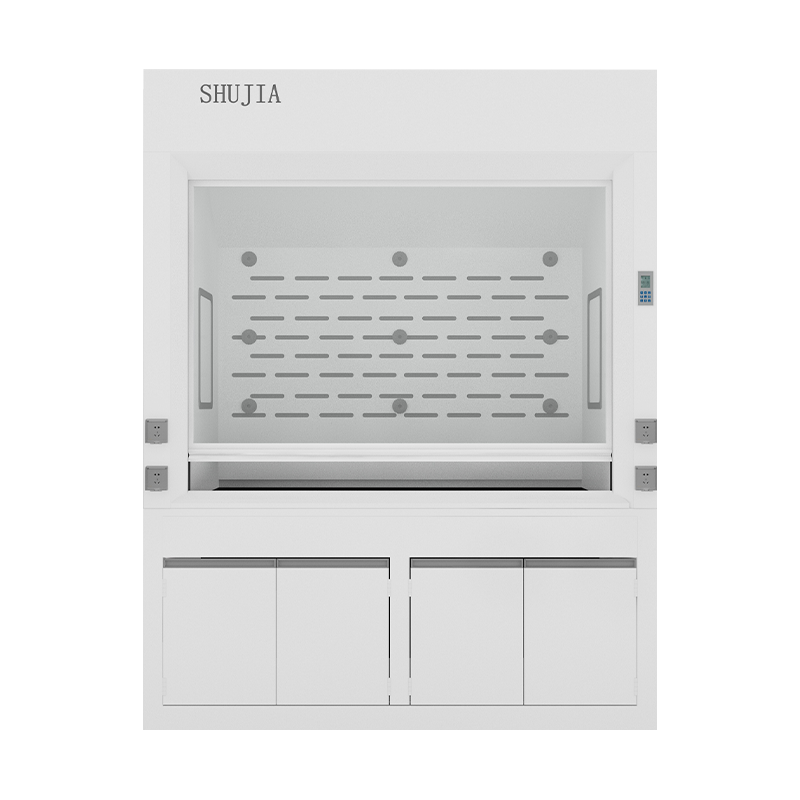
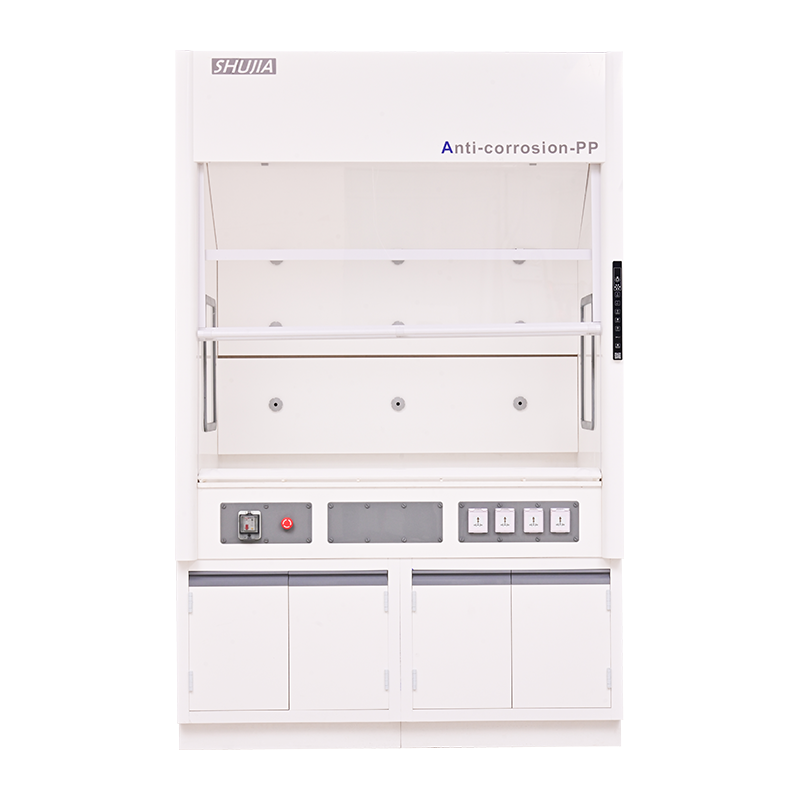
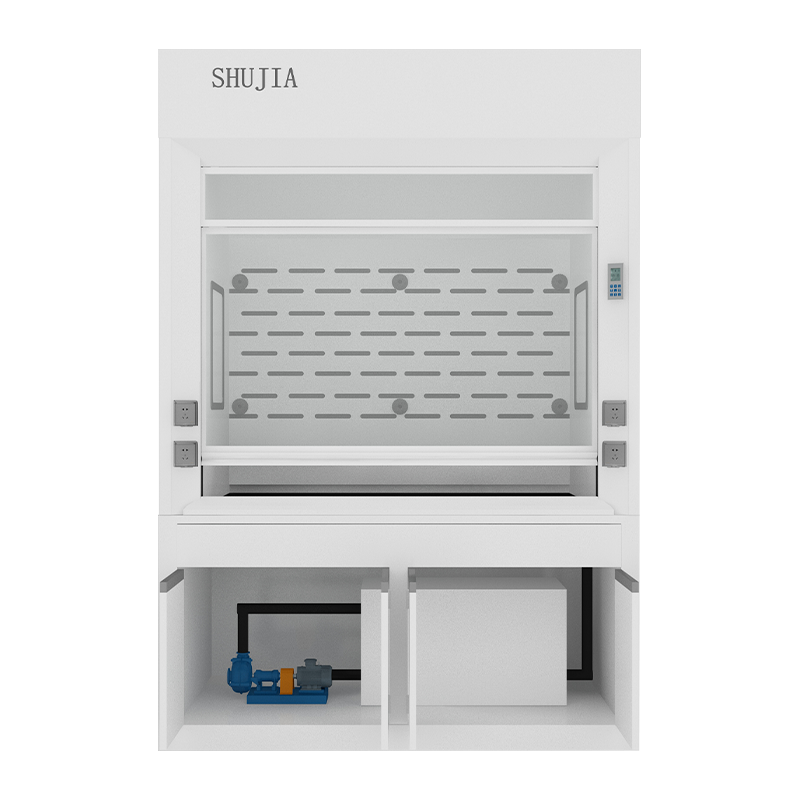
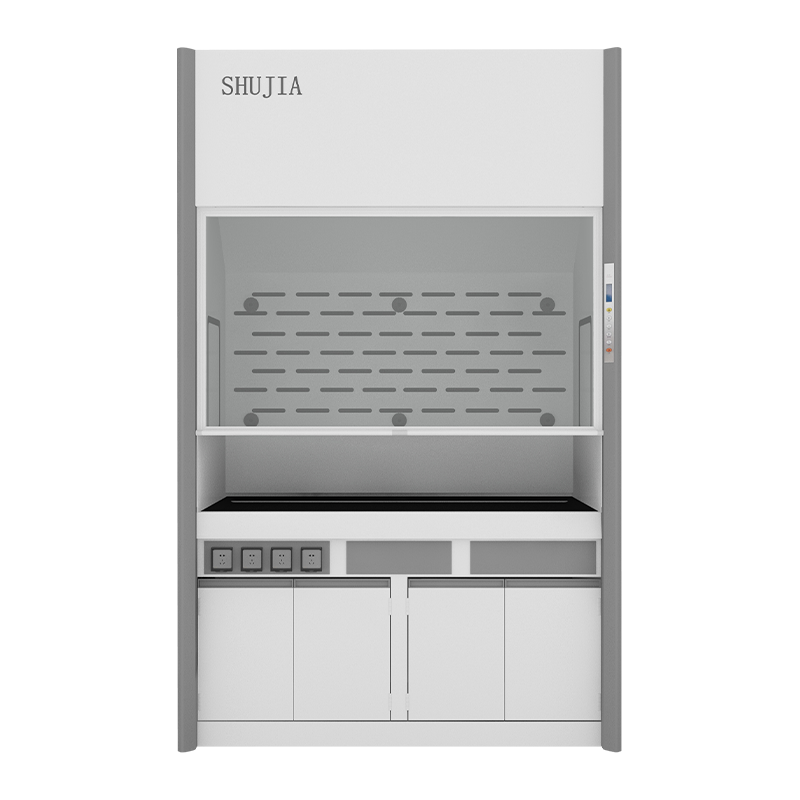
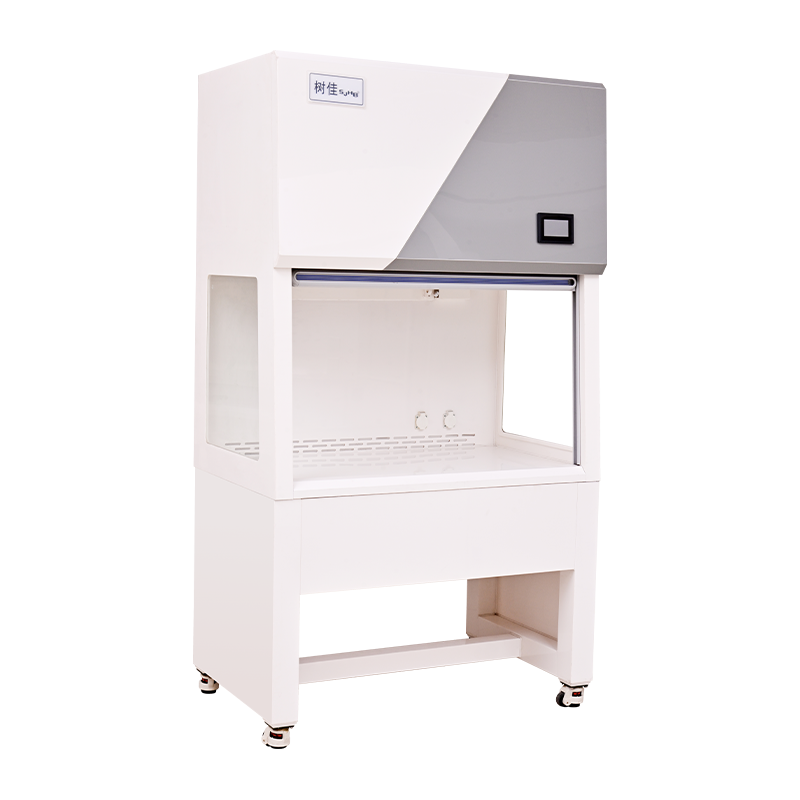
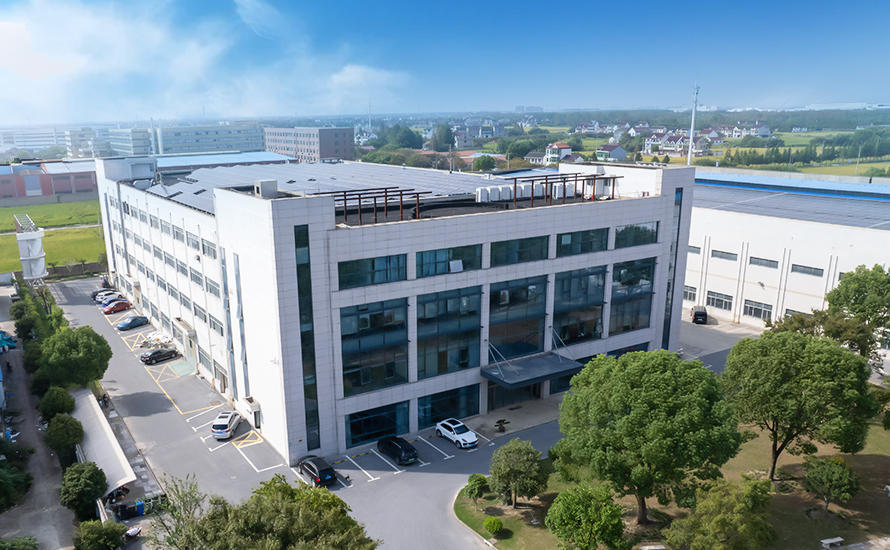
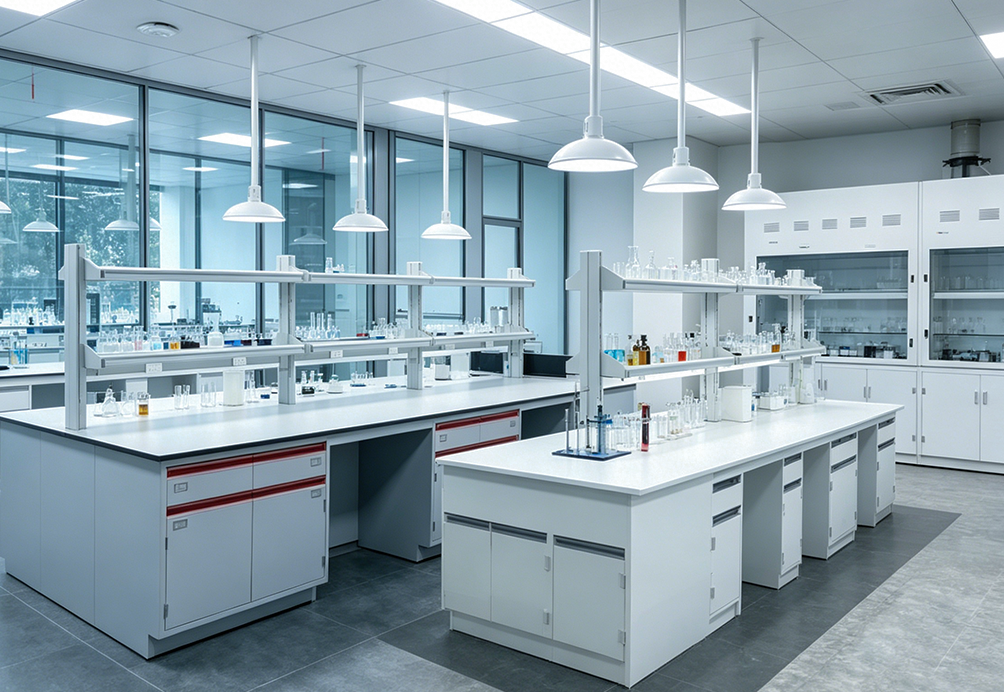
Shanghai Shujia Environmental Protection Engineering Co., Ltd. manufactures the Laboratory SJHB PP22 Dissolve Fume Hood for laboratories that run high-temperature digestion, wet chemical analysis and ICP sample preparation. The hood belongs to our Laboratory Furniture range, and it is engineered to sit inside a complete exhaust chain that we also build — ductwork, fans, scrubbers and adsorption units.
We have produced laboratory ventilation and environmental protection equipment from our Shanghai production bases since 2012, and we build the PP22 as a corrosion- and heat-resistant enclosure rather than a general-purpose bench hood. The design point is a working chamber that tolerates concentrated acids, alkaline digestion reagents and hot plates without losing airflow control.
Where the PP22 Fits in a Digestion Workflow
A digestion bench concentrates three stresses in one place: aggressive reagent vapour, radiant heat from hot blocks, and heavy glassware loads. The PP22 is configured to handle all three inside the same cabinet, which is why it is specified for physical and chemical analysis rather than for solvent handling alone.
- ICP and AAS sample preparation with mixed-acid digestion
- Kjeldahl and wet-ash digestion programmes
- Trace-metal analysis where cross-contamination must stay controlled
- Environmental monitoring and third-party testing benches
Because the main body is flame-retardant and corrosion-resistant, and the deflector and collection hood are specified for corrosion and high temperature, the hood keeps its geometry in service instead of warping or blistering above a hot block.
Our Corrosion-Resistant Laboratory Range
The PP22 is one model in a family of polypropylene and corrosion-resistant furniture we build for the same class of laboratory. Each type covers a different bench activity, and we combine them into one ventilation scheme when a project needs several work zones.
| Product |
Typical Bench Activity |
Construction Focus |
| SJHB PP22 Dissolve Fume Hood |
High-temperature digestion, ICP preparation, wet analysis |
Flame-retardant corrosion-resistant body, heat-resistant deflector and collection hood |
| SJHB PP23 Organic Chemical Synthesis Fume Hood |
Organic synthesis and solvent-based reactions |
Corrosion-resistant enclosure for sustained solvent vapour exposure |
| SJHB PP24 Perchloric Acid Fume Hood |
Perchloric acid digestion and trace analysis |
Wash-down internal surfaces for oxidiser service |
| SJHB PP21 Supplemental Ventilation Cabinet |
Auxiliary exhaust for instruments and small apparatus |
Compact corrosion-resistant exhaust enclosure |
| Customized Ventilation Room |
Walk-in enclosures and large digestion lines |
Site-built enclosure matched to the room layout |
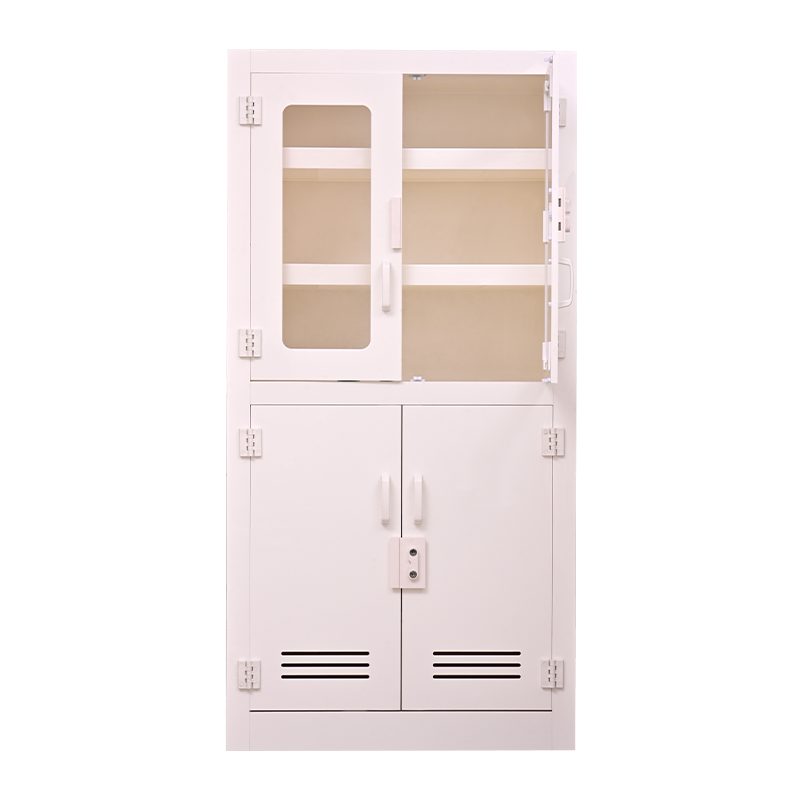
| PP Ventilated Reagent Cabinet / Vessel Cabinet |
Acid and reagent storage with continuous exhaust |
Vented polypropylene storage body |
| PP Anti-Corrosion Side Experimental Platform |
Side bench work next to the hood |
Acid-resistant bench and support frame |
| PP Ultra Clean Platform / Semiconductor Ultra Clean Cabinet |
Clean work zones adjacent to wet chemistry |
Controlled-particle working surface |
Construction Details That Decide Service Life
Digestion hoods fail at the moving parts and at the liner long before the outer shell gives trouble. We specify the PP22 around those two points.
- Main body: flame-retardant, corrosion-resistant material that resists acids, alkalis and heat
- Deflector and collection hood: corrosion- and high-temperature-resistant material, so the airflow path survives radiant heat from hot blocks
- Sash transmission: corrosion-resistant polymer fibre cable, keeping the moving parts reliable in aggressive air
- Anti-backflow device: safeguards against reverse airflow into the working chamber
- Structure: rated for a working load of up to 200 kg
Critical Specifications
| Parameter |
Value |
| Design air volume |
1,350 m³/h |
| Face velocity |
0.5 m/s |
| Working load capacity |
Up to 200 kg |
| Harmful-gas leakage rate |
Below 0.05 |
| Overall dimensions |
2350 × 850 × 1200 / 1500 / 1800 mm |
| Standards applied |
ASHRAE 110-2016; JB/T 6412-1999 |
| Third-party testing |
CMA, CNAS, ILAC-MRA |
Sizing and Configuration Options
We build the PP22 in three overall heights on a common 2350 × 850 mm footprint. Height selection follows the apparatus: tall digestion assemblies and condensers need the 1800 mm variant, while standard hot-block work is usually served by the 1200 mm or 1500 mm body.
Within that envelope we configure the working chamber to the bench programme rather than forcing the programme into a fixed layout.
- Worktop and liner material selection for the reagent set in use
- Sink or cup sink position for digestion rinse and spill handling
- Gas, water and electrical service fittings, including socket quantity and position
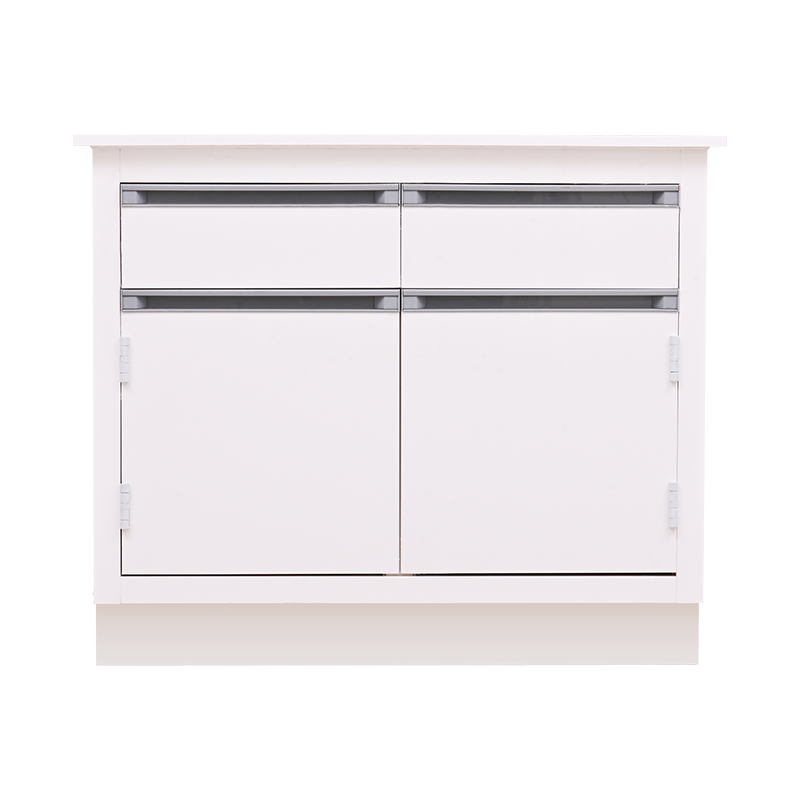
- Base cabinet, drawer and shelf arrangement under the work surface
- Sash type and counterbalance arrangement
- Duct spigot position and diameter to match the exhaust route
Airflow, Controls and Integration with the Exhaust System
The PP22 is designed at 1,350 m³/h with a 0.5 m/s face velocity, which gives margin for hot, high-vapour digestion work. Reduced make-up air volume keeps the operator comfortable without giving up containment.
Where the hood shares a duct with other units, we integrate a VAV high-speed damper actuator so face velocity stays constant as the sash moves and as other hoods on the line change state. Downstream, our PP air ducts and accessories, anti-corrosion centrifugal fan, wet scrubber tower and activated carbon adsorption box complete the route from bench to discharge.
Installation, Utilities and Commissioning
The PP22 is delivered as a factory-built unit and installed as part of the laboratory ventilation system. We confirm the following before release for production.
- Bench position, aisle clearance and sash opening direction
- Duct route, spigot orientation and connection to the main riser
- Electrical supply for lighting, sockets and any airflow monitoring
- Water, drain and gas service points
- Exhaust fan duty and any treatment stage required before discharge
- Commissioning checks on face velocity, sash travel and anti-backflow operation
Quality Control and Acceptance Evidence
Each hood is inspected after every production process, and finished units are inspected 100% against customer requirements and the applicable standard. The PP22 is third-party tested to CMA, CNAS and ILAC-MRA, and complies with ASHRAE 110-2016 and JB/T 6412-1999.
We take part as a core unit in drafting T/SLEA 0011-2023 Laboratory Fume Hoods and T/SLEA 1011-2023 Technical Specifications for Laboratory Design and Construction — Part 1: General Technical Requirements. Our company holds a Construction Industry Enterprise Qualification Certificate, a Work Safety Permit and a Business License.
Information We Use to Configure Your Solution
A digestion hood is only correct when the bench programme, the room and the exhaust route agree. We prepare the configuration and quotation from the following project inputs.
- Digestion or analysis method, reagent list and maximum working temperature
- Heat source type and footprint — hot block, mantle or hotplate
- Glassware and apparatus dimensions, including condensers and reflux assemblies
- Required hood height variant and preferred sash arrangement
- Service requirements: water, drain, gas, compressed air, socket count
- Duct route, fan location and whether treatment equipment is in scope
- Room drawing, ceiling height and available make-up air
- Delivery, installation and documentation scope, including drawing language
Custom sizes and layouts are developed from customer drawings or samples, so a non-standard bench position does not force a compromise on containment.
Maintenance, Spare Parts and Documentation
Serviceable items on the PP22 are the sash cable, the anti-backflow device, liner and deflector panels, service fittings and the damper assembly. We supply these as spare parts and provide the drawings and operating documentation needed to keep the hood in its tested condition.
The SJHB PP22 Dissolve Fume Hood manufacturer scope covers design, production, installation and service, and we coordinate the hood with the rest of the laboratory ventilation package from our Shanghai factory.
Frequently Asked Questions
What is the SJHB PP22 Dissolve Fume Hood used for?
It is designed for physical and chemical analysis and high-temperature digestion, including ICP sample preparation, where corrosion resistance and heat resistance are both required. The body is flame-retardant and corrosion-resistant, and the deflector and collection hood are specified for corrosion and high temperature.
What sizes are available?
The PP22 is available at 2350 × 850 mm with overall heights of 1200 mm, 1500 mm and 1800 mm. The height variant is selected from the apparatus height and the digestion assembly in use.
What airflow does the hood require?
The design air volume is 1,350 m³/h at a 0.5 m/s face velocity. Reduced make-up air volume supports operator comfort while the higher design air volume covers demanding digestion processes.
Which standards and tests apply to the PP22?
The hood is third-party tested to CMA, CNAS and ILAC-MRA standards and is compliant with ASHRAE 110-2016 and JB/T 6412-1999. The harmful-gas leakage rate is held below 0.05, and the structure carries a working load of up to 200 kg.
Can the hood be customized for our bench layout?
Yes. We develop and produce products according to customer drawings or samples, and we configure service fittings, sinks, base cabinets, sash arrangement and duct spigot position around the digestion programme and the room layout.
How does the hood connect to the rest of the exhaust system?
We size the duct connection to the exhaust route and integrate a VAV high-speed damper actuator where the hood shares a duct with other units. Ductwork, anti-corrosion centrifugal fan, wet scrubber tower and activated carbon adsorption box are supplied from the same range when the project scope includes waste gas treatment.

 EN
 English
 عربى