VAV High-Speed Damper Actuator Manufacturing at Shujia
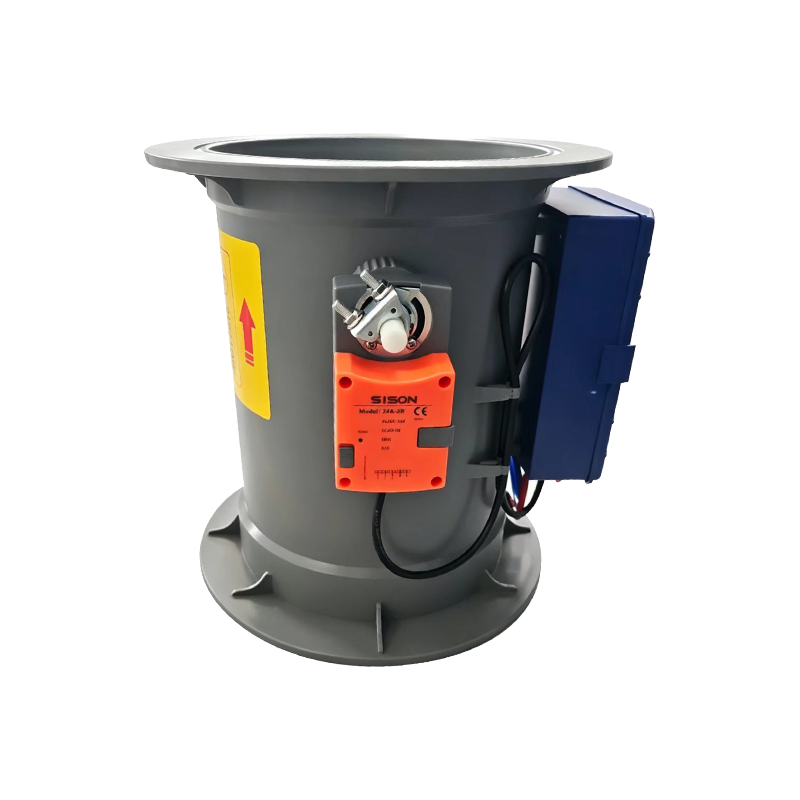
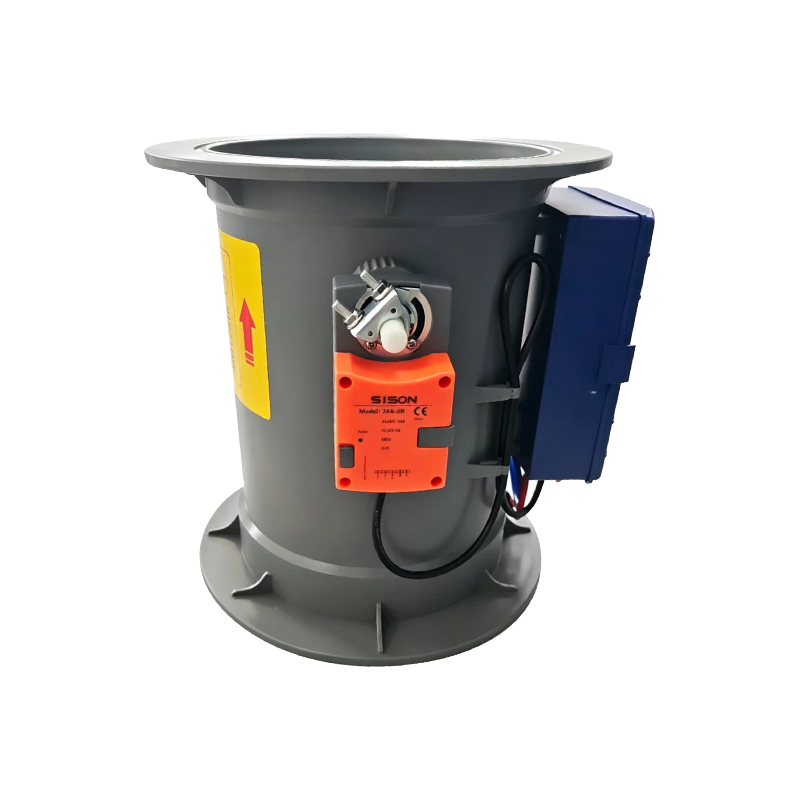
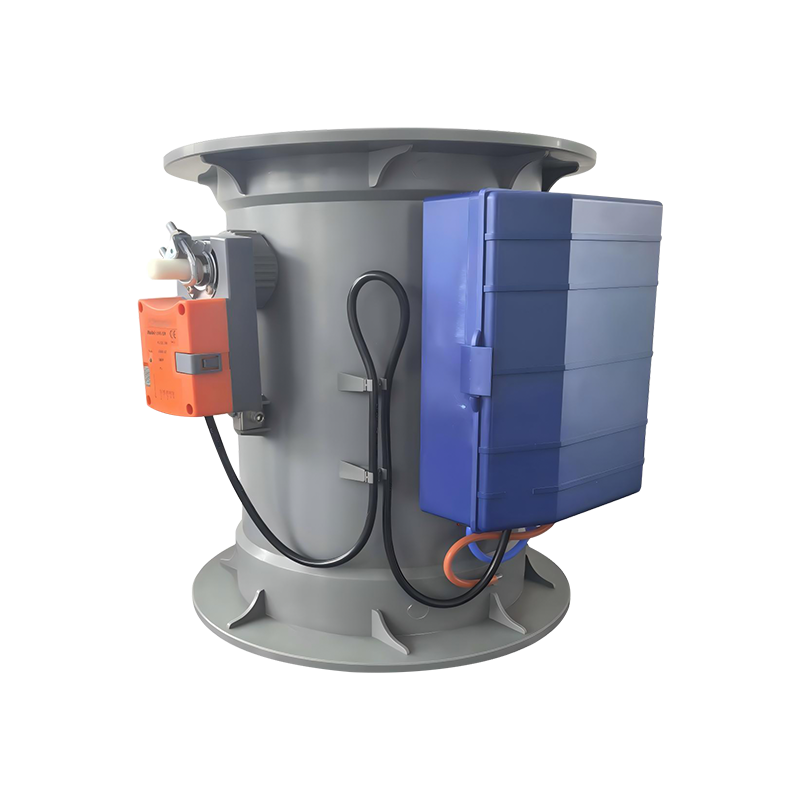
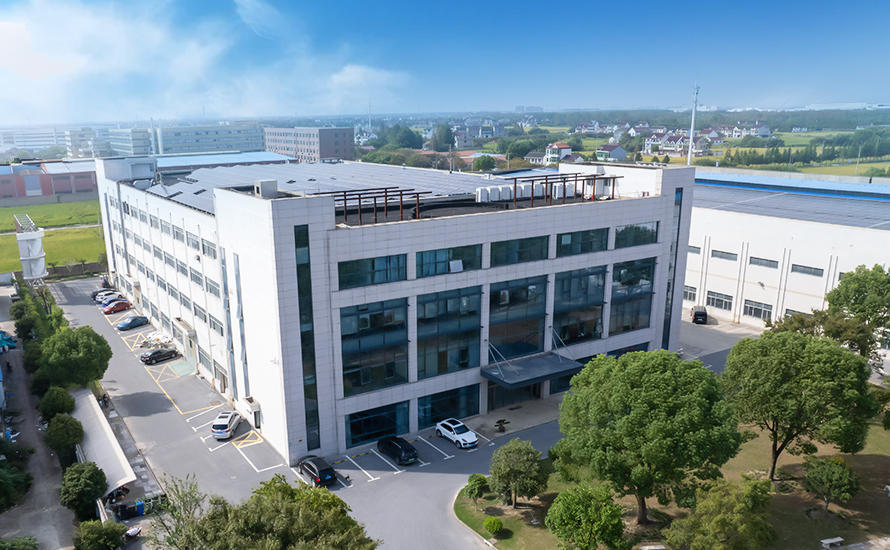
Shanghai Shujia Environmental Protection Engineering Co., Ltd. is a Laboratory VAV High-Speed Damper Actuator manufacturer supplying the drive component at the centre of pressure-independent fume-hood exhaust control. The actuator drives venturi and butterfly dampers through a full 0–90° stroke in roughly 1 to 2.5 seconds, fast enough to hold face velocity steady while a sash is raised or lowered. We build it into our Intelligent Laboratory Environment Control range alongside the controllers, sensors and ductwork that complete a variable-air-volume system.
Configuration starts from the hood, not the actuator. Face velocity target, sash operating pattern, duct pressure class and the controller output type decide which actuator variant and damper pairing we propose. Because we also manufacture fume hoods, PP ductwork and waste-gas treatment equipment, the actuator is sized against the same airflow model as the rest of the exhaust train.
- Full 0–90° travel in approximately 1–2.5 seconds
- AC24 / DC24 supply voltage
- 0(2)–10 Vdc or 4–20 mA control input
- 2.5–4 Nm torque class for venturi and butterfly dampers
- Matched to high-speed VAV controllers
How the Actuator Behaves in a Working Fume Hood
Containment is lost when the sash moves faster than the exhaust can respond. A slow actuator lets the face velocity dip during the stroke, and the operator breathes the difference. The high-speed stroke closes that gap: the damper reaches its new position within the sash travel window, so the controller can hold the setpoint instead of chasing it.
The actuator is a positioning device, not a flow meter. It receives a command from the VAV controller and moves the damper blade to the corresponding angle; the controller reads the hood condition and issues the next command. Response speed, repeatable positioning and stable torque at low angles are what make the loop work.
Control loop sequence: sash movement detected → controller recalculates required exhaust volume → command sent to actuator → damper strokes in 1–2.5 s → face velocity re-stabilises at setpoint.
Technical Range and Control Interface
| Parameter |
Range we supply |
Selection note |
| Rotation range |
0–90° full travel |
Direct-coupled to venturi and butterfly damper shafts |
| Stroke time |
Approx. 1–2.5 s for full stroke |
Set against sash speed and hood width |
| Supply voltage |
AC24 / DC24 |
Low-voltage control circuit |
| Control signal |
0(2)–10 Vdc or 4–20 mA |
Matched to the VAV controller output |
| Torque class |
2.5–4 Nm |
Suited to venturi valves and butterfly dampers |
| Damper types |
Venturi valve, butterfly damper |
Chosen by duct size and pressure class |
| Controller pairing |
High-speed VAV controllers |
Response matched to sash operating speed |
Damper and Valve Matching
The actuator and the damper are one mechanical assembly in service, so we select them together. A venturi valve gives a pressure-independent characteristic that suits hoods with wide airflow turndown; a butterfly damper suits larger branch ducts and general exhaust balancing where the pressure class is stable.
- Venturi valve: pressure-independent response, good for hoods with frequent sash movement and high turndown.
- Butterfly damper: straightforward branch control, lower pressure loss, matched to the 2.5–4 Nm torque class.
- Shaft coupling: confirmed against the damper shaft diameter and blade friction before the actuator is released.
- Stroke direction: fail position and rotation direction agreed with the controller logic at configuration stage.
Where the Actuator Sits in Our Product Range
The actuator belongs to our Intelligent Laboratory Environment Control range, which covers the sensing, control and actuation layer of a laboratory ventilation system. It is the moving part of that layer; the controllers and sensors decide, and the actuator executes.
Around it, our Laboratory Furniture range supplies the hoods and cabinets that create the exhaust demand, and our Laboratory Waste Gas Treatment range handles what leaves the building. A project can therefore be specified as one airflow system rather than three separate purchases.
Integration with Hoods, Ductwork and Exhaust Treatment
Actuator response only holds face velocity if the ductwork and hood are sized consistently with it. We check the branch layout, the PP Air Duct and Accessories run, and the exhaust fan curve against the actuator stroke before releasing a configuration.
Where the hood itself is part of the scope, the actuator is configured against the same airflow model as the cabinet. For perchloric acid work, the SJHB PP24 Perchloric Acid Fume Hood is specified with its own wash-down and duct requirements, and the VAV loop is set accordingly.
Quality Control and Acceptance
We select raw materials and production processes for corrosion resistance and long service life, then inspect at each production stage. Finished actuators are inspected 100% against the agreed specification and the applicable international standard before packing.
- Multi-process inspection through production, not only at final assembly
- 100% finished-product inspection to customer requirements and international standard
- Custom development from customer drawings or samples
- Company documentation includes Construction Industry Enterprise Qualification Certificate, Work Safety Permit and Business License
- Participation as a core unit in T/SLEA 0011-2023 Laboratory Fume Hoods and T/SLEA 1011-2023 Technical Specifications for Laboratory Design and Construction – Part 1
Information We Use to Configure Your Solution
A workable actuator and damper selection comes from the hood schedule and the control interface, not from a catalogue number alone. The table below lists what we ask for and how each item changes the configuration.
| Project input |
What it determines |
Typical format |
| Hood count and width |
Total exhaust volume and actuator quantity |
Layout drawing, hood schedule |
| Face velocity target |
Control setpoint the loop must hold |
m/s or fpm |
| Sash operating pattern |
Required stroke speed and damper type |
Operating description |
| Duct size and pressure class |
Damper selection and torque margin |
Duct schedule |
| Controller output type |
Signal variant, 0(2)–10 Vdc or 4–20 mA |
Control point list |
| Available supply voltage |
AC24 or DC24 variant |
Electrical single-line diagram |
| Ambient and chemical exposure |
Housing and sealing selection |
Room data, reagent list |
| Control system interface |
How the actuator is commanded and monitored |
BMS/EMS point list |
Installation, Commissioning and Maintenance
Actuators are mounted directly on the damper shaft at the factory-defined position, wired to the low-voltage control circuit and stroked through the full range before handover. Commissioning confirms stroke direction, travel time and setpoint stability with the sash in motion.
- Mounting position and shaft engagement checked against the damper assembly
- Low-voltage wiring separated from mains routing
- Full-stroke test and face velocity verification at commissioning
- Spare actuators and damper accessories supplied for planned maintenance
- Documentation and operator guidance on stroke testing and fault response
Frequently Asked Questions
What stroke speed does the VAV High-Speed Damper Actuator deliver?
It completes a full 0–90° travel in roughly 1 to 2.5 seconds. That window is set against the sash operating speed so face velocity stays within the control band while the sash is moving.
Which voltages and control signals does it accept?
The actuator is powered by AC24 or DC24 and accepts a 0(2)–10 Vdc or 4–20 mA control signal, so it can be driven from the standard output of a high-speed VAV controller.
Which damper types can it drive?
It is specified in the 2.5–4 Nm torque class for venturi valves and butterfly dampers. We confirm the damper shaft size, blade friction and pressure class before releasing the pairing.
Can the actuator be supplied as part of a complete VAV system?
Yes. It is part of our Intelligent Laboratory Environment Control range and can be quoted with the controllers, sensors, fume hoods, PP ductwork and exhaust treatment equipment that make up the full exhaust train.
How is product quality controlled before delivery?
Raw materials and production processes are selected for corrosion resistance and stability, inspection is carried out after each production process, and finished actuators receive 100% inspection against the agreed specification and the applicable international standard.
What do you need from us to prepare a proposal?
Send the hood schedule and layout, face velocity target, sash operating pattern, duct size and pressure class, controller output type, available supply voltage and the control point list. With those inputs we return an actuator and damper configuration, quantity schedule and delivery scope.

 EN
 English
 عربى