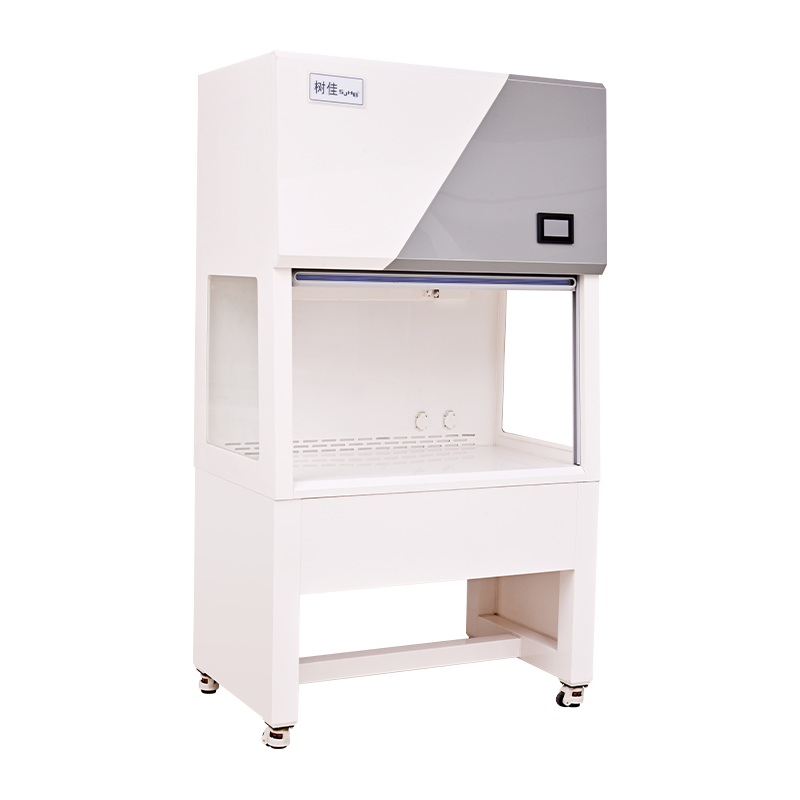
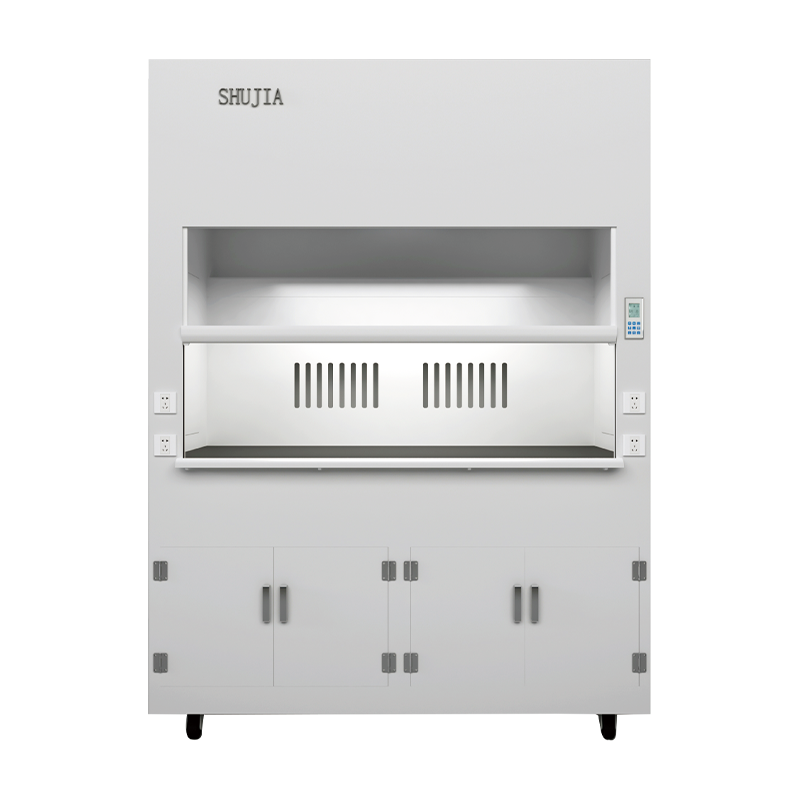
Laboratory fume hoods are the most important engineering control standing between a chemist and the vapors, aerosols and splashes produced at the bench. They are also some of the most expensive equipment to run. A single full-size ducted hood can exhaust the air volume of a small office in a couple of minutes, and every cubic meter pulled out of the room has to be replaced with air that has been heated, cooled and filtered. That tension between protection and operating cost drives almost every purchasing decision.
This article from Shanghai Shujia Environmental Protection Engineering Co., Ltd. explains how a fume hood actually contains hazards, how the main hood types compare, which hidden metrics decide both safety and running cost, and how to specify, commission and maintain a unit that keeps passing inspection year after year.
KEY CONCLUSIONS
Five decisions that determine whether a fume hood protects people and stays affordable
1. Containment is measured, not assumed. A face velocity of 0.4 to 0.6 m/s (80 to 120 fpm) is the usual working range, but only a tracer gas test such as ASHRAE 110 or EN 14175 proves the hood contains.
2. Ducted is the default. Ductless hoods suit only known, low-toxicity chemistry with filter monitoring in place.
3. Energy is the biggest lifetime cost. Variable air volume control and sash discipline can cut conditioned-air demand by roughly half.
4. The room matters as much as the hood. Make-up air, cross-drafts and fan capacity decide real-world performance.
5. Testing never ends. Commission once, then verify at least annually and after every change to the room or ductwork.
How Laboratory Fume Hoods Work: Containment Principles
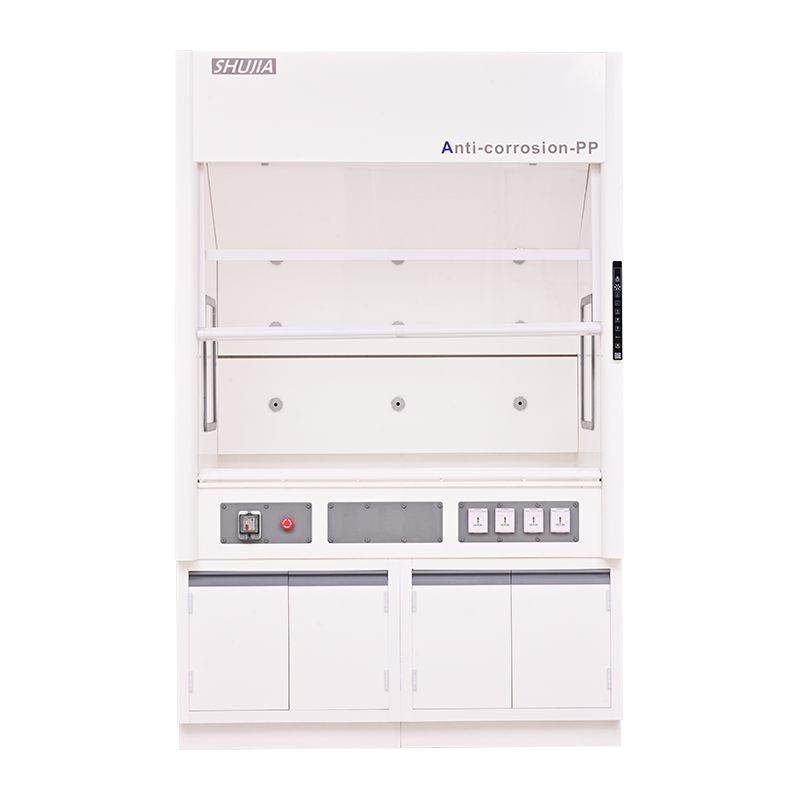
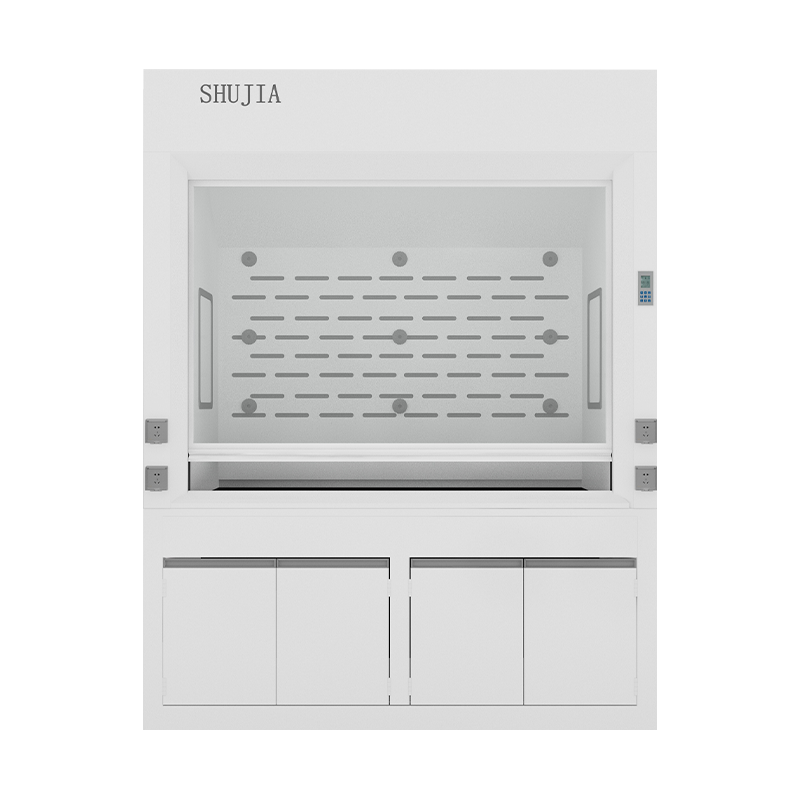
A fume hood is a ventilated enclosure with one open face. An exhaust fan pulls room air through that opening at a controlled speed, sweeps it across the work surface and carries contaminants away through a duct to a safe discharge point. The design looks simple. The physics behind it is not, because the air moving across the sash opening is easily disturbed by a person walking past, a door opening or a badly placed supply diffuser.
Five elements work together. If any one of them is poorly specified, the hood can look correct on paper and still leak at the operator's breathing zone.
Face Velocity
The average air speed through the sash opening. Too low and vapors escape. Too high and turbulence forms around the operator's body and pulls contaminants out. The practical window is 0.4 to 0.6 m/s, and some low-flow designs are proven at 0.3 m/s.
Sash Design
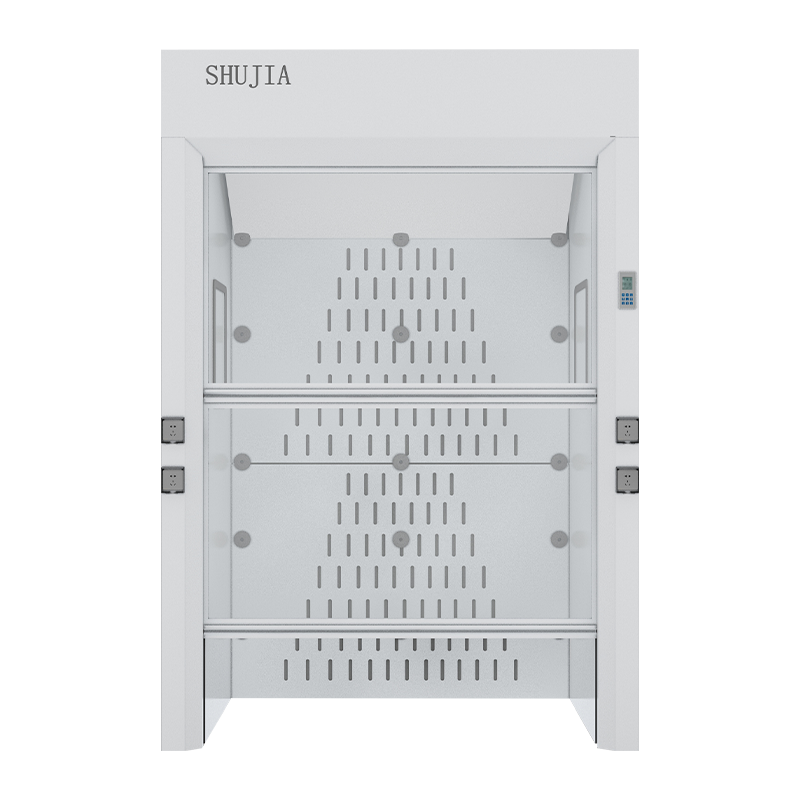
The sash is a safety shield and a flow control device at once. A working height of about 400 to 500 mm keeps the opening small, preserves velocity and protects the face and chest from splashes or small energetic reactions.
Baffles and Airfoil
Adjustable rear baffles spread the exhaust evenly from worktop to ceiling of the chamber so there are no dead zones. The airfoil sill at the front guides air smoothly under the sash and prevents the eddy that forms behind a flat edge.
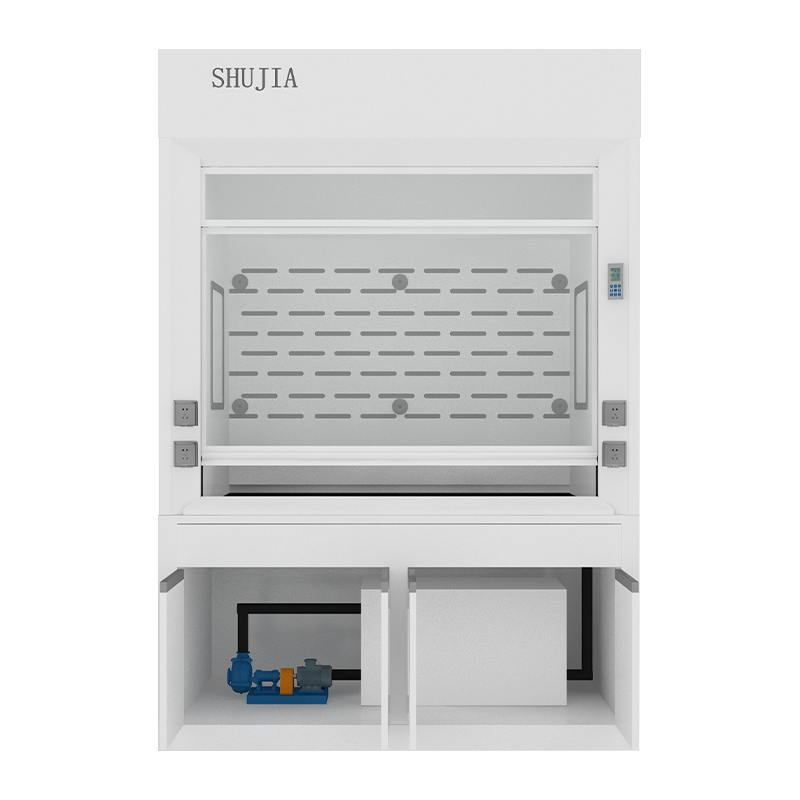
Exhaust Fan and Ductwork
Duct material, run length, bends and static pressure decide whether the fan can deliver design airflow. Stack discharge velocity of about 15 m/s is a common target so that exhaust rises clear of the roof and does not re-enter fresh air intakes.
Make-Up Air
Every cubic meter exhausted must be replaced. If the room is starved of supply air, the hood competes with doors and corridors, and face velocity drops. Supply should enter gently, away from the hood face, at low velocity.
Why a good face velocity reading is not enough
Many facilities check face velocity with a handheld anemometer and consider the job done. That is a useful screening step, but it says little about how air behaves in front of a person standing at the hood. Two hoods with identical average velocity can show very different containment results once a tracer gas is released inside and a mannequin is placed at the sash. For this reason, modern specifications ask for a full containment test as well as a velocity profile.
Ducted vs Ductless Fume Hoods: Performance and Cost Comparison
The first real choice is between a ducted hood that sends contaminated air outside and a ductless hood that filters it and returns it to the room. Within ducted designs there are further options: constant air volume, variable air volume and low-flow high-performance models. The table below summarizes typical values for a 1.5 m wide hood. Figures are indicative engineering ranges and will vary with manufacturer and configuration.
Parameter
Standard Ducted (CAV)
Ducted VAV
Low-Flow High-Performance
Ductless (Filtered)
Design face velocity
0.5 m/s (100 fpm)
0.4 to 0.5 m/s, held constant
About 0.3 m/s (60 fpm)
0.3 to 0.5 m/s
Exhaust airflow, sash fully open
2,000 to 2,700 m³/h
2,000 to 2,700 m³/h
1,200 to 1,600 m³/h
No exhaust; 400 to 700 m³/h recirculated
Airflow with sash lowered
Roughly constant (bypass)
Drops in step with opening
Drops in step with opening
Fixed filter airflow
Chemical range
Broad, including unknowns
Broad, including unknowns
Broad, with proven containment
Known, limited chemicals only
Infrastructure needed
Duct, fan, make-up air
Same, plus sensors and controls
Same, plus controls
Power outlet only
Upfront cost
Medium
Medium to high
High
Low
Running cost
High
Moderate
Low to moderate
Low energy, recurring filter cost
Best suited to
Small labs, teaching, low hood count
Research and pharma with many hoods
New builds with strict energy targets
Repetitive, well-defined procedures
When a ductless fume hood is acceptable
Ductless hoods rely on activated carbon or specialty filters, and a filter only captures what it was designed for. Carbon saturates silently unless a vapor sensor or a strict replacement schedule is in place, and some low-molecular-weight solvents pass through almost immediately. For that reason a ductless unit should be limited to a documented list of chemicals, quantities and procedures, and reviewed by the safety officer before purchase. Recirculating hoods are typically assessed against SEFA 9 or national filtering enclosure standards rather than the EN 14175 series.
Where the ducted fume hood still wins
If the chemistry changes from week to week, if toxic or unknown substances are in play, or if heat-generating equipment such as digestion blocks and hot plates sit inside the chamber, a ducted hood remains the safer choice. It removes contaminants from the building altogether rather than relying on a consumable filter to do so.
Hidden Metrics: Energy Demand and Containment Performance
Catalog sheets list width, depth and materials. They rarely show the numbers that decide how a hood behaves over ten years. Three of them deserve attention before any purchase order is signed.
Conditioned-air energy index
A constant-volume hood pulls the same air out of the room whether the sash is open or closed, twenty-four hours a day. In a laboratory with dozens of hoods, that exhaust is often the single largest driver of building energy use. The chart compares indicative annual conditioned-air demand for common configurations, with a conventional constant-volume hood set to 100.
Relative annual conditioned-air energy index
Indicative values. Conventional CAV hood = 100. Actual results depend on climate, usage hours and sash behavior.
Constant volume (CAV)
VAV, typical use
VAV plus automatic sash closer
Low-flow VAV
Ductless (excl. filters)
The gap between the second and third bars is behavioral rather than technical. A VAV hood only saves energy when the sash is actually lowered. Automatic sash closers or occupancy sensors that close the sash when nobody is at the bench turn good intentions into measured savings.
Cross-drafts and room airflow
A person walking past a hood at normal speed can generate a transient draft strong enough to disturb containment. Good practice keeps room cross-drafts below roughly 20 percent of the face velocity, which means supply diffusers must be placed well away from the hood face and doors should not open directly beside it. Where a laboratory layout cannot meet this, a hood with a stronger airfoil design or a narrower sash opening is a better fix than raising fan speed.
Tracer gas containment rating
The ASHRAE 110 method releases sulfur hexafluoride or an equivalent tracer inside the hood and measures leakage at a sampling point in the breathing zone. Results are reported for three conditions: as manufactured, as installed and as used. A rating such as 0.05 ppm or lower at the as-manufactured stage is commonly specified. The gap between as-manufactured and as-used values is the most honest indicator of how much the real room is degrading the hood.
Fume Hood Applications by Industry
Demand for laboratory fume hoods is spread across several sectors, each with different priorities. The distribution below is an indicative estimate of where hood demand concentrates. It will shift by region and by the maturity of local research and manufacturing sectors.
Indicative share of fume hood demand by sector
Pharmaceutical and biotech: 28%
Universities and research institutes: 24%
Chemical and petrochemical: 18%
Electronics and semiconductor: 10%
Hospitals and clinical labs: 9%
Environmental, food and testing: 11%
Pharmaceutical and biotech laboratories
Synthesis, formulation and analytical chemistry generate a constant mix of solvents, acids and potent compounds. These facilities usually buy ducted VAV hoods in bulk, and they place heavy emphasis on documented containment testing because audit trails are part of quality systems. Epoxy resin worktops and chemically resistant liners are standard.
University and research laboratories
Teaching labs need durable, easy-to-clean hoods that tolerate student handling. Research labs need flexibility, since projects and chemicals change every semester. Low-flow hoods are increasingly specified here because the large hood counts make airflow reduction financially significant.
Chemical, electronics and testing laboratories
Acid-intensive work in electronics and metal analysis calls for polypropylene or stainless steel construction with corrosion-resistant ductwork and, in some cases, scrubbers. Environmental and food testing labs often use acid digestion, which demands wash-down capability and special attention to exhaust material. Perchloric acid work needs a dedicated hood with a wash-down system and non-combustible, non-reactive ductwork. It should never share a duct with ordinary hoods.
Fume Hood Selection Guide: Six Steps From Hazard Review to Commissioning
Most failed installations trace back to decisions made in the wrong order. Choosing a model first and checking the building afterward is the classic mistake. The sequence below keeps the hazards, the infrastructure and the budget aligned.
1
Build a chemical and process inventory
List every substance, volume, temperature and piece of equipment that will go inside the hood. Flag strong acids, flammables, water-reactive materials and any substances with very low exposure limits. This list decides the hood type, materials and any need for scrubbers.
2
Size the hood for the work, not the room
Common widths are 1.2, 1.5 and 1.8 m. Oversized hoods waste airflow, while undersized ones tempt users to crowd equipment toward the sash. Plan for roughly 15 cm of clear space between the sash plane and the nearest apparatus, and leave room for waste containers.
3
Choose the airflow strategy
Select CAV, VAV, low-flow or ductless based on hood count, building ventilation capacity and the energy budget. For more than a handful of hoods, VAV or low-flow almost always pays back.
4
Specify materials and fittings
Epoxy resin suits most general chemistry. Phenolic resin handles heat well. Stainless steel suits clean or high-temperature work, and polypropylene resists aggressive acids. Add explosion-proof electrics where flammable vapors are present, plus services such as water, gas and sinks as the process requires.
5
Engineer the exhaust and make-up air system
Calculate total exhaust demand, duct sizes, static pressure, fan redundancy, stack height and supply air distribution together. Keep supply diffusers away from the hood face and check that stack discharge cannot return to air intakes.
6
Commission, test and train
Run a containment test as installed, balance airflow, set alarm thresholds and record baseline readings. Then train users on sash handling, equipment placement and what the alarm means. A hood that nobody understands is a hood that gets misused.
Fume Hood ROI: Total Cost of Ownership Over Ten Years
Comparing quotes on purchase price alone leads to expensive decisions. For ducted hoods, energy used to condition exhaust and make-up air usually dwarfs the cost of the cabinet itself. The cards below show typical planning ranges for the lifetime cost split of a ducted hood. They are project dependent and should be replaced with local figures during budgeting.
20 to 30%
Purchase and installation
Hood, services, ductwork, fan, controls and commissioning.
55 to 70%
Energy for conditioned air
Heating, cooling, humidity control and fan power over the hood's life.
10 to 15%
Testing and maintenance
Annual testing, sensor calibration, fan service and replacement parts.
A simple payback calculation
Annual savings per hood equal the airflow reduction, multiplied by operating hours, the conditioning energy per cubic meter and the energy price. Take an illustrative case: a retrofit that cuts 1,000 m³/h of exhaust, with the hood running all 8,760 hours, an average conditioning energy of 0.004 kWh per m³ and electricity-equivalent energy priced at 0.10 USD per kWh.
1,000 m³/h × 8,760 h = 8.76 million m³ per year
8.76 million m³ × 0.004 kWh/m³ = about 35,000 kWh
35,000 kWh × 0.10 USD = roughly 3,500 USD saved per hood, per year
Against that saving, the extra cost of VAV controls, sash sensors and a controller is typically recovered within two to five years, depending on climate, energy prices and how many hours the hoods genuinely stand idle. Humid or extreme climates shorten the payback. Mild climates with low energy prices lengthen it. Either way, the calculation should be run for the real building before a ductwork design is frozen.
Fume Hood Maintenance, Testing and Compliance Requirements
A hood that was perfect on commissioning day degrades quietly. Filters clog, belts slip, sensors drift, shelves get stacked with bottles against the rear baffle, and someone modifies the room layout. A written schedule with clear ownership prevents most of these problems.
EVERY USE
Check the airflow monitor or alarm is active, confirm the sash is at the marked working height, keep apparatus at least 15 cm inside, and make sure baffle slots are unobstructed.
MONTHLY
Inspect sash movement and counterweights, liner condition, lighting, service fittings and sinks. Wipe the interior and remove stored chemicals that do not belong there.
QUARTERLY
Verify face velocity against the marked setpoint, check fan belts and vibration, and test alarms and VAV controller response to sash movement.
ANNUALLY
Full performance test by a qualified technician: velocity grid, flow visualization, containment test where required, sensor calibration and a signed, dated label on the hood.
AFTER ANY CHANGE
Retest after relocating furniture, changing diffusers, modifying ducts, replacing a fan or adding another hood to the same exhaust system.
Standards that commonly apply
Requirements depend on country and facility type, so local regulations and the facility safety officer have the final word. The following documents are most often referenced in specifications and audits.
ASHRAE 110: method of testing fume hood performance using tracer gas.
EN 14175 series: European requirements and test methods for fume cupboards, including on-site testing.
ANSI/AIHA Z9.5: laboratory ventilation, including commissioning and periodic verification.
NFPA 45: fire protection for laboratories using chemicals.
SEFA 1 and SEFA 9: recommended practices for laboratory fume hoods and recirculating hoods.
OSHA 29 CFR 1910.1450: occupational exposure to hazardous chemicals in laboratories.
Common failure points worth checking first
When a hood fails a test, the cause is usually found in a short list. Check for blocked baffle slots first, then a slipping fan belt or an undersized duct, followed by a room that has become negatively pressurized because supply air was throttled. After that, look at cross-drafts from a newly installed door or diffuser. Replacing the hood is rarely the answer. Correcting the room almost always is.
Laboratory Fume Hood FAQ
What face velocity should a laboratory fume hood have?+
Most guidelines recommend an average face velocity between 0.4 and 0.6 m/s (80 to 120 fpm) at the working sash height. Low-flow high-performance hoods may be proven at about 0.3 m/s. Higher is not better, because velocities above about 0.6 m/s can create turbulence that reduces containment.
How often should fume hoods be tested?+
At minimum, test at commissioning and then at least once a year. Retest whenever the hood, ductwork, fan, supply air or room layout changes. Many facilities add quarterly face velocity checks and rely on a continuous airflow monitor between formal tests.
Can a ductless fume hood replace a ducted hood?+
Only for a defined, low-hazard set of chemicals that the filter is certified to capture. Ductless units depend on filter condition, which can fail without warning if not monitored. For variable chemistry, unknown substances, high heat loads or highly toxic materials, a ducted hood is the safer option.
What is the correct sash height when working?+
Use the marked working height, typically about 400 to 500 mm above the worktop, with the sash acting as a shield between your face and the experiment. Lower it fully when the hood is not in use. Raising the sash above the mark for loading equipment should be brief.
Which worktop and liner material should I choose?+
Epoxy resin is the general-purpose choice for chemical resistance. Phenolic resin tolerates heat. Stainless steel suits high-temperature and clean applications, and polypropylene is preferred for aggressive acids and digestion work. Match the material to the chemical inventory rather than to price alone.
Why can a hood pass a velocity check but still leak?+
Average velocity does not capture turbulence, cross-drafts, operator posture or apparatus placement. A tracer gas test with a mannequin at the sash reveals leakage that an anemometer cannot. Room supply air and traffic patterns are the usual causes.
What is the difference between a fume hood and a biosafety cabinet?+
A fume hood protects the operator from chemical vapors and exhausts them away. A biosafety cabinet uses HEPA filtration to protect against biological agents and, in many designs, to protect the sample as well. They are not interchangeable, and a biosafety cabinet generally should not be used for volatile or toxic chemicals.
What affects the price of a laboratory fume hood?+
Width, construction material, airflow type (CAV, VAV or low-flow), electrical rating, services, controls and accessories all matter, as does the cost of ducting, fans and make-up air. Installation and the energy to run the hood often outweigh the cabinet price, so compare total cost of ownership, not the ex-works quote.
Conclusion: Choosing Laboratory Fume Hoods That Protect People and Budgets
Good laboratory fume hoods are the result of a system, not a single product. Containment depends on face velocity, sash discipline, baffle and airfoil design, a fan that can deliver real airflow and a room that supplies air gently. Costs depend on airflow strategy, because conditioned-air energy is usually the largest line in the ten-year budget. Safety depends on testing that goes beyond a velocity reading and continues for as long as the hood is in service.
The practical path is straightforward: document the chemistry, choose the airflow strategy that fits the hood count and energy goals, engineer exhaust and make-up air together, commission with a containment test, and keep a maintenance schedule that someone owns. Do this in the right order and a hood becomes a dependable, low-drama part of the lab.
Planning a new laboratory or upgrading existing fume hoods?
The engineering team at Shanghai Shujia Environmental Protection Engineering Co., Ltd. can review your chemical inventory, exhaust design and energy targets, and recommend a fume hood solution matched to your lab.
Request a Fume Hood Consultation

 EN
EN
 English
 عربى
عربى
 +86-13472882970 (Mr. Zhang)