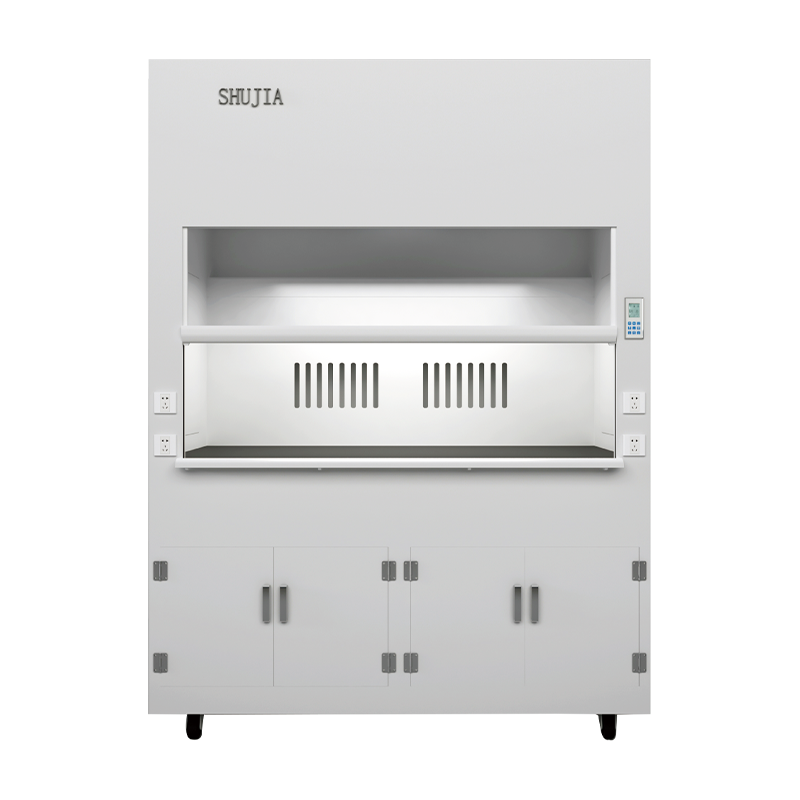
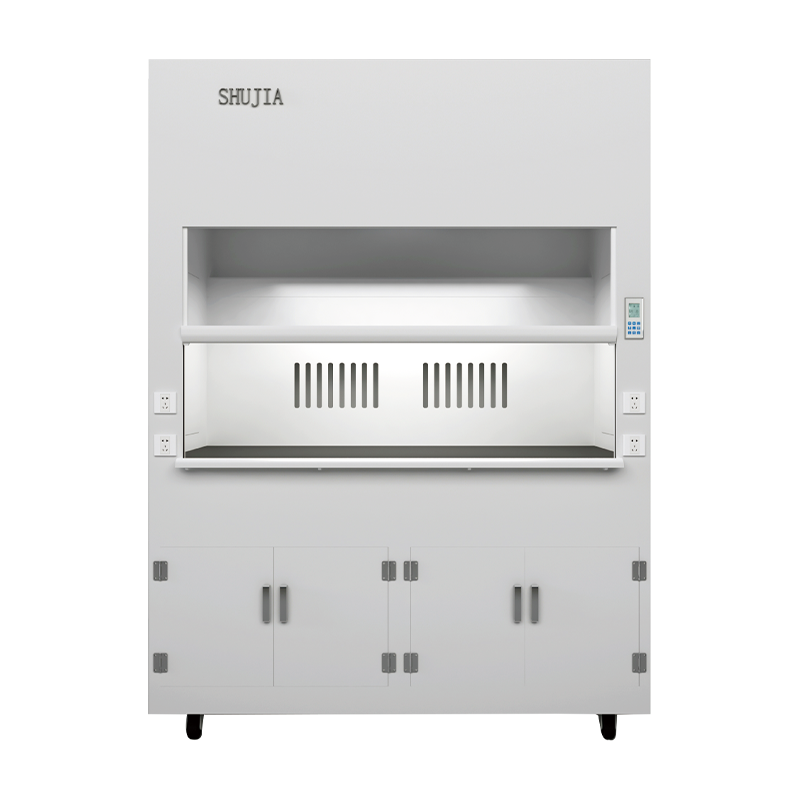
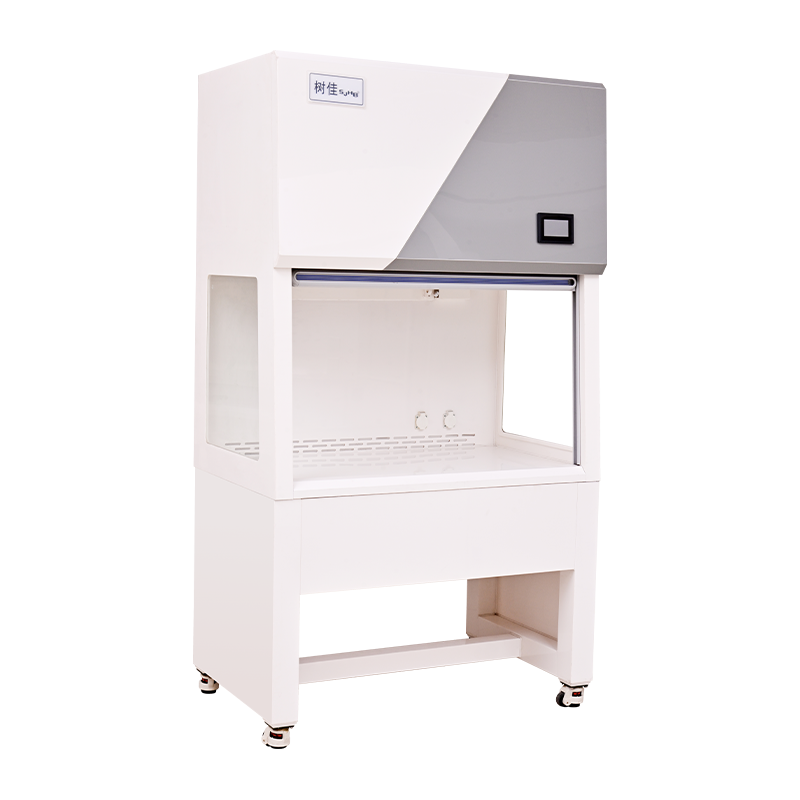
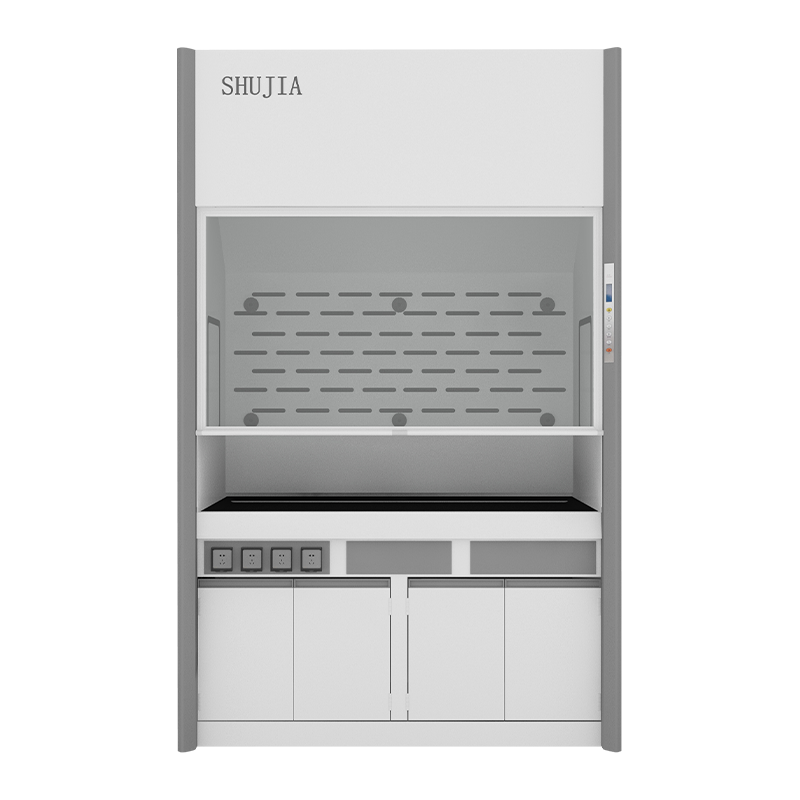
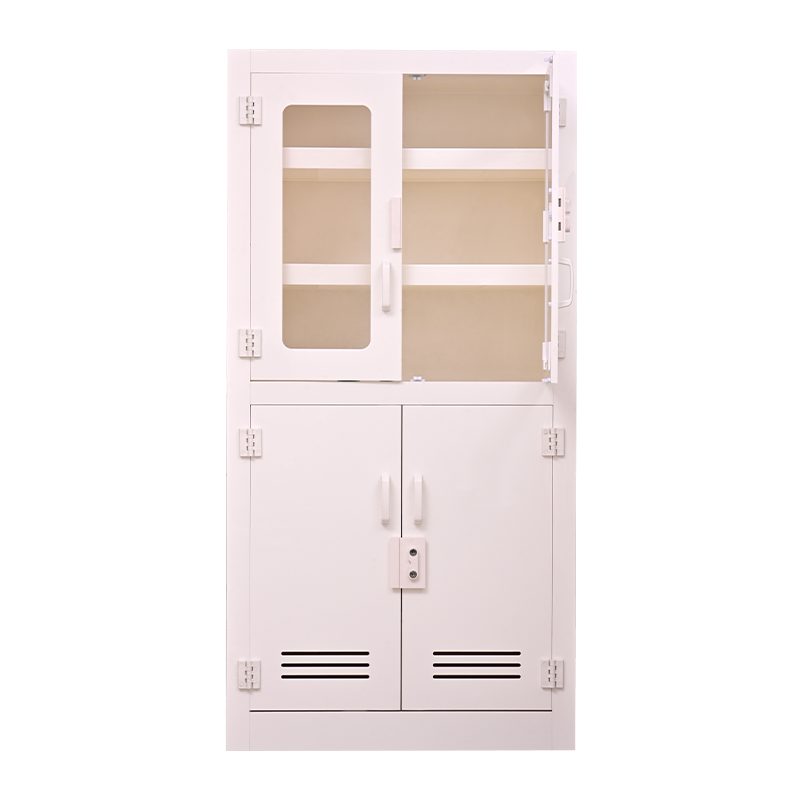
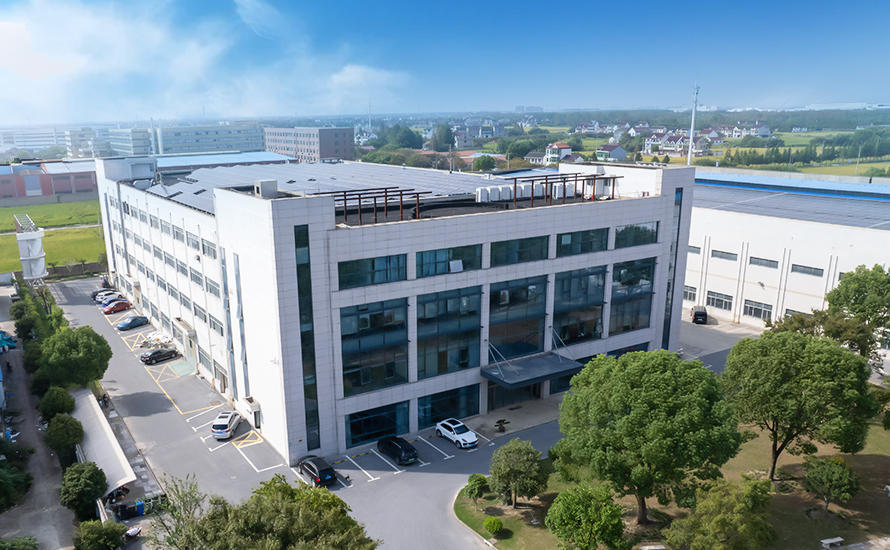
As a Laboratory Semiconductor Ultra Clean Cabinet manufacturer, Shanghai Shujia Environmental Protection Engineering Co., Ltd. builds this cabinet for trace-element analysis laboratories where metallic and particulate contamination decides whether a result is usable. The body is PP throughout, so the working envelope introduces no metal contamination, and the FFU uses PTFE media that does not shed the boron, silicon, potassium and calcium common to ordinary filter media. We supply the cabinet as a standalone workstation or as a bench-connected unit for ICP-MS sample preparation.
Where the Cabinet Fits in Trace-Element Analysis
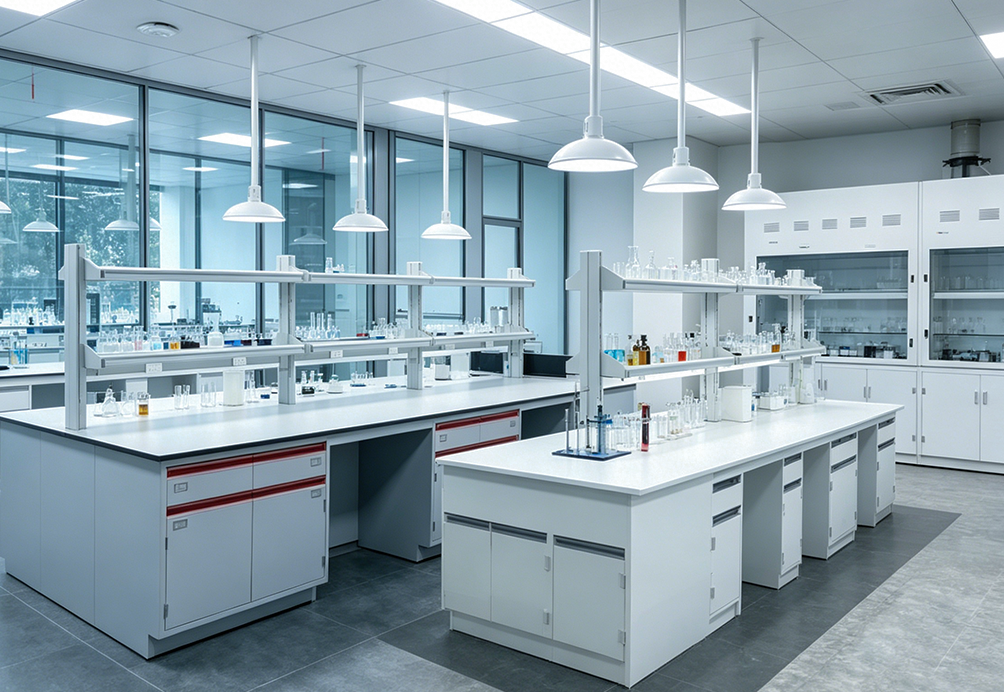
The cabinet is dedicated to trace-element analysis laboratories, in particular sample preparation for ICP-MS, where a single metal ion or a stray particle can shift a calibration curve. Digestion, dilution, standard preparation and autosampler loading happen inside the same controlled envelope, so the sample stays clean from the digestion tube to the instrument.
- ICP-MS and ICP-OES sample preparation, including digestion, dilution and internal standard spiking
- Environmental, geological, biological and high-purity material analysis
- Ultrapure reagent handling and volumetric preparation
- Loading and unloading of autosampler trays
- Bench tasks where B, Si, K or Ca contamination from filter media is unacceptable
Our Laboratory Furniture Range and Application Fit
The Semiconductor Ultra Clean Cabinet sits at the top of our laboratory furniture range for contamination control. The same PP construction logic carries into bench-level work: the PP Ultra Clean Platform provides a smaller clean working zone, while the PP Anti-Corrosion Side Experimental Platform supports wet chemistry alongside it.
For acid and solvent work that must be contained rather than cleaned, we supply the SJHB PP24 Perchloric Acid Fume Hood and the PP Ventilated Reagent Cabinet / Vessel Cabinet for reagent storage with active ventilation.
| Product |
Construction and key feature |
Typical application |
| Semiconductor Ultra Clean Cabinet |
PP body, PTFE-media FFU, upper intake and lower rear exhaust |
ICP-MS and trace-element sample preparation |
| PP Ultra Clean Platform |
Bench-mounted PP clean working zone |
Small-volume preparation beside the main cabinet |
| PP Anti-Corrosion Side Experimental Platform |
PP bench with corrosion-resistant surface |
Wet chemistry adjacent to clean cabinets |
| PP Ventilated Reagent Cabinet / Vessel Cabinet |
PP cabinet with active ventilation |
Acid and solvent reagent storage |
| SJHB PP21 Supplemental Ventilation Cabinet |
PP enclosure with supplementary exhaust |
Secondary containment of low-volume vapours |
| SJHB PP22 Dissolve Fume Hood |
PP fume hood for dissolution work |
Sample dissolution and acid handling |
| SJHB PP23 Organic Chemical Synthesis Fume Hood |
PP hood for organic synthesis |
Solvent and organic reaction work |
| SJHB PP24 Perchloric Acid Fume Hood |
PP hood configured for perchloric acid service |
Perchloric acid digestion |
| Customized Ventilation Room |
Project-built ventilated enclosure |
Multi-instrument or multi-operator rooms |
Airflow Architecture and Cleanliness Performance
The cabinet uses an upper-intake, lower-rear-exhaust configuration that draws air down through the working chamber and sweeps the zone away from the operator. When the unit is installed in a Class 1000 laboratory, the measured concentration of 0.3 µm particles inside the operating chamber is zero.
- FFU filtration efficiency: 99.999% at 0.3 µm
- Filter media: PTFE
- FFU outlet: φ250
- Air path: intake at the top of the chamber, exhaust at the lower rear
- Exhaust direction keeps vapours moving away from the operator's breathing zone
Standard Sizes and Workspace Dimensions
Three standard footprints cover most ICP-MS bench layouts. Intermediate and project-specific sizes are developed from drawings or samples supplied with the enquiry.
| External dimensions W × D × H (mm) |
Workspace W × D × H (mm) |
| 1300 × 960 × 2000 |
1100 × 840 × 700 |
| 1600 × 960 × 2000 |
1400 × 840 × 700 |
| 1900 × 1260 × 2300 |
1700 × 840 × 700 |
Controls, Instrument Integration and Exhaust Connection
A colour LCD panel controls purification, lighting, ventilation and timing from the front of the cabinet, so settings can be changed without reaching into the working zone. The left and right sides can be extended to connect with ICP-MS instruments or other workbenches for combined use.
- Control functions: purification, lighting, ventilation, timing
- Side extension: left and right, for instrument or bench connection
- Ducting: PP air duct and accessories matched to the exhaust outlet
- Air movement: anti-corrosion centrifugal fan sized to the duct run
- Downstream treatment: wet scrubber tower or activated carbon adsorption box for acid mist and VOC control
- Room-level balancing: VAV high-speed damper actuator for variable exhaust volume
Materials, Quality Control and Standards Participation
The cabinet is made of PP to eliminate metal-element contamination, which is why the working surfaces, liner and duct connections are not fabricated from stainless or coated steel. We select raw materials and inspect after each production process; finished units receive 100% inspection against customer requirements and the applicable international standard.
- Construction Industry Enterprise Qualification Certificate
- Work Safety Permit
- Business License
- Participation in T/SLEA 0011-2023 Laboratory Fume Hoods
- Participation in T/SLEA 1011-2023 Technical Specifications for Laboratory Design and Construction — Part 1: General Technical Requirements
Information We Use to Configure Your Solution
A proposal is built from the working point rather than from a catalogue number. We confirm the cabinet size, FFU arrangement, control configuration and ducting scope once the following inputs are fixed:
- Analyte list, expected concentration range and detection limits
- ICP-MS or ICP-OES model, bench height and autosampler footprint
- Required cleanliness class of the host laboratory and any particle-count target
- Room dimensions, ceiling height, door and corridor access for delivery
- Exhaust route, duct length, number of bends and available static pressure
- Electrical supply, control interface and any building management connection
- Number of cabinets, bench layout and left/right connection requirements
- Site conditions for installation, plus documentation or training scope
Installation, Maintenance and Delivery Scope
We deliver the cabinet as a factory-assembled unit with the FFU, control panel and exhaust outlet prepared for site connection. Installation covers levelling, duct connection, electrical termination and a functional check of purification, lighting, ventilation and timing.
- Filter replacement driven by particle counts and pressure drop
- Control panel and lighting serviceable from the front
- PP duct and fittings supplied with the exhaust run
- Spare parts and consumables identified at handover
- Operation and maintenance documentation issued with the unit
- Packaging sized for container and site access
Frequently Asked Questions
What separates this cabinet from a standard clean bench?
The body is PP rather than coated steel, and the FFU uses PTFE media instead of glass-fibre media that releases B, Si, K and Ca. The upper-intake, lower-rear-exhaust layout also keeps the working chamber swept rather than pushing contaminated air across the sample.
Which sizes are available?
Three standard footprints: 1300 × 960 × 2000 mm, 1600 × 960 × 2000 mm and 1900 × 1260 × 2300 mm, with workspaces of 1100 × 840 × 700 mm, 1400 × 840 × 700 mm and 1700 × 840 × 700 mm.
Can the cabinet be connected to an ICP-MS bench?
Yes. The left and right sides can be extended to connect with ICP-MS instruments or other workbenches, so the cabinet and the instrument bench operate as one continuous preparation line.
What cleanliness can be expected inside the chamber?
In a Class 1000 laboratory, the measured concentration of 0.3 µm particles inside the operating chamber is zero. The FFU is rated at 99.999% efficiency at 0.3 µm with PTFE media and a φ250 outlet.
How is quality controlled before shipment?
We inspect after each production process and carry out 100% inspection of finished units against customer requirements and the applicable international standard. Our qualifications include the Construction Industry Enterprise Qualification Certificate, Work Safety Permit and Business License.
What do you need to prepare a proposal?
The analyte list and detection limits, the instrument model and bench height, the host laboratory cleanliness class, room and access dimensions, the exhaust route and available static pressure, electrical supply, quantity and layout. From those inputs we confirm the cabinet size, FFU configuration, control arrangement and ducting scope.

 EN
 English
 عربى