Wet Scrubber Tower Manufacturer for Laboratory and Industrial Exhaust
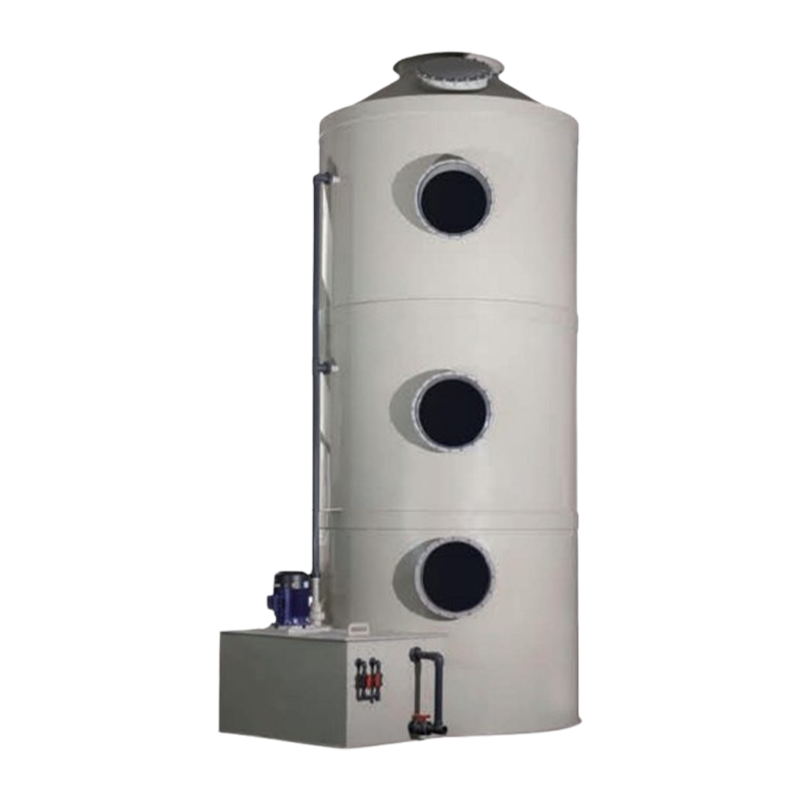
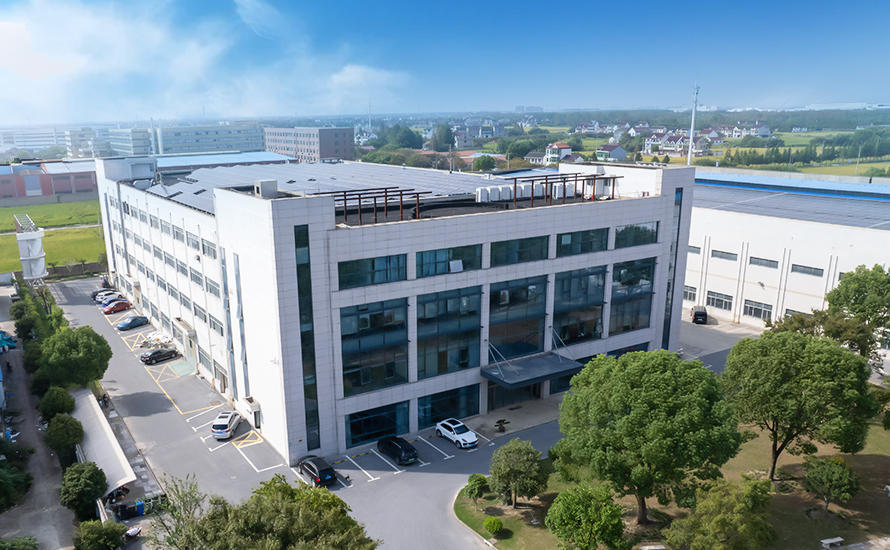
Shanghai Shujia Environmental Protection Engineering Co., Ltd. is a Laboratory Wet Scrubber Tower manufacturer based in Jinshan District, Shanghai. We research, design, produce, install and service gas-purification towers together with the fans, ducting and adsorption stages that complete a laboratory or industrial exhaust train.
Our work in laboratory ventilation and environmental protection equipment began in 2012. Three production bases covering 40,000 m² and a team of more than 200 people across design, production, construction and service allow us to support projects from a single tower replacement through to a complete waste-gas system.
- Working principle: direct gas–liquid contact neutralises and absorbs acidic and water-soluble pollutants; the cleaned gas is separated from the contaminated liquid before discharge.
- Materials: PP, stainless steel and fiberglass, selected against the pollutant mix, humidity and operating temperature.
- Configurations: horizontal and vertical towers, with on-site drilling available for flexible pipe connection.
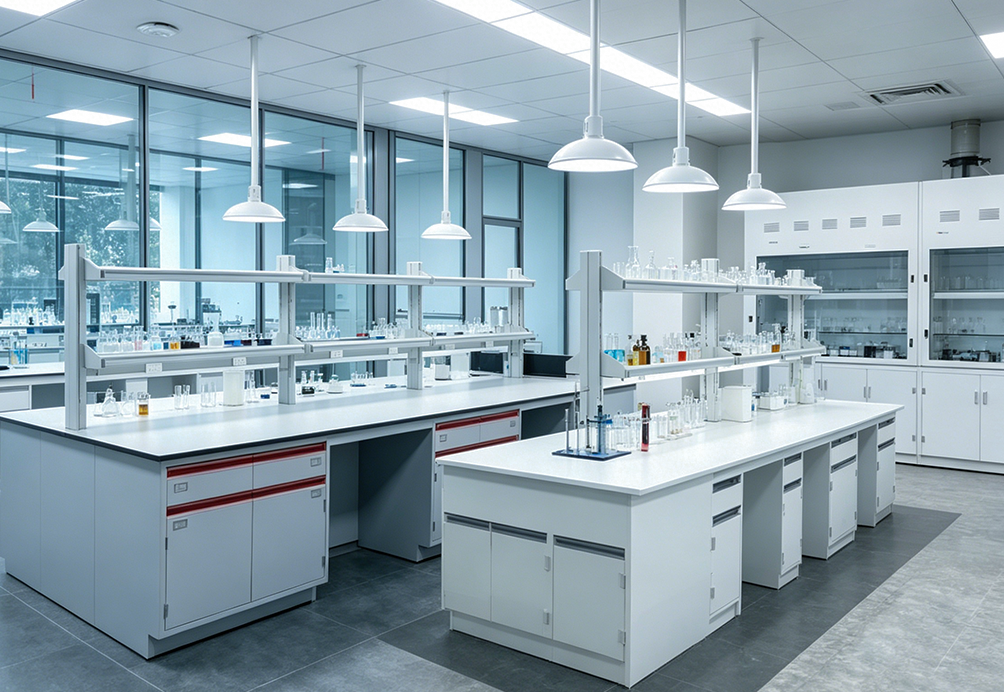
- Applications: laboratory exhaust, electroplating, chemical engineering and machinery manufacturing waste gas.
Inside the Tower: Scrubbing Stages and Internals
A wet scrubber is only as good as the contact between gas and liquid. We build the tower as a stack of functional stages, each of which can be specified independently for the pollutant load and the available footprint.
- Spray nozzles: distribute scrubbing liquid across the tower cross-section so the rising gas meets a continuous liquid film.
- Spherical packing: provides the wetted surface area where absorption and neutralisation take place.
- Grating and support layers: carry the packing bed and keep it evenly distributed under airflow.
- Defogging layer: captures entrained droplets so the discharge carries minimal liquid carry-over.
- Circulating water system: recirculates the scrubbing liquid through the tank and pump, with make-up water and drainage connections.
Tower shells can be drilled on site where the duct route is finalised during installation, which keeps flexible pipe connections aligned with the actual hood, fan and stack positions rather than a drawing assumption.
Our Waste Gas Treatment Range
The scrubber is normally one stage in a train. We supply the surrounding equipment so that the wet stage, the polishing stage, the air mover and the duct network are matched to one another.
| Product |
Role in the exhaust train |
Typical application fit |
| Wet Scrubber Tower |
Primary wet stage for acid mist, ammonia, water-soluble gases and odorous compounds |
Fume-hood exhaust, electroplating lines, chemical and machinery processes |
| Activated Carbon Adsorption Box |
Polishing stage for residual VOCs and odour after scrubbing |
Solvent handling areas and discharge points with odour limits |
| Anti-Corrosion Centrifugal Fan |
Moves corrosive, humid exhaust through tower, ducting and discharge stack |
Systems carrying acid-laden or moisture-rich gas streams |
| PP Air Duct and Accessories |
Connects hoods, tower, fan and stack; carries condensate and drainage |
Full laboratory exhaust networks and retrofit tie-ins |
Materials and Configuration Options
Material selection follows the chemistry of the exhaust. PP suits most acid and alkali service at moderate temperature, stainless steel is chosen where mechanical strength or higher temperature matters, and fiberglass covers large-diameter or highly aggressive duties.
- Orientation: vertical towers for tight footprints and gravity drainage; horizontal units where headroom is limited.
- Packing bed: type and depth set by the required contact time and pressure-drop budget.
- Spray system: nozzle count, pattern and number of spray levels matched to the tower diameter.
- Demister: selected for the acceptable droplet carry-over at the discharge.
- Circulation tank: volume, make-up water, overflow and drain connections sized to the scrubbing duty.
- Access: inspection openings and removable sections for packing and nozzle service.
- Connection detail: on-site drilling for flexible pipe connection where duct routes are set during installation.
Application Fit by Pollutant and Process
Wet scrubbing is the appropriate route when pollutants are acidic, alkaline or readily water-soluble, and when the gas stream carries mist or humidity that would shorten the life of dry media. We match the tower to the process rather than to a single nominal airflow figure.
- Acid mist: hydrochloric, sulphuric and nitric acid duties from digestion, pickling and surface treatment.
- Alkaline and amine vapours: ammonia and similar compounds released in chemical and biological work.
- Water-soluble solvents: alcohols, ketones and similar species where a wet stage reduces load before carbon adsorption.
- Odorous exhaust: laboratory and process streams where discharge quality is measured at the boundary.
- Particulate-laden gas: where the spray also acts as a knock-down stage ahead of the packing.
Critical Specifications We Confirm Before Design
- Exhaust volume in m³/h and the expected turndown range.
- Pollutant species, inlet concentration and required outlet concentration.
- Gas temperature, humidity and particulate loading.
- Available pressure drop across the tower and the fan static pressure budget.
- Liquid-to-gas ratio, circulation rate and scrubbing-liquid chemistry.
- pH or ORP control setpoints and reagent dosing method.
- Footprint, height limit, service clearance and discharge stack position.
- Utilities: water supply, drainage, power and compressed air.
Controls, Automation and Line Integration
We configure the control system around the required line interface. The scrubber fan is interlocked with the fume hoods or VAV dampers it serves, so airflow is only drawn when the exhaust network is in operation and the tower is not left running dry.
- pH or ORP monitoring with dosing pump control for neutralisation.
- Circulation tank level control, make-up water and overflow protection.
- Differential pressure monitoring across packing and demister to flag blockage or flooding.
- Fan run status, overload protection and alarm contacts for the building management system.
- VAV damper actuator coordination where hood demand varies through the day.
Signal type, terminal arrangement and the handover point between our scope and the building control system are agreed during design so that commissioning does not depend on later improvisation.
Quality Control, Acceptance and Documentation
Raw materials are selected against the service conditions, and inspection is carried out after each production process. Finished units receive 100% inspection against the agreed requirements and the applicable international standard before packing.
- Dimensional and material verification of shell, packing support and nozzle positions.
- Water-fill or joint tightness checks on the circulation tank and pipe connections.
- Spray pattern and coverage test on the nozzle array.
- Fan rotation, direction and vibration check before shipment.
- Trial run with water circulation, followed by airflow balancing on site.
Our engineering practice is supported by participation in the drafting of T/SLEA 0011-2023 Laboratory Fume Hoods and T/SLEA 1011-2023 Technical Specifications for Laboratory Design and Construction – Part 1. Company qualifications include the Construction Industry Enterprise Qualification Certificate, the Work Safety Permit and the Business License.
Installation, Commissioning, Maintenance and Spare Parts
We integrate research, design, production, construction and operation, so installation and commissioning are handled by the same organisation that built the tower. Site work covers base positioning, duct and pipe connection, on-site drilling where required, electrical tie-in and trial operation.
- Routine maintenance: nozzle cleaning, packing inspection, demister rinsing and circulation water replacement.
- Instrument care: pH or ORP probe calibration and level switch checks.
- Mechanical service: pump seal and impeller inspection, fan bearing and drive checks.
- Spare parts: nozzles, packing media, demister pads, gaskets, pumps and control components.
- Documentation: layout drawings, operation and maintenance instructions, and commissioning records.
Information We Use to Configure Your Solution
A tower quotation is only meaningful when it is tied to a working point. The following inputs let us size the shell, packing, spray system, fan and controls as one system.
- Process description and the list of chemicals handled at each bench or tank.
- Exhaust volume per hood or process point, plus simultaneity assumptions.
- Duct layout drawing or site dimensions, including height and service access.
- Discharge requirements and any local emission limits that apply.
- Operating hours, shift pattern and expected load variation.
- Utilities available at the installation point and the control interface expected.
- Scope split for delivery, installation, commissioning and training.
Where drawings or samples are supplied, we develop and produce to those requirements, including non-standard tower dimensions, connection positions and material combinations.
Frequently Asked Questions
What exhaust streams suit a wet scrubber tower?
Streams carrying acid mist, ammonia, alkaline vapours, water-soluble solvents, odorous compounds or humid gas with light particulate load. Where the remaining load is mainly volatile organic compounds, we normally place an activated carbon adsorption box after the wet stage.
Which materials can the tower be built in?
PP, stainless steel and fiberglass, in horizontal or vertical orientation. The choice follows the pollutant chemistry, operating temperature and structural requirements of the installation point.
Can the tower be adapted to an existing duct and fan system?
Yes. We size the tower against the actual exhaust volume and available pressure drop, and on-site drilling for flexible pipe connection allows the inlet and outlet to be aligned with existing ductwork during installation.
How is scrubbing performance controlled during operation?
Circulation rate, pH or ORP dosing, tank level and differential pressure across the packing and demister are the main operating variables. We provide the instrumentation and control logic for these points and agree the interface with the building control system.
Do you produce customised towers?
We develop and produce to customer drawings or samples, including non-standard dimensions, nozzle arrangements, connection positions and material combinations, based on the experimental or process demands and the site layout.
How quickly do you respond to an enquiry?
We reply within 24 hours on working days. Shanghai Shujia Environmental Protection Engineering Co., Ltd. is a direct manufacturer with its own international sales department, so production and commercial handling stay within the same organisation.

 EN
 English
 عربى