Choosing a worktop for a working laboratory looks simple on paper and becomes complicated the first time someone knocks over a bottle of concentrated nitric acid. After more than a decade fitting out labs for universities, pharmaceutical manufacturers, testing bodies and petrochemical clients, we have learned that "acid resistant" is never a yes-or-no label. It is a conversation about which acids, at what strength, at what temperature, and for how long. What follows is the guidance we give our own customers when they compare acid resistant countertops, written so that you can match the surface to the work instead of to a brochure photo.
What "Acid Resistant" Really Means on a Bench Top
Chemical resistance is a spectrum, and every serious manufacturer publishes it as a chart rather than a badge. Those charts usually list a chemical, a concentration and a contact time, then grade the effect as no change, slight discolouration, softening, blistering or complete breakdown. A drop of dilute hydrochloric acid wiped away within a minute is a completely different test from a puddle of concentrated sulfuric acid left standing overnight.
Four variables drive the outcome, and it helps to keep all of them in view:
- Concentration and chemistry. Strong oxidisers, hydrofluoric acid and hot perchloric acid are far more aggressive than dilute buffer solutions.
- Temperature. A spill that is harmless at room temperature can stain or crack a resin surface when it lands next to a hot plate.
- Contact time. Most surface failures come from spills that sat unnoticed over a weekend, not from the spill itself.
- Mixed exposure. Solvents, bases, stains and disinfectants arrive on the same bench, and some combinations behave worse than any single chemical.
It also pays to separate cosmetic damage from structural damage. A discoloured patch is inconvenient; a bench that has gone soft, cracked at a seam or lost its bond to the substrate is a safety issue, because the worktop is part of what keeps spills away from the cabinets and services below.
Comparing the Materials You Will See Most Often
Every material on this list is used successfully in laboratories somewhere. The trick is knowing where each one stops being a sensible choice.
Ratings are general guidance drawn from common laboratory experience. Always confirm a specific product's data sheet against the chemicals and temperatures you actually use.
| Material |
Acid resistance |
Heat resistance |
Where it fits best |
What to watch for |
| Epoxy resin |
Excellent against most acids, bases and solvents |
High |
Heavy wet chemistry, synthesis, general research benches |
Can chip under sharp impact; dark colour hides stains and damage alike |
| Phenolic resin |
Good against acids and solvents, weaker against strong bases |
Moderate |
Pharmaceutical, clinical and cleanroom environments |
Edge chipping and moisture ingress if joints are poorly sealed |
| Polypropylene |
Outstanding, including hydrofluoric and perchloric work |
Limited |
Trace metal analysis, digestion benches, corrosion-heavy zones |
Lower stiffness, so support and heat shielding need thought |
| Stainless steel 316 |
Good for many acids, attacked by chlorides and hydrochloric acid |
High |
Clinical and biological benches, hot work surfaces |
Scratches readily; pit corrosion in chloride-rich settings |
| High-pressure laminate |
Moderate, short contact only |
Moderate |
Teaching labs and low-aggression work |
Swelling at seams and cut edges; not for strong oxidisers |
| Ceramic and glazed stone |
Good against most acids |
Very high |
Splash zones, hot plate areas, bench inserts |
Grout lines trap residue; brittle under impact |
The Questions We Ask Before Recommending a Surface
When a customer asks us to specify acid resistant worktops, the conversation follows roughly this order. Answering these honestly narrows the field faster than any comparison chart.
- Which chemicals are actually used? Bring the solvent and acid inventory, including the small bottles kept in a drawer.
- How are they handled? Decanting, heating, digesting and pouring all create different exposure patterns.
- What temperatures reach the bench? Hot plates, Bunsen burners, muffle furnace transfers and autoclaved glassware all matter.
- How much mechanical abuse is expected? Dropped volumetric flasks, point loads from equipment, and carts banging into edges.
- What cleaning regime is realistic? Aggressive disinfectants and abrasive pads quietly age a surface.
- How will edges, sinks and joints be sealed? Most failures begin where the top meets something else.
- What is the life-cycle view? A cheaper surface replaced twice usually costs more than one specified properly the first time.
Matching the Surface to the Work
Chemistry and synthesis laboratories
Broad-spectrum resistance usually wins here, with epoxy resin carrying the main bench and polypropylene used for perchloric acid, hydrofluoric acid and other specific hazards. Where perchloric work is routine, dedicated fume hoods and dedicated bench sections keep the risk from spreading to the rest of the room.
Biological, medical and clinical laboratories
The dominant chemicals are milder, but cleanliness, non-porosity and a light-coloured surface that shows contamination are more important than extreme acid resistance. Stainless steel and phenolic resin both perform well, provided seams are properly sealed.
Pharmaceutical and quality control laboratories
These benches deal with solvents, buffers and repeated cleaning as much as with strong acids. Consistency across the room, easy documentation of materials, and surfaces that do not shed particles are usually the deciding factors.
Teaching and research institutions
Exposure is unpredictable because the people using the bench are still learning. A robust top with clearly replaceable sections, plus generous drip containment, tends to serve better than the most exotic single material.
Industrial, semiconductor and trace-analysis benches
Here contamination control drives the choice. Polypropylene and purpose-built clean benches limit the metal ions and particles that would ruin a trace analysis result, and the surrounding airflow matters as much as the surface itself.
Details Beyond the Top Sheet
A worktop is a system, not a slab. The parts that fail first are almost always the interfaces: the front edge where a beaker strikes, the joint between two sections, the cut-out around a sink, and the upstand where the bench meets the wall. Ask for a coved or radiused front edge on wet benches, sealed and mechanically supported joints rather than butt joints, and a drip groove or raised lip at sink openings.
The supporting cabinetry deserves equal attention. A chemically inert top over a substrate that swells when wet simply postpones the problem. Levelling, ventilation gaps and service access all influence how long the surface stays flat and how easily it can be repaired.
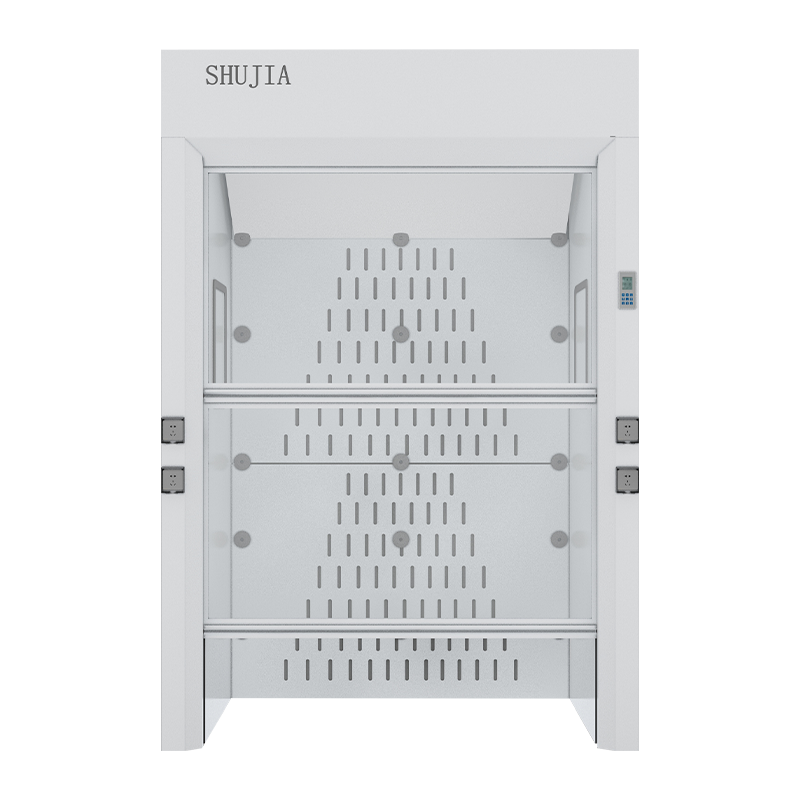
The bench also has to cooperate with the extraction system above it. Airflow that pulls vapour across the bench instead of away from the operator will shorten the life of any surface, so it is worth reviewing hood and slot design at the same time as the worktop selection. Our team has written a short guide on laboratory fume hood selection and safety performance that pairs well with this decision.
Installation and Care Habits That Extend Service Life
- Wipe spills promptly, and never let a spill sit overnight on the assumption that the surface is "immune".
- Use the resistance chart as a working document, not archive material, and re-check it whenever a new chemical enters the lab.
- Place heat-generating equipment on insulating pads or dedicated ceramic inserts rather than directly on resin.
- Clean with the mildest agent that works; aggressive solvents dull surfaces and can attack sealants.
- Inspect seams, edges and sink cut-outs once a year, and repair sealant before water or acid reaches the core.
- Record the material and batch of each bench section, so future repairs match in colour and performance.
Where Polypropylene Earns Its Place
If your acid list includes hydrofluoric, perchloric or hot concentrated reagents, polypropylene is often the most honest answer. It is not the stiffest material, and it does not like direct heat, but for corrosion-heavy benches it outlasts surfaces that cost considerably more.
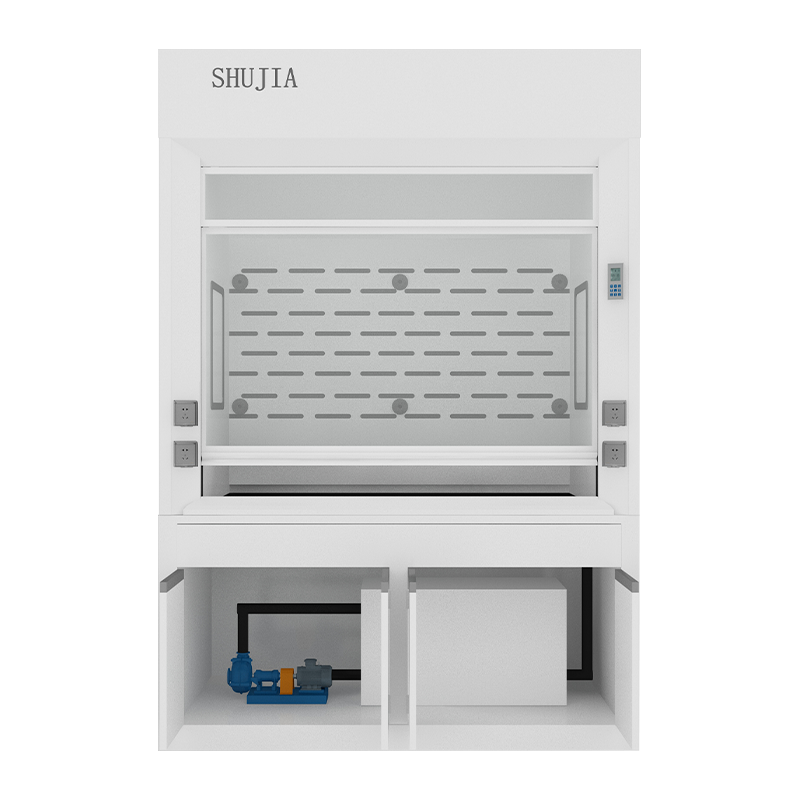
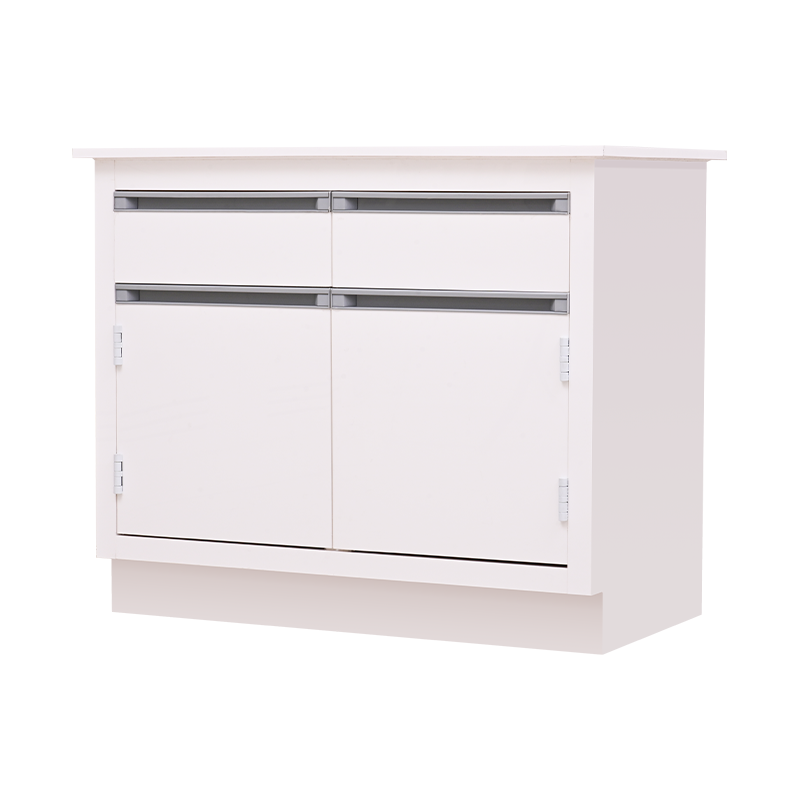 PP Anti-Corrosion Side Experimental BenchA polypropylene bench for corrosive digestion and trace-analysis zones, with PP, ceramic, or physicochemical worktop options and customizable storage configurations.View Product →
Our PP anti-corrosion side bench is the piece most customers start with when they are rebuilding a digestion or trace-analysis zone. It works best when paired with local extraction sized to the actual fumes rather than to a generic rule of thumb.
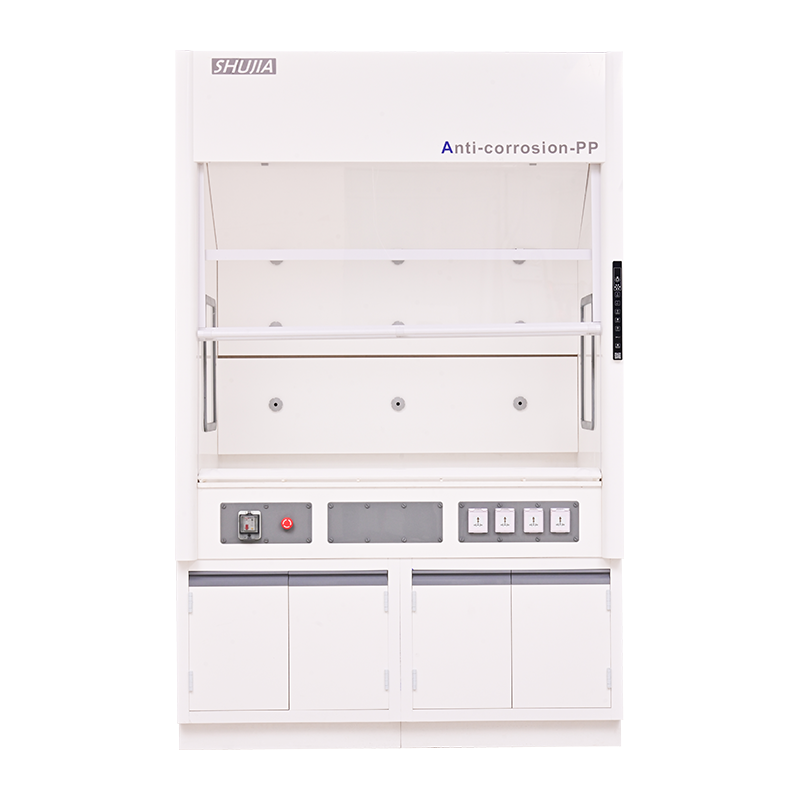
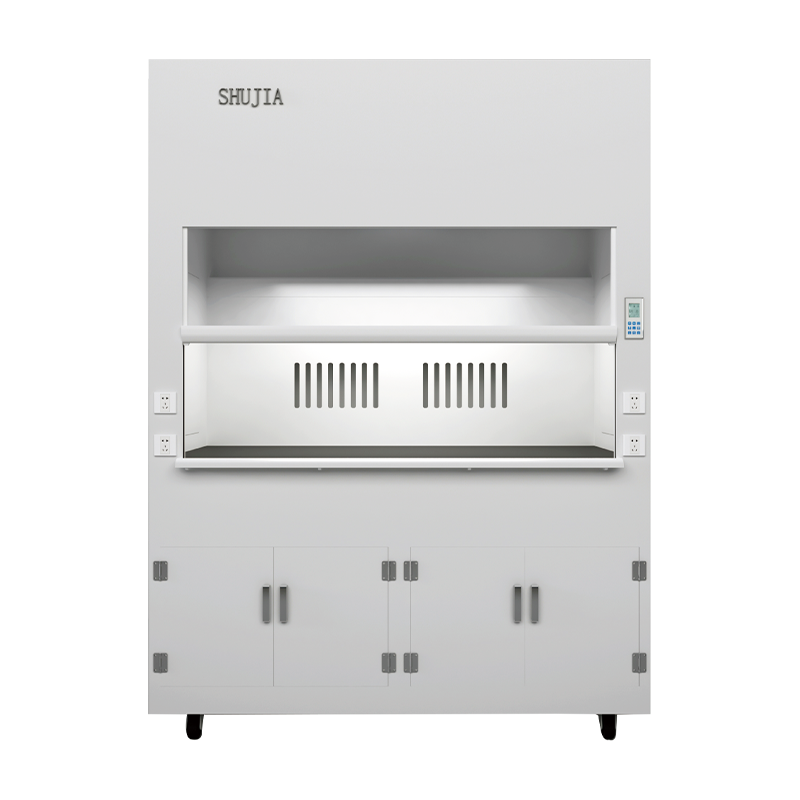
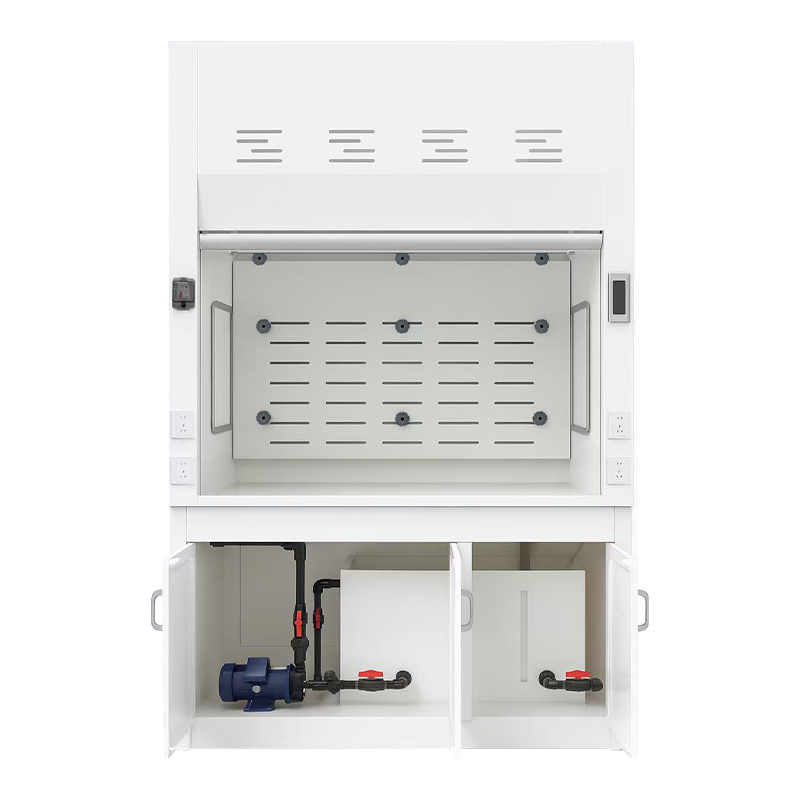 SJHB PP24 Perchloric Acid Fume HoodDedicated high-containment hood for perchloric and hydrofluoric acid work, with corrosion-resistant construction, self-circulating purification, and third-party tested performance.View Product →
Perchloric acid deserves particular respect, and a hood dedicated to that work protects both the operator and the surrounding surfaces from the residues that make this acid so unforgiving.
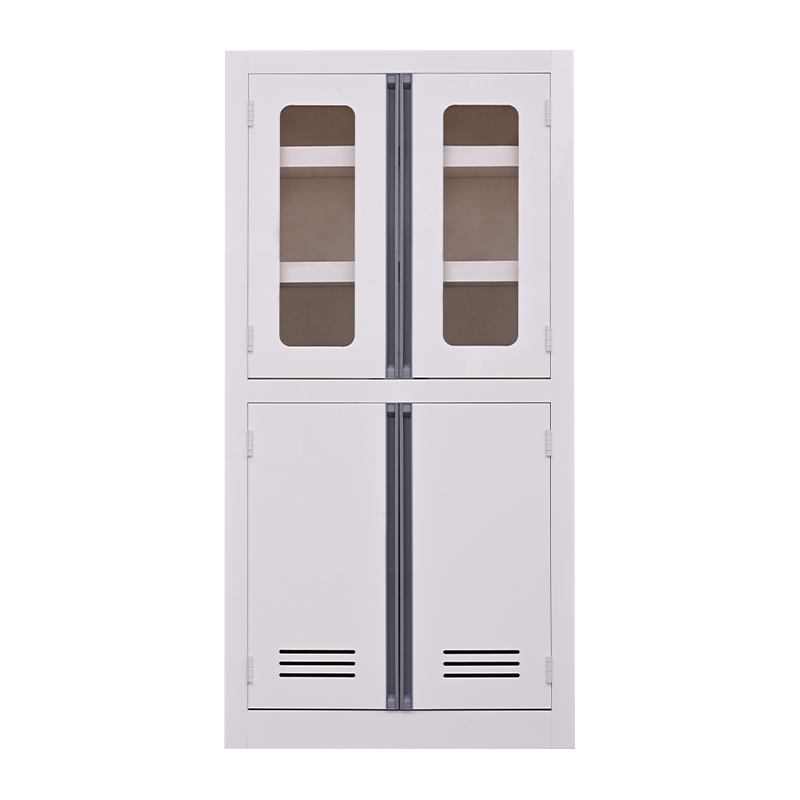 PP Ventilated Reagent and Vessel CabinetCorrosion-resistant PP storage cabinet with independent ventilation per compartment, adjustable spill-resistant shelves, and duct connection for keeping acid reagents out of the working aisle.View Product →
Storage is part of the same picture. Acids kept in ventilated cabinets stay out of the working aisle and off the bench, which reduces the casual spills that age a surface faster than any planned experiment.
A Practical Way Forward
Start with the chemical inventory, add the temperatures and handling patterns, and only then look at materials. In our experience that order produces a bench that is still flat, sealed and legible after ten years of real use, which is the only definition of acid resistance that matters. If you would like a second opinion on a specification, our engineers are happy to review drawings, chemical lists and airflow plans together, and you can reach the team through our contact page.

 EN
 English
 عربى


 +86-13472882970 (Mr. Zhang)