Most conversations about laboratory efficiency begin with instruments, software, or sample tracking. Very few begin with the bench. Yet the bench is where the bulk of a working day actually happens: pipetting, weighing, mounting slides, logging results, wiping surfaces, reaching for a bottle that sits just outside comfortable range. Adjustable height lab benches do not change the science itself, but they change how much effort the science costs, and that difference shows up in tempo, accuracy, and the mood of a room by late afternoon.
Bench Height Is a Workflow Variable, Not a Detail
Height shapes reach, and reach shapes time. A work surface set a few centimeters too high pushes the shoulders up and shortens the range of controlled movement. One set too low pulls the neck forward and bends the wrists into angles that never feel quite right. For a single afternoon this is a mild annoyance. Across a year of long shifts it turns into fatigue, small errors, and the kind of discomfort people stop mentioning because nothing seems to fix it.
When a bench fits both the person and the task, small movements stay small. Samples move from cart to surface to instrument without a detour through awkward posture, and the working rhythm of the room holds together.
How Adjustable Benches Change the Shape of a Workday
Fewer micro-interruptions
Every time someone pauses to stack a crate under a monitor, raise a chair to its top setting, or swap places with a taller colleague at a shared station, the task loses momentum. None of these pauses lasts long, but they add up. A bench that moves to the right height in seconds removes the pause entirely.
Shared benches, different bodies
Very few labs are staffed by people of the same build. Rotating shifts, students, visiting researchers, and colleagues who prefer to stand for certain steps all work at the same stations during a week. Adjustability lets one bench serve that whole group instead of forcing everyone to adapt to an average that fits nobody well.
Room to change the science
Labs rarely keep the same workflow for ten years. Methods shift, instruments grow taller, new assays arrive with new glassware. A bench with a usable height range absorbs those changes far more gracefully than a fixed surface that has to be replaced, or worse, worked around.
Matching Height to the Task in Front of You
There is no single correct bench height, only a correct relationship between the surface, the operator, and the step being performed. The table below reflects the patterns we see most often when setting up stations with clients.
These are practical starting points rather than fixed rules; final settings depend on the operator, the equipment, and the ventilation layout around the bench.
| Task pattern |
Practical starting point |
What adjustability adds |
| Precision pipetting and plating |
Surface close to elbow height, wrists flat |
Fast correction when the station is shared across shifts |
| Microscope and inspection work |
Lower setting so forearms can rest |
Comfortable seated or standing posture without changing chairs |
| Standing wet chemistry and titrations |
Slightly above elbow height to limit bending |
Height shifts as the step moves from weighing to pouring |
| Centrifuges, shakers, heavy glassware |
Lower surface for leverage and control |
Easier loading and unloading without shoulder strain |
| Documentation and data review |
Seated height matched to chair and screen |
One bench covers both bench work and desk work |
Where Adjustability Meets Airflow
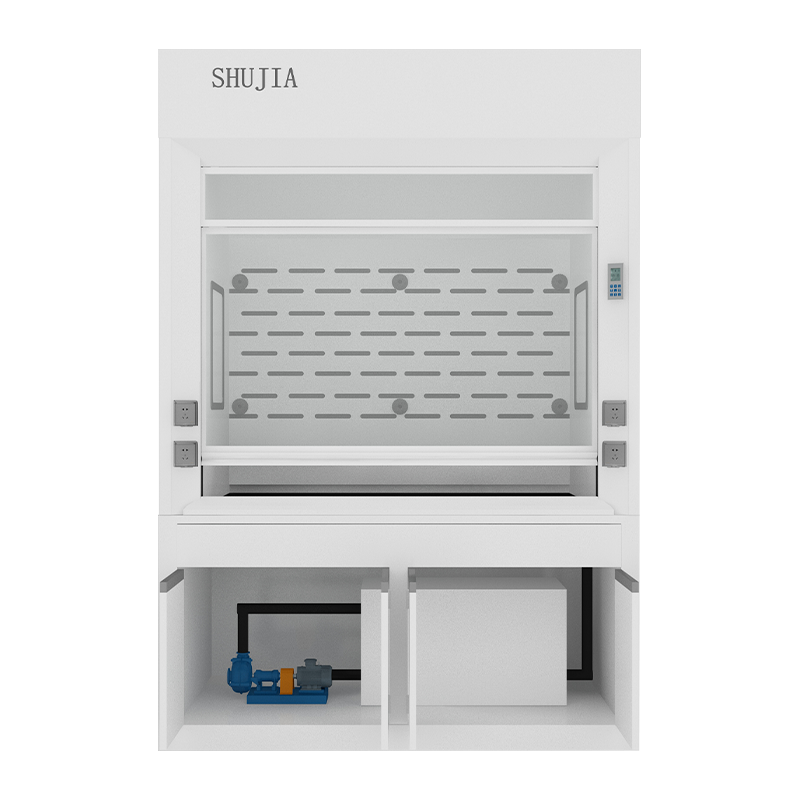
Bench height is rarely a furniture question alone. In a room with fume hoods, the working height of the bench beside the hood influences how people stand, how far they lean in, and how often the sash travels up and down. An operator who has to stoop or overreach tends to crowd the hood opening, and that is exactly when containment becomes harder to hold.
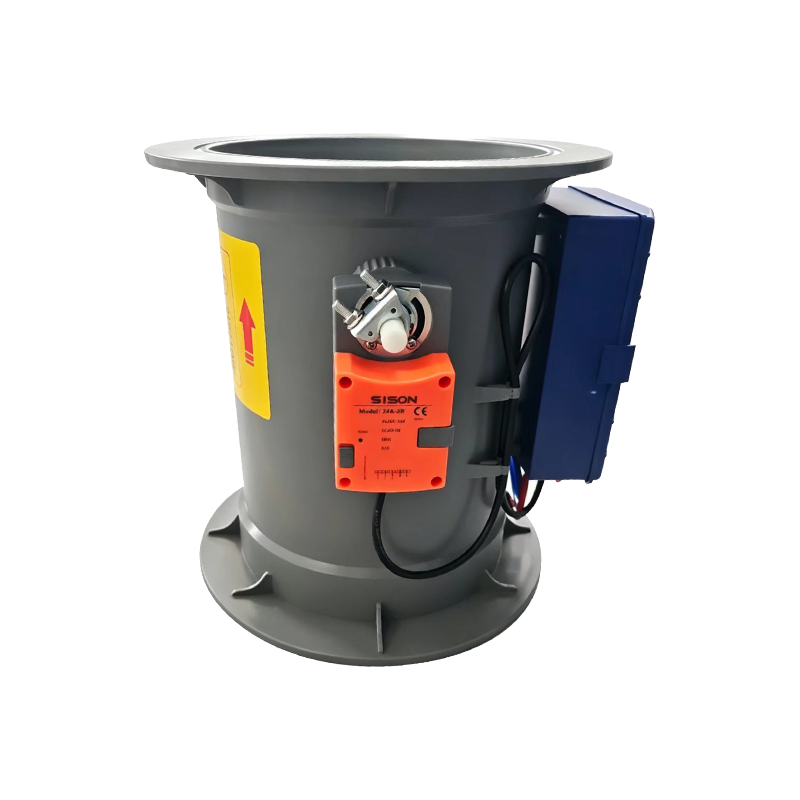
The reverse is also true. A surface that supports a relaxed, upright posture keeps people at a sensible distance from the sash, and airflow control can respond to sash movement rather than compensating for poor work habits. This is where furniture decisions and ventilation decisions start to overlap, and where our team usually joins a project early. The damper actuator range we supply is part of that same conversation, because response speed and stability at the valve affect what people actually experience at the bench.
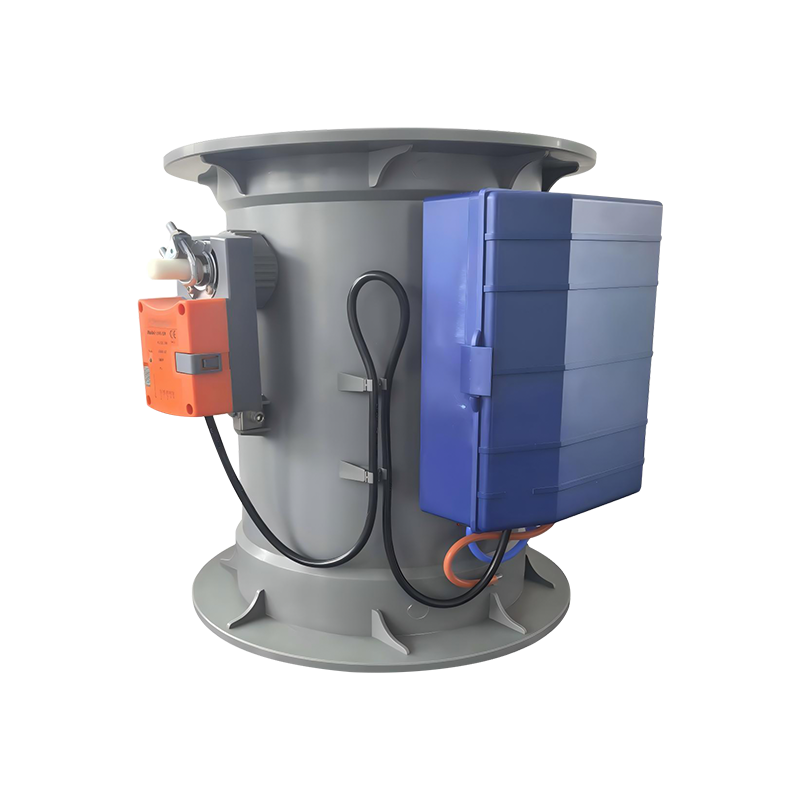 VAV High-Speed Damper Actuator for Fume HoodsFor VAV fume-hood systems, this actuator supports rapid 0–90° travel and precise positioning to help maintain face velocity as sashes move.View Product →
If you would like to read more about how control hardware and bench layout influence daily lab management, our team wrote a short piece on intelligent environment control and laboratory operation efficiency that pairs well with this topic.
What We Check Before Recommending an Adjustable Bench
- User range and task mix. Who works here, at what height, and for how long during a shift.
- Load and vibration. Balanced benchtop centrifuges, analytical balances, and heavy glassware all have different demands on frame stiffness.
- Lift mechanism. Manual crank, hydraulic assist, and electric drives each suit different budgets, load ranges, and accessibility needs.
- Services that must move too. Sinks, gas valves, power, data, and cable management all have to travel with the surface.
- Storage beneath. Drawers and cabinets should keep clearance through the full height range, not just the middle.
- Chemical exposure. The surface has to suit the reagents actually used, not the ones listed in a general catalogue.
- Stability and mobility. Casters help flexibility but need locking that holds under lateral force; leveling feet suit fixed stations.
- Interface with ventilation. Distance to hoods, sash clearance, and local exhaust in ventilated enclosures.
For rooms where the work is contained rather than open, a
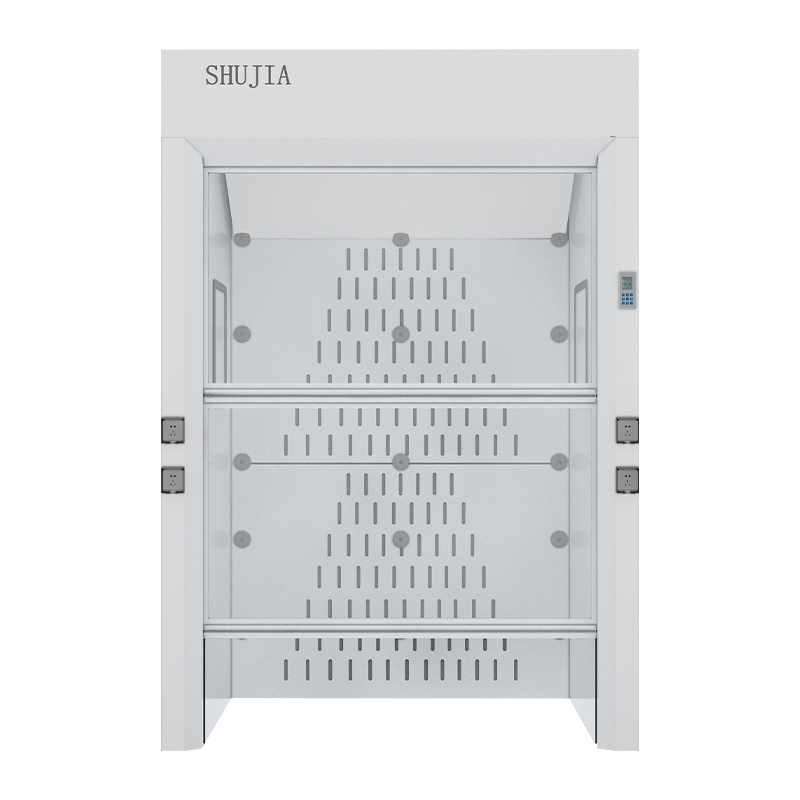 Customized Walk-In Ventilation Room for Chemical WorkA walk-in polypropylene enclosure for kilogram-scale synthesis and waste-liquid storage, with customizable layout, sliding doors, three-stage airflow and exhaust connections.View Product →
is often a better fit than a stand-alone bench, and the height question becomes part of the enclosure design.
Materials and Corrosion: The Part That Outlasts the Trend
Adjustability is a mechanism; the work surface is the part that lives with your chemistry every day. Polypropylene resists a broad range of acids and solvents and is a common choice for corrosion-heavy work. Epoxy resin tops suit general wet chemistry and heat exposure. Stainless steel belongs where cleaning and particulate control matter more than acid resistance. A height-adjustable frame only earns its keep when the top above it is chosen for the reagents in the room.
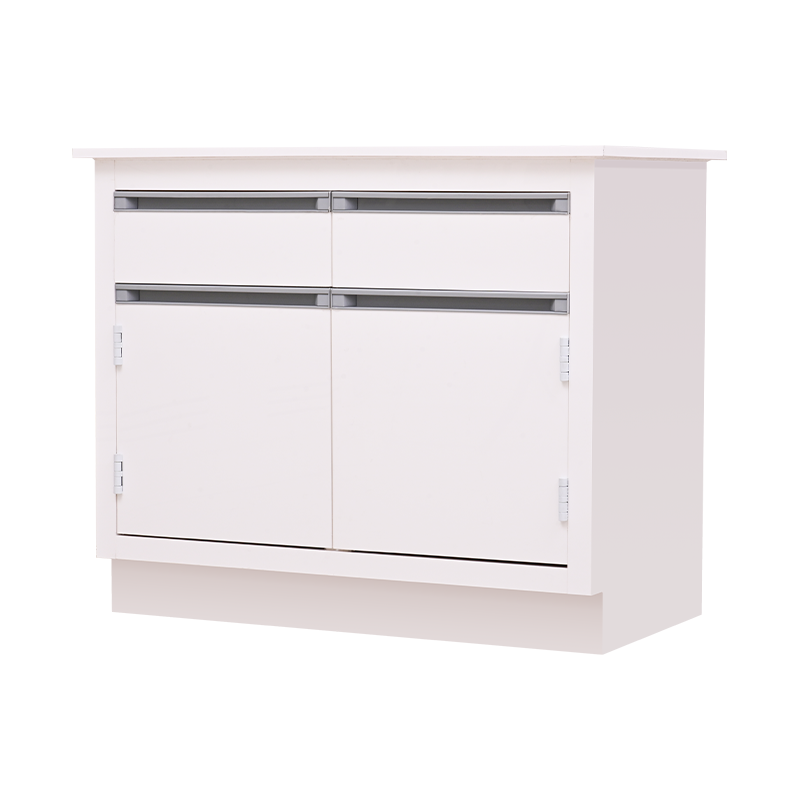 PP Anti-Corrosion Side Experimental PlatformAn integral PP laboratory bench for corrosive, high-use work, with PP, ceramic or physicochemical worktops and configurable cabinets, sinks and storage.View Product →
We usually recommend matching the frame and the top together, then checking that the chosen surface keeps acceptable thickness and edge detail through the full travel of the mechanism.
A Simple Optimization Sequence for an Existing Lab
- Observe for a week. Note where people stoop, stack, lean, or shift a chair to its limit.
- Measure the real range. Record heights of the shortest and tallest regular users, seated and standing.
- Pilot one station. Move a single bench to an adjustable frame and watch how the work changes.
- Adjust storage and services. Drawers, power drops, and waste routes often need the same rethinking.
- Standardize once it works. Rolling out a consistent height range across a room reduces confusion during shifts.
- Revisit after a year. New instruments and new staff will shift the picture again.
Working With People Who See the Whole Room
Our team has been building laboratory environments since 2012, from a base in Jinshan District, Shanghai, with three production sites covering 40,000 square meters and more than 200 people across design, production, installation, and service. We have supported over 10,000 customers in universities, biopharma, disease control, third-party testing, and petrochemical work, and we took part as a core member in drafting T/SLEA 0011-2023 for laboratory fume hoods and T/SLEA 1011-2023 for laboratory design and construction. That background matters here because bench height, hood containment, and exhaust design are rarely solved one at a time.
If you are reviewing an existing layout, our laboratory furniture range is a reasonable place to start comparing surfaces, enclosures, and storage before anyone commits to a floor plan.
Getting the Height Right the First Time
Adjustable height lab benches are a modest investment that pays back in small increments: a wrist that stays neutral, a shoulder that stays relaxed, a station that does not need rearranging between shifts. Those increments accumulate into a workflow that feels calmer and runs more predictably. Start by watching how people actually work at their benches, then set the range to match. If you would like a second pair of eyes on a layout, our engineers are glad to talk it through.

 EN
 English
 عربى


 +86-13472882970 (Mr. Zhang)